NBA · lineup
Wembanyama's Paint Dominance Is Reshaping the Finals—and the Knicks Have a KAT Problem
San Antonio's offensive scheme is systematically forcing Wembanyama into high-efficiency rim touches, and Karl-Anthony Towns is showing fatigue as the primary interior defender.
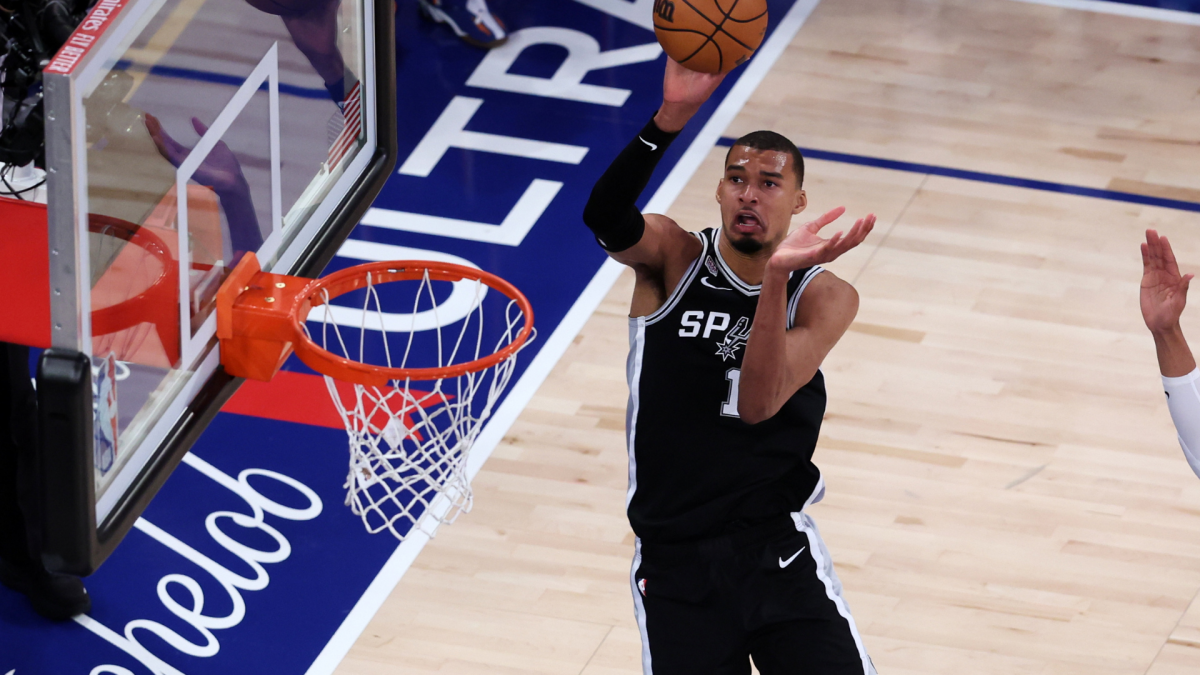
Victor Wembanyama's role in Game 3 of the NBA Finals tells the story of the series turning. The Spurs won Monday's matchup 2-1 to cut the Knicks' lead, and the difference was structural: in the first two games, Wembanyama distributed his 42 total shot attempts nearly evenly between the paint (20) and the perimeter (22). By Game 3, he fired 13 of 18 shots from inside the paint, and nearly all came at or near the rim. The result was 32 points on 11-of-18 shooting—a shooting night that doesn't happen by accident.
Spurs coach Mitch Johnson engineered this shift through deliberate scheme manipulation. Rather than allow Jalen Brunson to operate passively on the weak side in Games 1 and 2, Johnson repositioned him as a screener in Game 3, using ball screens to create collisions that either pulled Towns away from the paint or forced him to navigate multiple layers of Spurs action. Wembanyama set screens on Josh Hart and Mikal Bridges; Julian Champagnie ran secondary screens to herd Brunson into pick-and-roll situations. The geometry was punishing: every screen created a moment where either Towns had to vacate the low block to show on a perimeter threat, or Towns stayed put and Wembanyama rolled downhill into space. The Knicks' solution—benching their center entirely in stretches—only invited more rim attacks. Anunoby, at 6-foot-7, became a symbolic helpless presence on the backside.
What's more revealing is Towns's fourth-quarter silence: zero points in the fourth across all three games of the series. That's not randomness. Towns is shouldering primary paint defense against a 7-foot-4 talent who's increasingly operating with structural advantages, and the wear is showing. By Game 3, Spurs actions were designed to tire him preemptively—Towns had to fight through screens at half-court, chase off-ball movement, and recover to multiple threats before he ever reached the rim. That physical and cognitive load compounds.
For prop bettors, the mechanism here is durable across the remainder of the series. If Mitch Johnson's scheme persists—and there's no reason it won't, given its success—Wembanyama's paint volume remains elevated. His efficiency in the paint (11-of-18 in Game 3) is also above his season average and reflects both his improved positioning and the structural collapse of Knicks interior defense under pressure. Expect his shot volume from inside 10 feet to trend toward 12–14 attempts per game going forward, and his points total to remain in a range that assumes higher paint efficiency than his season-long three-point volume would suggest. Towns's fatigue profile, meanwhile, makes him vulnerable in fourth-quarter matchups; the Knicks may have to rotate defenders or accept continued rim exposure.