Knicks' 46-Game Cushion Evaporates; Late-Clock Reliance Is the Real Problem
By Erik Schwartz ·
New York's championship window tightens after Game 3, but the offensive stagnation that cost them isn't a fluke—it's a structural vulnerability the Spurs are now hunting.
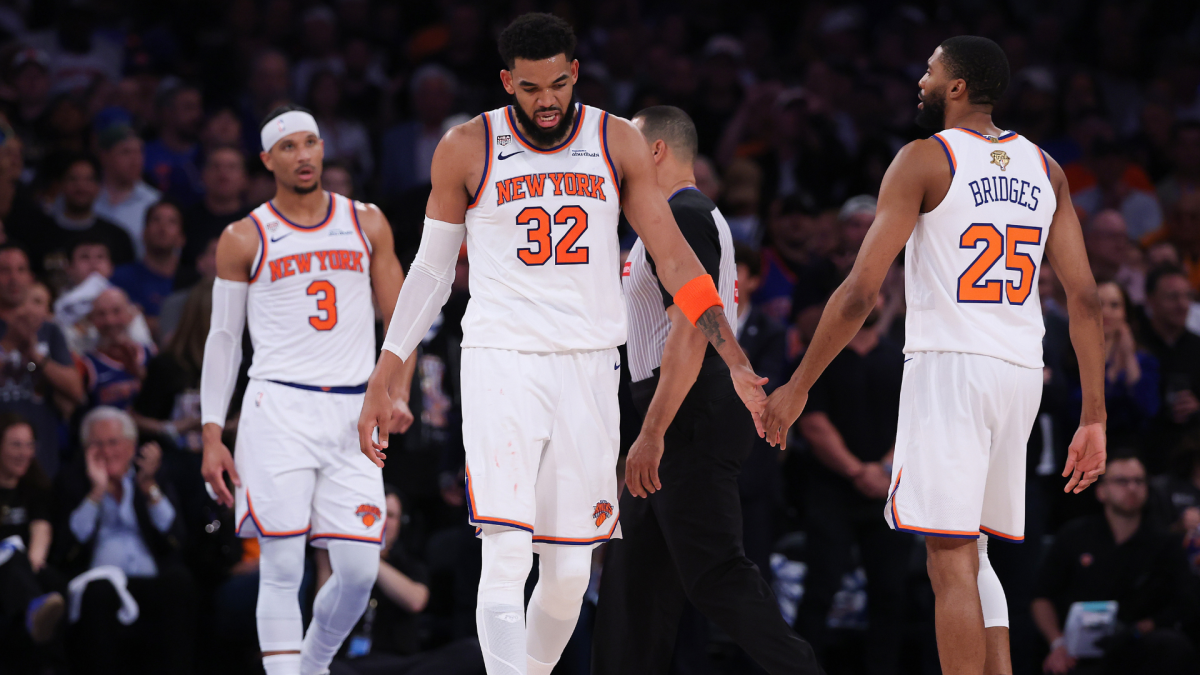
The Knicks' 46-game winning streak ended Monday in a 115-111 loss to San Antonio, and while the headline reads like a narrative reset, the deeper issue is far more troubling: New York has been compensating for halfcourt offensive dysfunction by playing an increasingly desperate late-clock lottery game. In Game 3, 27.3% of Knicks possessions stretched to the final four seconds of the shot clock, up from their season-long playoff rate of 24%—and their efficiency on those desperation plays plummeted from 94.3 points per 100 to just 80. Against a defense anchored by Victor Wembanyama's length and the Spurs' disciplined perimeter pressure, standing around and hoping for a late-clock three is a strategy that eventually fails.
This isn't new. The pattern mirrors Game 2, which the Knicks won despite similar early deficits and fourth-quarter collapses in execution. In Game 2, New York managed only 87 points per 100 possessions in the fourth quarter; in Game 3, that number dropped to 87 again. The difference was that the Spurs, particularly in the final quarter, didn't flinch when San Antonio went on its run. Coach Mike Brown identified the culprit post-game: decision-making paralysis. "One guy caught, held, held, held, held, held," Brown said. "Now the defense settles in. Now you're in trouble." Wembanyama doesn't need much settling time. When the Knicks' shooters like Mikal Bridges and Karl-Anthony Towns fell silent, and when Jalen Brunson couldn't manufacture easy touches, the offense had no third or fourth option. The Spurs' strategy is clear: bleed the clock with superior length, then dare New York to execute in crunch time.
For the Knicks to regain control of the series heading into Game 4 on Wednesday, they need to recalibrate their halfcourt movement and trust. The math is unforgiving: New York has outscored San Antonio by just 2.8 points per 100 possessions across three games—seven total points in a Finals series. That margin collapses entirely if the Knicks keep shooting themselves into late-clock corners. Brunson has been their pressure valve, but even his ability to create offense in chaos has limits when teammates are standing motionless, waiting for the defense to crack. The Spurs know this. San Antonio's defensive intensity in crunch time—holding New York to 80 per 100 on ultra-late-clock attempts—suggests they've studied the same film the Knicks have and identified the exact moment New York's offense tips from patient to panicked.
From a betting perspective, the implications are immediate and structural. Over-under lines on Game 4 will likely reflect the surface narrative: "Knicks lost, so they'll come out aggressive and run more offense." That's market noise. The real angle centers on fourth-quarter scoring totals and Brunson's assist total. If the Knicks truly unclog their halfcourt, Brunson's assist rate should normalize upward—his season average is 7.4 per game in full matches, but in games where New York is forced into stagnation, his assist opportunities dry up as the offense becomes more isolation-heavy and less team-oriented. Watch whether the Spurs press their advantage by continuing to camp on perimeter cutters; if they do, Brunson's passing lanes shrivel, which depresses both his assists and the team's fourth-quarter point total. Conversely, if the Knicks genuinely prioritize motion and quick decisions, you'd expect Brunson to approach or exceed 8.5 assists and the team fourth-quarter under (set at around 27-28 points) to carry substantial risk.
The dangerous part for Knicks backers is that San Antonio has no reason to deviate from what nearly worked. The Spurs built leads, the Knicks fought back, and then San Antonio's fourth-quarter defense suffocated New York's offense. Wembanyama will continue to occupy space the Knicks desperately need. Unless Bridges and Towns rediscover their shooting stroke—and that's a binary outcome with no predictive power—the Knicks' margin for error remains razor-thin. Game 4 is essentially a prove-it moment for New York's halfcourt offense, not a referendum on their overall strength. If they can't execute with 15+ seconds remaining on the shot clock, the series tightens considerably.