NBA · transaction
Stevens Dismantles the Celtics to Dodge Roster Ceiling
Boston traded Jaylen Brown to Philadelphia for Paul George and draft capital because depth, not star power, wins championships in 2026.
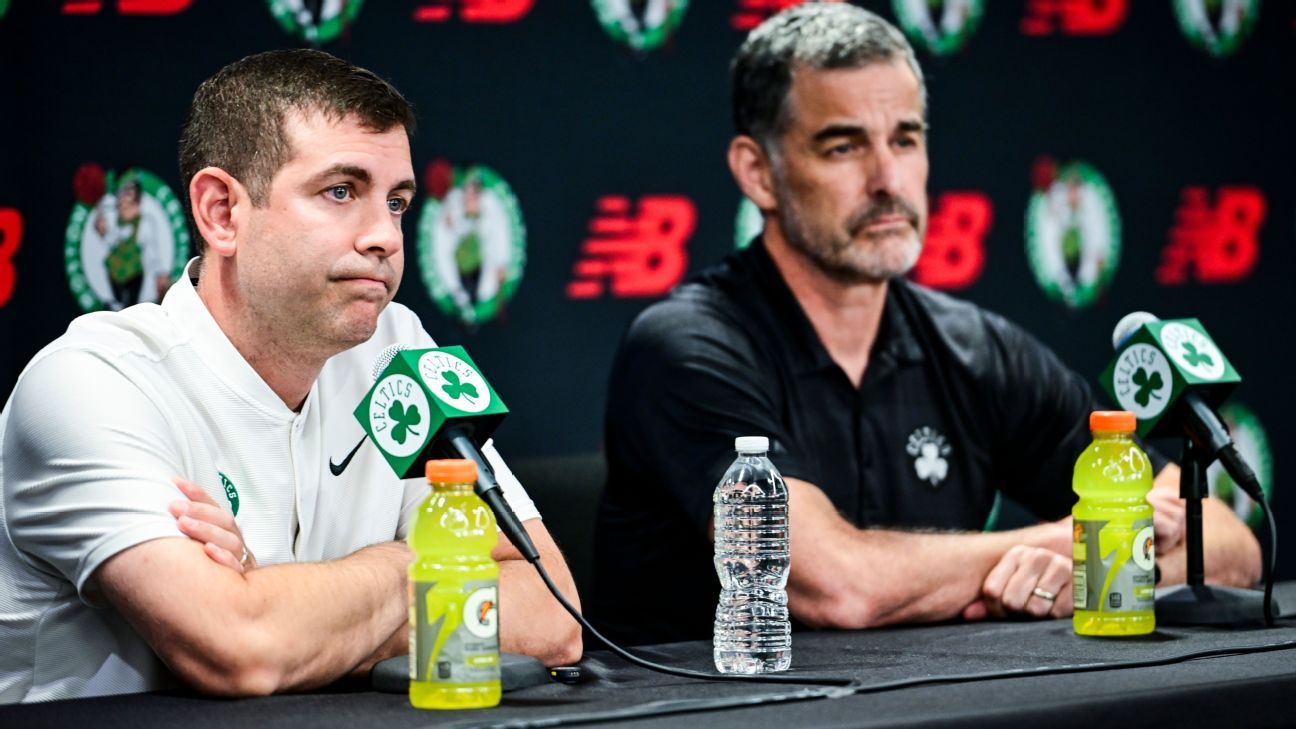
Brad Stevens made the call Monday that Boston's path to a title had narrowed too far to ignore. The Celtics shipped Jaylen Brown to the Philadelphia 76ers, acquiring Paul George, two first-round picks (2028, 2031), and two second-rounders in return. Stevens' diagnosis was surgical: 70% of the salary cap locked into Brown and Jayson Tatum, with usage rates that left no room for the kind of contextual depth that separated this season's champions from also-rans. Brown, a Finals MVP who averaged 28.7 points, 6.9 rebounds, and 5.1 assists last season and finished sixth in MVP voting, became expendable not because his production fell short but because the architecture around him had flatlined.
The math behind the move is stark. Last season, while Tatum recovered from a torn right Achilles, Brown carried the offensive load and the Celtics still won 56 games—the second-best record in the East. That performance, paradoxically, exposed the problem rather than solving it. A two-star system works when injuries force opportunity; it calcifies when health returns and both players are available. Stevens watched the last two title teams and saw what the Celtics lacked: interchangeable wings, reliable shooting at the margins, and enough offensive variability that single-coverage schemes or injury losses didn't crater the entire system. Trading Brown doesn't weaken the Celtics' ceiling with George in place. It lowers the floor of acceptable outcomes by removing a top-five scorer. The bet Stevens made is that a more flexible roster—George plugs into both wing positions, the draft picks offer swing optionality—can sustain excellence over a season-long grind in ways a redundant two-man show cannot.
For prop bettors, the immediate volatility runs through Boston's shot distribution and role-player volume. Tatum's usage will climb in the short term (drafting a 28-PPG scorer out of the starting five naturally concentrates possessions), but the theoretical edge is duration-dependent. If George stays healthy and melds quickly into the pick-and-roll structure—the framework Stevens has always favored—Tatum's assist rate should rise as teams can no longer double-team Brown in isolation. Conversely, if George's knee proves fragile or his fit alongside Tatum creates redundancy rather than complementarity, the Celtics' offense could seize up entirely. The off-season ramp-up window is critical. George has played 57 games in the last two seasons; his availability is a prerequisite, not a given.
The 76ers absorb a different set of contingencies. Brown lands in Philadelphia off a 56-win season where he was the primary volume threat; the 76ers will lean on him immediately to fill the gap left by the first-round loss to Boston. But Brown's 28.7 PPG came in a Celtics system that ran through Tatum when he returned—a luxury the 76ers don't have. Joel Embiid anchors their offense, and Brown's assist rate (5.1) will be tested if he's asked to operate as a secondary playmaker instead of a primary scorer. The prop angle here is volatility compression: expect Brown's scoring line to land 1-2 points lower than his 2025-26 season average (27.5-28.5 range) as the system absorbs him differently, and expect his assist rate to remain flat or dip as Embiid reclaims the offensive load.
The market's initial reads—Brown as a top-30 fantasy asset in Philadelphia, Tatum's usage bump lifting his scoring floor—are mechanically sound but temporally premature. The edge exists in fade windows, not lean windows. Boston's depth additions won't materialize for weeks (free agency, training camp, systems integration). Brown's acclimation in Philly is a 10-15 game sample problem, not a season problem. Smart money waits for opening week to see how the rosters actually function before laying chalk on adjusted player totals. The real value emerges once the market overshoots based on the trade headline alone and the on-court reality demands a correction.