NBA
Wembanyama's Playmaking Drought Exposes Spurs' Real Problem in Western Finals
San Antonio's young star is scoring at will but creating almost nothing for teammates, a red flag that has less to do with his talent and more to do with how the Thunder are defending the Spurs' entire offensive ecosystem.
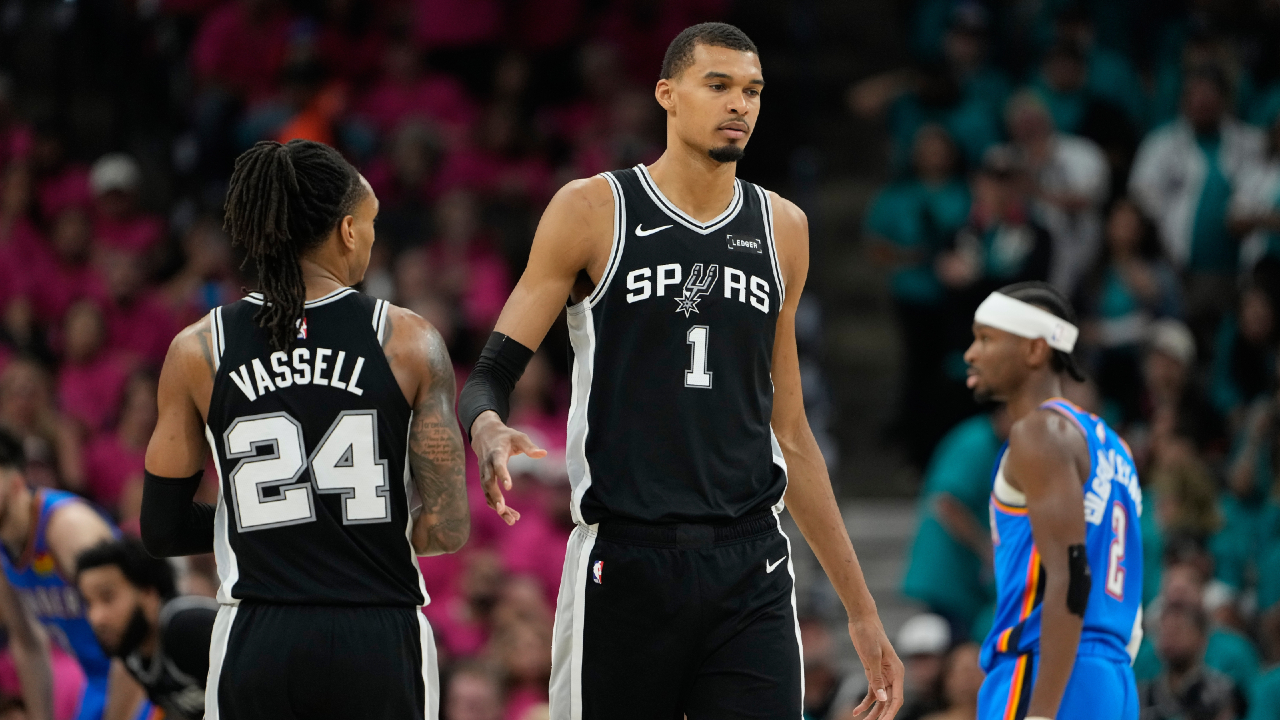
The Spurs are down 2-1 to Oklahoma City, and Victor Wembanyama finished Game 3 with 26 points in 39 minutes—a performance that should be carrying San Antonio forward, not backward. Instead, the Thunder won 123-108, and Wembanyama left the floor frustrated not by his scoring but by his three assists and four rebounds in a game where the Spurs got outscored by 19 in the 10 minutes he didn't play. That split is the real diagnosis: Wembanyama's individual excellence has become a mirage, masking the fact that the Spurs' offensive machinery breaks down the moment he sits.
The mechanics are worth untangling. When Wembanyama is on the floor, he's getting the ball in space and finishing at a historically high rate—his +4 differential in 39 minutes is being drowned out by what happens without him. That 19-point swing in 10 bench minutes tells you San Antonio's secondary playmaking infrastructure is skeletal. Devin Vassell is not a secondary creator; neither is any of the remaining rotation players. The Thunder are not just defending Wembanyama—they're playing the Spurs' entire roster with the knowledge that when he rests, the offensive pressure relief valve opens completely. On-ball defense gets easier when the next-best option is isolation or pick-and-roll with a complementary player rather than another elite threat.
Wembanyama himself identified the core problem: he's not facilitating the way the Spurs need him to. His 3 assists came across 39 minutes in a Western Conference Finals game. For context, he's averaging 29.3 points and 15 rebounds—elite volume—but those assist numbers suggest the Spurs are riding his scoring gravity without extracting secondary creation. When the Thunder defend him as a floor-spacer and rim-runner (which they've evidently adjusted to do after Game 1), San Antonio has no secondary ball movement to exploit the spacing he creates. They're playing single-threatening basketball at the championship level, and it's showing.
For prop purposes, this unlocks a specific betting angle. Wembanyama's points total will likely stay elevated—he's too talented for OKC to actually shut down, and Game 4 will see the Spurs desperately feeding him early. But his assists line (currently floating around 4.5-5.5 in most books) is undervalued at the over. Not because he'll suddenly become a passer—the structural problem won't solve itself in one game—but because the Spurs will force-feed him creation attempts in desperation to stop the bleeding. Coaches in elimination-game spots always over-allocate touches to their best player. Wembanyama will see more opportunities to pass out of defensive collapse, even if the Thunder's scheme doesn't change. The over on assists is less about his playmaking evolution and more about San Antonio's desperation mathematics. This is a single-game spike prediction (Game 4 only), not a reliable series pattern—once the Spurs either stabilize or are eliminated, the angle evaporates.
What's darker for San Antonio is that there's no quick fix. The Spurs can't acquire a tertiary creator mid-series, and Wembanyama can't will the rest of his roster into competence. Game 4 will show whether San Antonio's supporting cast can absorb added offensive load, or whether the Thunder have found the blueprint: collapse on Wembanyama when he has the ball, dare everyone else to beat you, and watch the Spurs' efficiency crater during rest periods.