Wembanyama's Historic Playoff Efficiency Reshapes Spurs Ceiling—And Your Series Pricing
By PropBetEdge Editorial Team ·
At 22, Victor Wembanyama is posting the third-best PER in an age-22 playoff run since 1974, demolishing the conventional wisdom that young stars need painful first-postseason experiences to develop.
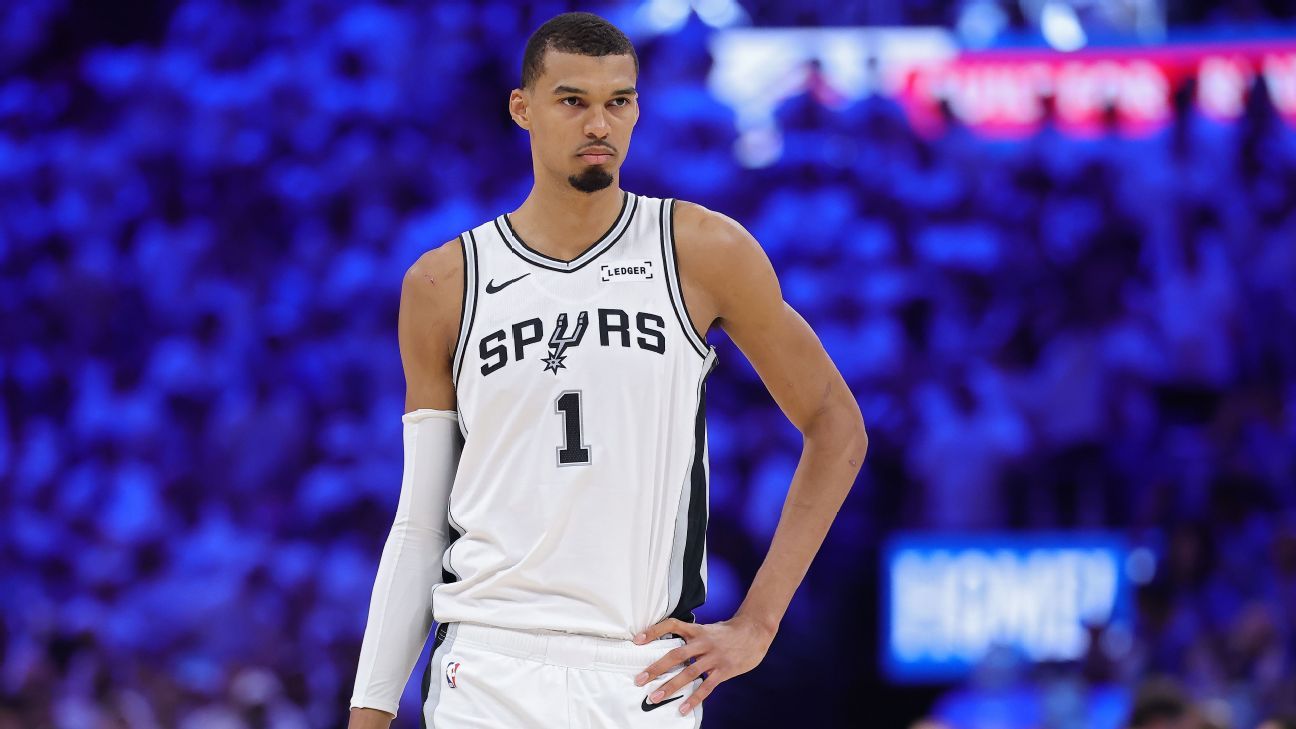
Victor Wembanyama is not following the script. In his first playoff appearance, the Spurs' 22-year-old franchise pillar is posting 22.1 points, 12.3 rebounds, and 4.0 blocks per game across a minimum of 10 games—the youngest player in recorded NBA history to average that three-way combination. His 29.1 player efficiency rating ranks third all-time among age-22 playoff runs, trailing only Chris Paul's 2008 Hornets campaign and Kareem Abdul-Jabbar's 1970 Bucks season. The distinction matters: both Paul and Jabbar exited the playoffs before the Finals. Wembanyama has San Antonio positioned to advance past Oklahoma City with home-court advantage and a clear path to face either New York or Cleveland in the championship series.
The historical comparison exposes a myth embedded in basketball culture. Jordan, Bryant, and James all stumbled in their first playoff runs—a narrative so durable it's become shorthand for "young talent needs seasoning." But Wembanyama's seven-footer frame, defensive versatility, and uncommonly polished three-point stroke (he's shooting threes at volume in these playoffs) have conspired to produce immediate, elite two-way production rather than the typical learning curve. His 0.288 win shares per 48 minutes ranks second only to Paul's 0.289 among this cohort. The Spurs aren't carrying a developmental asset through the postseason; they're riding a fully formed engine.
What this means for series trajectory is more subtle than simple dominance projection. Wembanyama's rim-running and rim-protection capacity—he's averaging 4.0 blocks while maintaining 22.1 PPG in a playoff setting—creates a floor on San Antonio's defensive ceiling that typical 22-year-olds simply don't provide. Oklahoma City's offensive scheme, built around pace-and-space ball movement and penetration, is precisely the kind of attack that young bigs often struggle to navigate defensively. Instead, Wembanyama has been the best rim protector in this series. That defensive value compounds into offensive opportunity: the fewer possessions the Spurs waste scrambling to recover, the more margin they have for error in half-court execution.
For bettors, the implication is immediate. Wembanyama's scoring and rebounding prop lines have likely been priced with a recency anchor—Game 1's 41 points and 24 rebounds against a top-five Thunder defense created a ceiling-hit narrative that inflated subsequent totals. But his 22.1 PPG and 12.3 RPG averages across the series represent a sustainable rate that's closer to his baseline than to that outlier performance. If books have moved his points and rebounds lines upward expecting regression-to-the-peak, that's a fade. His per-game output won't match Game 1; it will track to his 10-game average, which is already priced as if it's an anomaly. The real edge, however, lives in his assist line. Wembanyama's 4.0 blocks per game indicates he's camping the paint, which typically suppresses guard-like passing volume. But his ability to initiate offense from the elbow and facilitate in pick-and-roll has crept upward as San Antonio adjusted to thunder's coverage. If his assist line is set at 2.5 or lower, the under carries value—he's a finisher and defender first, not a primary playmaker, even in a series where he's the best all-around performer.