NBA · transaction
Melton's Third Warriors Reunion Signals Depth Play Over Star Chase
Golden State locks down backcourt stability while keeping cap flexibility for LeBron James—a calculated bet on role-player consistency over lottery odds.
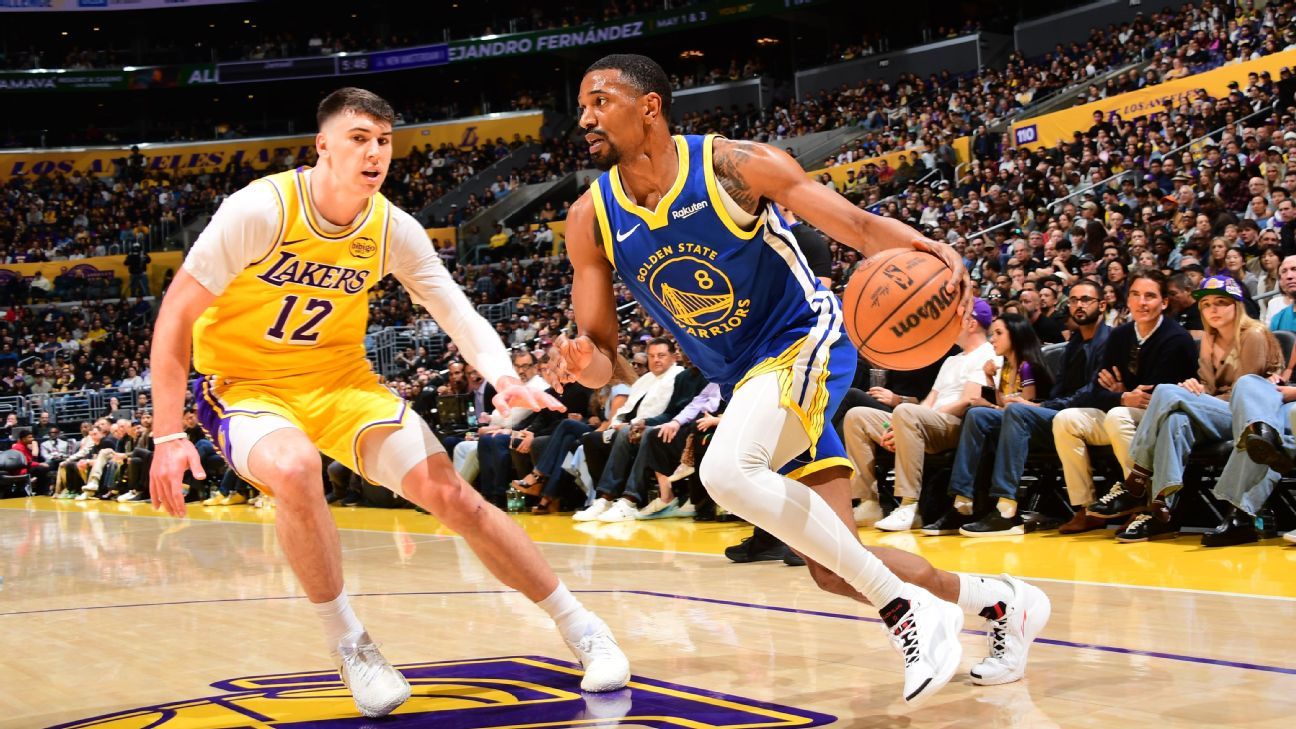
De'Anthony Melton is returning to the Warriors for a third consecutive offseason, agreeing to a two-year, $11 million deal with a player option on year two. The signing happened Wednesday as the guard declined his $3.4 million option elsewhere and tested free agency, but Golden State matched him back at a slight raise—a rare recurring move that speaks to organizational preference and Melton's fit.
The mechanics here matter more than the headline suggests. Melton tore his ACL six games into his first Warriors stint during the 2024-25 season, got traded at the deadline, then signed back last summer specifically to rehab with the team's training staff. That return paid dividends: he appeared in 49 games, stayed healthy, and averaged a career-high 12.3 points while maintaining the perimeter defense that made him valuable in the first place. The Warriors viewed this trajectory—injury recovery plus role clarity—as more predictable than testing open market risk. They also structured the deal with a player option to give Melton flexibility and himself agency, which reinforces retention odds for next summer.
What's sharper: this deal doesn't block the LeBron chase. The Warriors declined Draymond Green's player option and gave Kristaps Porzingis a flexible extension, explicitly preserving cap runway. Melton's $11 million footprint over two years is the kind of depth signing that lets a contender address backcourt depth without sacrificing star pursuit. They added Michigan wing Yaxel Lendeborg in the draft (11th overall) to shore up frontcourt insurance, freeing up cap bandwidth. This is precision roster construction, not panic filling.
For prop purposes, Melton's role stabilizes in predictable ways. He'll occupy the reserve shooting guard and small-ball wing spots—not a volume scorer, but a 12-15 points per game candidate on nights he plays 25+ minutes. More valuable: his steals rate (1.4 per game last season) and three-point volume (3.2 attempts per game) create combo prop angles. Since his return to playing shape in December, he's hit the three at a 35% clip and logged steals in 38 of 49 games. Against teams that push pace or hunt isolation buckets, Melton's minutes tick up and those steals/threes props compress into higher-probability bets. The edge isn't explosive upside—it's reliability in a role he's proven he can sustain.