Horford's Warriors Extension Locks in Depth; Signals Golden State's Injury-Response Strategy
By Justin Erickson ·
Al Horford's two-year, $14M deal to stay in Golden State confirms the Warriors are doubling down on veteran floor spacing and rim protection after a playoff collapse.
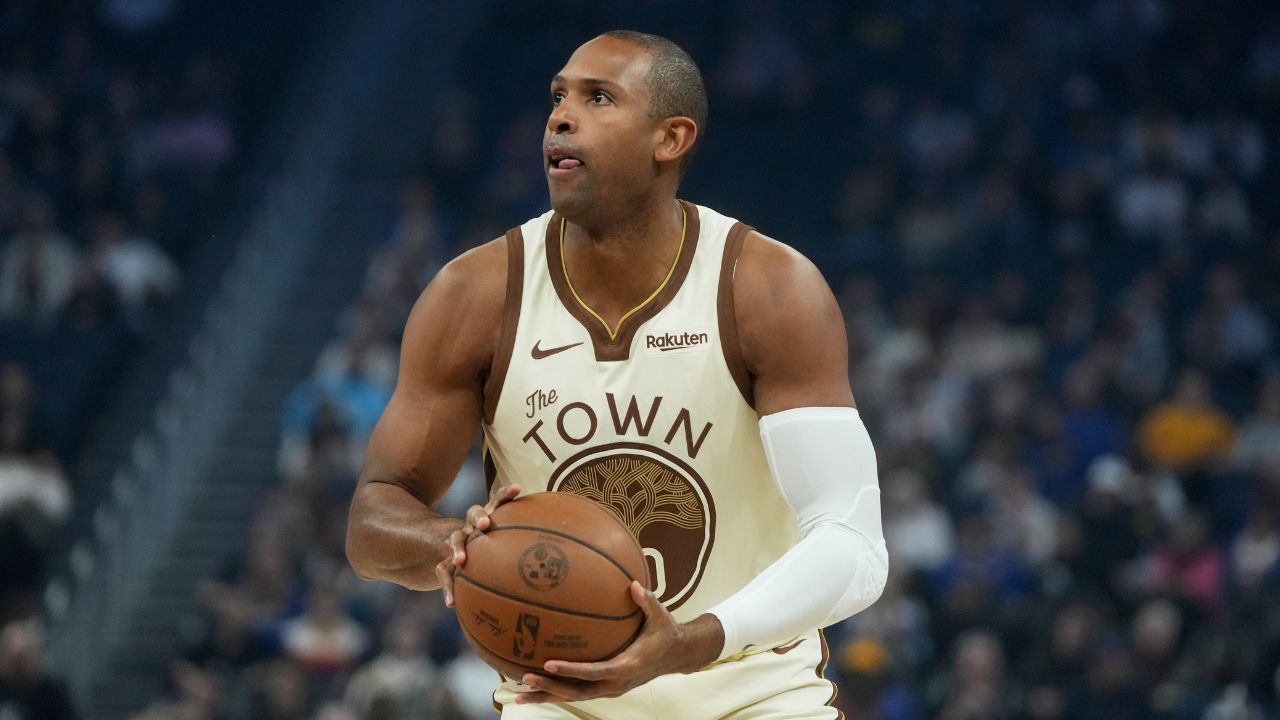
Al Horford is staying put. The 40-year-old centre signed a two-year, $14 million extension with Golden State on Monday, cementing his role alongside Stephen Curry and Draymond Green for at least one more season. Per The Associated Press, the agreement was announced after Horford's first year in Warriors colors, when he appeared in 45 games—starting 13—and averaged 12.7 points, 4.9 rebounds, 2.6 assists, and 1.13 blocks.
The math on this deal matters more than the headline. At roughly $7M per year on a 40-year-old, Horford's contract is essentially the Warriors' signal that they are not panic-building around injury attrition. The franchise watched its 2025–26 season unravel: they started competitive but devolved into the 10th seed, lost Jimmy Butler to season-ending knee surgery in January, and crashed out in the Play-In. That collapse occurred even with Kristaps Porzingis—acquired mid-season from Atlanta for Buddy Hield and Jonathan Kuminga—providing both spacing and rim presence. By retaining Horford at veteran minimum rates and locking Porzingis into a two-year, $40M deal, Golden State is betting that durability, not star power, is the constraint. Horford becomes the 13th player in NBA history to reach a 20th season; he is also proof that the Warriors believe their core group—Curry, Green, and now this complementary layer—can still contend if healthy.
This is a roster-construction tell that props bettors should read carefully. Horford's 12.7 PPG and 1.13 BPG in limited role minutes last season reflect his real value: he is a defensive anchor and floor-spacing five who thrives in drop-coverage systems and pick-and-roll settings. His assist rate (2.6 per game) was inflated by garbage time and low usage; his true playmaking load will remain modest. The 45-game sample and 13 starts also hide variance—he played in clumps around injuries. What matters for prop construction is that Horford's floor time will likely expand if Porzingis or Green miss time, and in those scenarios his per-game scoring and rebounds will tick upward simply due to increased possession share.
The betting angle is distribution-dependent. If Horford stays healthy and maintains his starter role (13 starts in 45 games suggests part-time), his 12.7 PPG line will carry predictable variance—look for him to land in the 10–15 PPG range in most games, with outlier efficiency nights when he faces drop coverage. Fading overs on his point total over a full season is reasonable, because at his age and usage rate, he is unlikely to sustain above-average efficiency against switching defenses. However, in specific games where the Warriors face rim-running teams (Phoenix, Denver, smaller lineups), Horford's block total and rebound floor will compress; his assists may pop if Curry is off the floor and Horford becomes the short-roll option. The contract itself—$14M over two years—is a value signal that the Warriors view him as depth insurance, not a stat-padder. That constraint matters. Prop players should treat Horford's totals as matchup-sensitive rather than game-to-game anchored, and weight any volume spike as a warning sign of team injury, not improved form.