NBA · transaction
Thunder Convert Dort Into Draft Capital While Hawks Unlock Long-Term Flexibility
Oklahoma City's three-team dismantling sends an All-Defensive wing to Atlanta and reshapes the offseason math for both contenders.
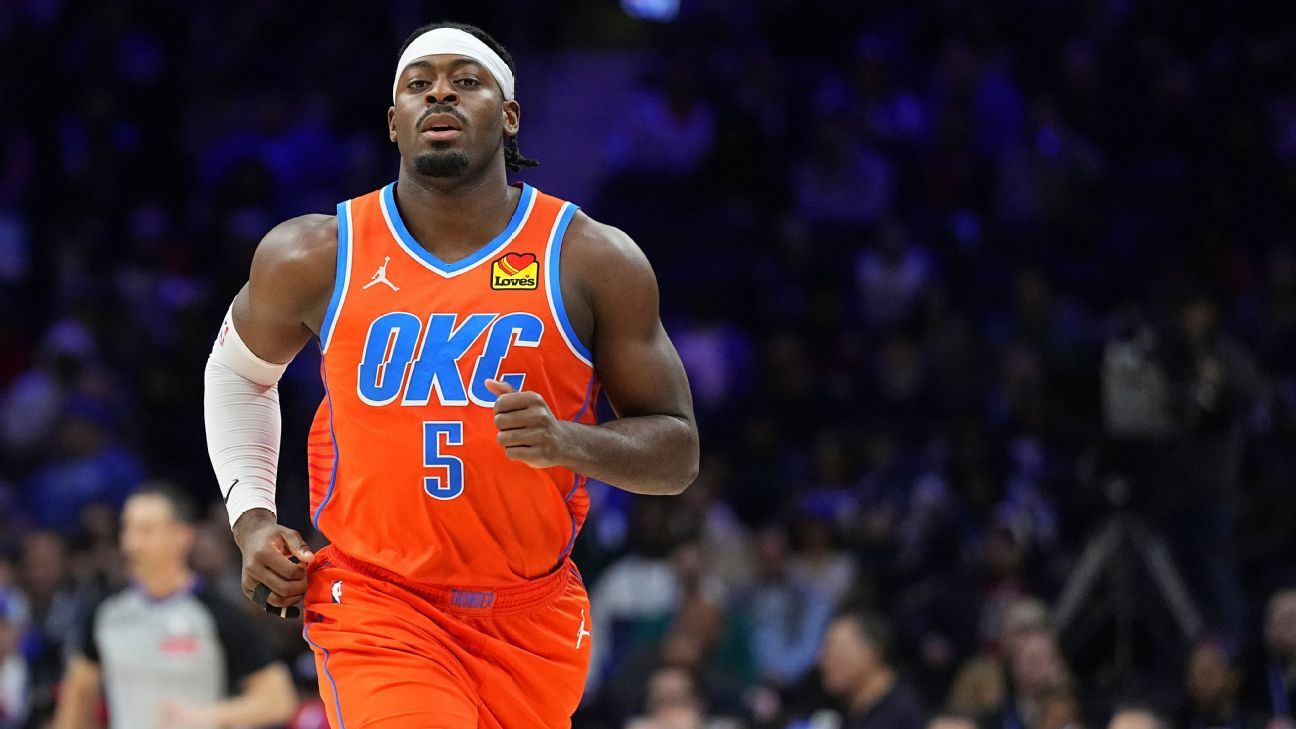
The Thunder executed a three-team trade on Sunday that moves All-Defensive wing Luguentz Dort to the Hawks, dispatches second-year lottery pick Zaccharie Risacher to the Mavericks, and lands Ryan Nembhard in Atlanta. In return, Oklahoma City collects three second-round picks—the seventh such asset they've accumulated this offseason—while creating a $17 million trade exception and shedding $200 million in salary.
The mechanics reveal Oklahoma City's unorthodox but disciplined approach to managing the second apron. Rather than simply decline Dort's $17.7 million team option (the traditional cost-cutting move), the Thunder picked it up, extracted draft assets in the process, and positioned themselves under the apron threshold. That's the inverse of how most teams operate: they're treating a full contract as a tradeable asset rather than dead money. It works because Atlanta, fresh off a down season, has the cap space and championship aspirations to absorb Dort's salary and lock him into a long-term deal—something Oklahoma City couldn't afford post-2025 title run.
For the Hawks, Dort represents a defensive anchor paired with Dyson Daniels and Nickeil Alexander-Walker across the wing positions. At 27 years old, he's entering the prime defensive window of most perimeter players, which matters more than his 8.3-point output last season (a career-low in an injury-plagued campaign). The real value to Atlanta is optionality: by absorbing Dort and moving Risacher, the Hawks clear $40-plus million in cap space for next summer, transforming from a tapped-out roster into one with maneuver room.
For betting purposes, the movement creates two distinct angles. First, Dort's prop lines will likely overcorrect downward in the short term—his 8.3-point average from last season will anchor books despite the fact that he's joining a less crowded offensive ecosystem in Atlanta than he had in Oklahoma City. The Thunder's 2025 championship squad had four offensive engines competing for usage; the Hawks have structural voids. Look for Dort's scoring total to be mispriced low for the first 10-15 games before the market recalibrates to Atlanta's new roster construction. Second, Hawks team totals in the 2026-27 season carry variance risk: adding Dort's elite perimeter defense without solving their halfcourt offense doesn't move the needle on wins until Atlanta uses that cap space next summer. Any over on Hawks win total projections before they complete their roster is a leverage bet on future moves, not current talent.