NBA
Harden's Option Decline Signals Long-Term Cavs Commitment—and a Playoff Recalibration Ahead
James Harden is turning down $42.3 million to negotiate a multiyear deal with Cleveland, betting on chemistry that took half a season to build and a postseason that exposed real limits.
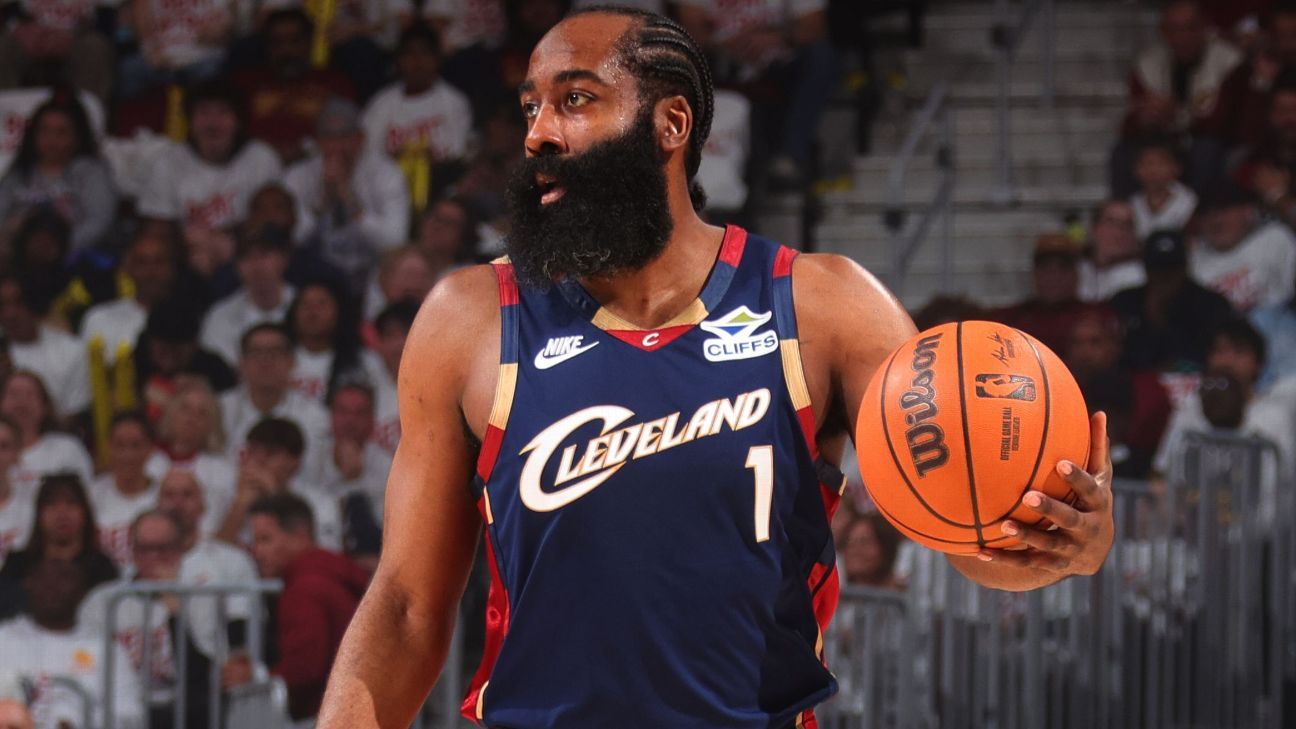
James Harden is declining his $42.3 million player option for the 2026-27 season and negotiating a new multiyear contract with the Cleveland Cavaliers, sources confirmed to ESPN on Monday. The move signals Harden's confidence in the Cavs' core and their confidence in him—but the subtext matters more than the headline. Harden arrived mid-season and helped lift Cleveland to the Eastern Conference Finals for the first time since 2018, a tangible win. Yet the Knicks swept the Cavs, and in those 18 playoff games, Harden's numbers didn't hold up under playoff pressure.
The regular-season split tells a cleaner story. In 26 games after the All-Star break, Harden shot 46% overall and 43.5% from three, averaging 20.5 points and 7.7 assists. That was close to All-Star form. But the postseason was a different animal: 41% from the field, 29.9% from three, and turnovers ballooning to 4.7 per game—his highest in any playoff run. He was adjusting to Donovan Mitchell and a new offense mid-flight, which is a legitimate excuse. But it's also a data point the market will price in.
The Cavs are betting that a full offseason, a full training camp, and 82 games to synchronize with Mitchell will smooth out the friction. At 36 years old entering his age-37 season, Harden is also betting on himself—declining guaranteed money in favor of a longer deal implies he believes his performance floor is higher than $42.3 million warrants. The franchise is counting on chemistry and reps to bridge the gap between his 43.5% three-point mark in the regular season and his 29.9% in the playoffs.
For bettors, this creates a micro-season narrative arc. Early season props on Harden's assists and three-point makes will likely overweight the postseason swoon; the market hasn't yet repriced for a full-season integration. His assists line (currently hovering near 6.5-7.0 after the Knicks sweep) will be vulnerable to the downside for the first 10-15 games as defenses continue to test the Mitchell-Harden fit in non-playoff intensity. By mid-November, when both players have found their rhythm, his assist volume should creep back toward the 7.5-8.0 range he showed in the regular season. Three-point makes will follow the same trajectory—early-season unders are safer than late-season unders, because the playoff context is still fresh in the betting market's mind. The regression to his mid-season form isn't a lock; it depends on whether the Cavs can avoid the defensive scheming that collapsed his efficiency in the playoffs. But the option decline signals that the franchise believes in the recalibration.