Harden's Cavs Pivot Reshapes Cleveland's Salary Architecture and Backcourt Timeline
By Justin Erickson ·
By declining his $42.3M option and negotiating a multiyear deal in Cleveland, Harden trades maximum earnings for organizational flexibility—and gives the Cavs a clear path to stay under the second apron while cementing their contention window.
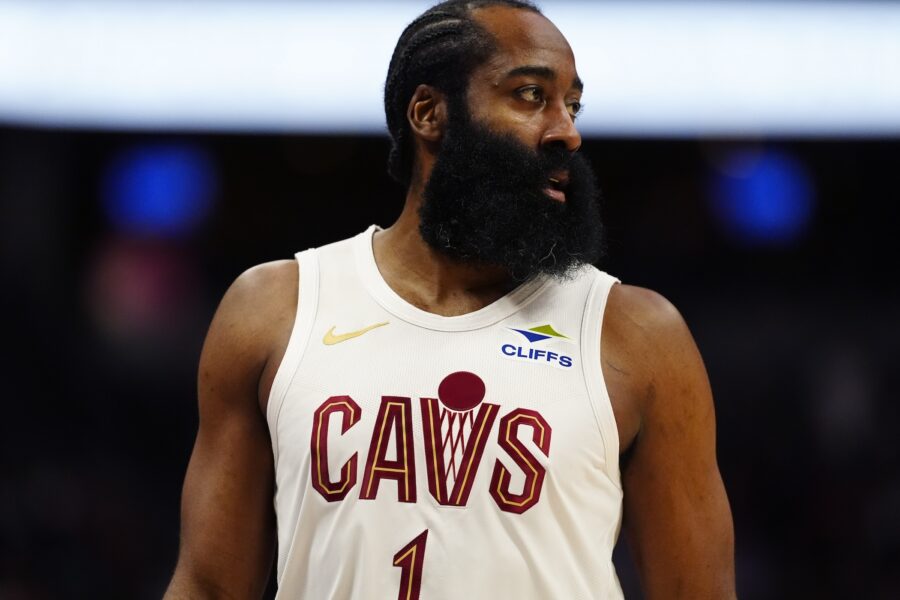
James Harden is walking away from $42.3 million to reset his deal with the Cleveland Cavaliers. The star guard will decline his player option for the 2026-27 season and enter negotiations on a multiyear contract, sources confirmed to ESPN's Shams Charania. The move is a calculated handshake between player and franchise: Harden gets long-term security and a role in a winning environment; the Cavs unlock salary-cap flexibility to operate beneath the second apron—the threshold that triggers the most punitive luxury-tax penalties in the new CBA.
The original option carried only $13.3 million in guaranteed money, which explains why both sides see mutual gain in restructuring. Harden is 36 years old and no longer chasing maximum contracts in free agency; he wants stability and a chance to compete in a deep playoff run. Cleveland, meanwhile, has built a legitimate contender around Donovan Mitchell and their young core, but operating under the second apron requires surgical precision. Every dollar matters. A multiyear deal allows the team to spread Harden's compensation across years and control his hit on payroll in high-tax seasons, buying Cleveland the salary flexibility to add supporting pieces and make mid-season moves without triggering prohibitive penalties.
For Harden, this is a career inflection. He remains a high-volume creator—his playmaking gravity still reshapes defenses—but the defensive liabilities that have trailed him for years are not disappearing. The Cavaliers are betting that his offensive production, particularly his ability to generate looks for shooters and collapse help defense around pick-and-roll, outweighs the trade-off on the other end. In a league where isolation efficiency and three-point shooting define guard play, Harden's gravity in the midrange and his willingness to move off the ball in spot-up scenarios give Cleveland a secondary ball handler who can operate in high-leverage spots.
The betting angle hinges on roster construction and usage. Harden will not dominate shot attempts the way he did in his MVP seasons; Mitchell is the primary offensive engine, and Harden will slot into a creator-facilitator role. His assist rate should climb toward 7.5-8.5 per game—well above his typical 6.2-7.0 range—because he will operate as a secondary offensive hub rather than a isolation-dominant scorer. Cleveland's spacing improves with a fifth player capable of knocking down threes at 35%+, which lowers defenses' ability to package coverage onto Mitchell. If Harden's minutes sit in the 32-35 range (reasonable for a 36-year-old in a deep playoff-contending team), his assists total contracts slightly from volume, but his efficiency per minute trends upward. Backcourt assist-pairing props—Mitchell 6.5+ and Harden 7.5+—become a viable lean in the second half of the season once the Cavs' offensive system calibrates. Early-season volatility will price these conservatively.
The multiyear structure also signals that Cleveland is committing to a two-to-three-year contention window with this core. Management is not building for the draft; they are mortgaging future salary flexibility for present-day depth. For prop bettors, that means Harden's offensive load stabilizes into a predictable range once the scheme solidifies—a departure from his traditional high-variance scoring nights. Lean his assists props over his scoring props as the season progresses.