NBA
Wembanyama's Playoff Efficiency Sets Finals Game 1 Floor; Three Angles to Target
Victor Wembanyama's 48% field-goal clip against Oklahoma City carries into San Antonio's Game 1 matchup against New York, creating a pricing inefficiency on his scoring prop that extends to two related Spurs advantages.
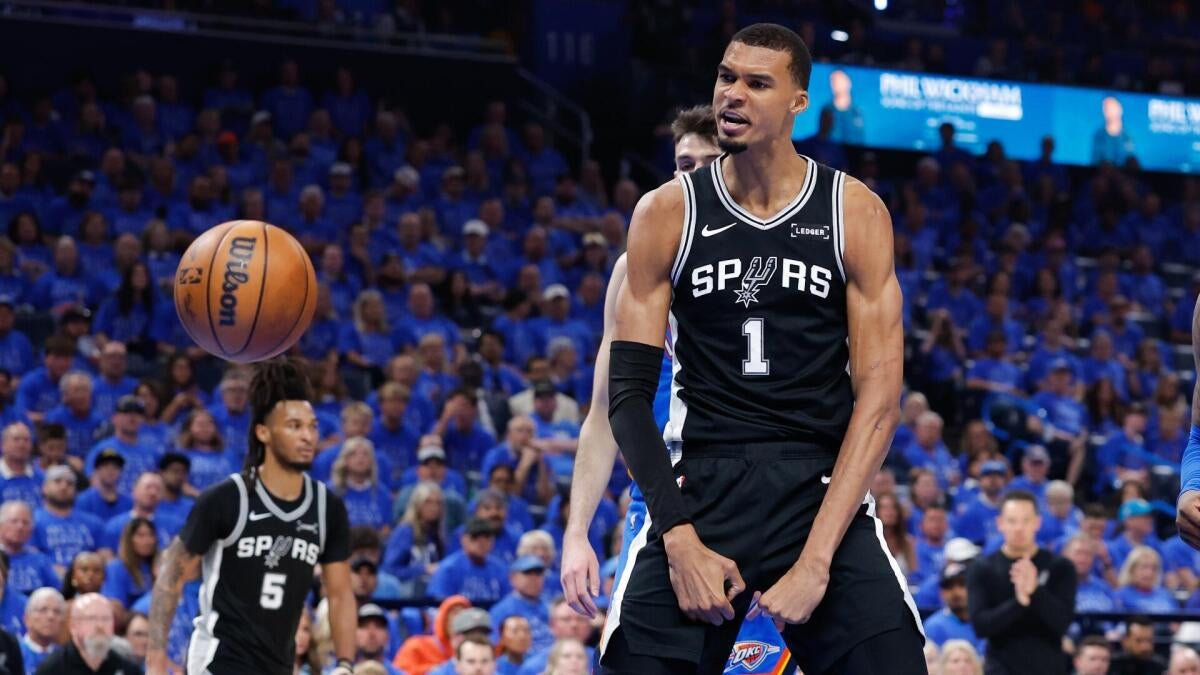
Game 1 of the 2026 NBA Finals tips Wednesday night in San Antonio with the Spurs hosting the Knicks. Victor Wembanyama, San Antonio's 7'4" centerpiece, averaged 27.3 points on 48.1% field-goal shooting and 40% from three against Oklahoma City in the conference finals—a level of efficiency that projects forward into this matchup. The SportsLine Projection Model estimates Wembanyama finishes with 29.4 points; the market opened his over/under at 27.5.
The efficiency gap matters because Wembanyama isn't a regression candidate here—he's a perimeter-shooting big who thrived in a playoff series where he faced switching and space-heavy defense. The Thunder, like most modern NBA teams, live in pick-and-roll territory and hunt mismatches on him. New York's defensive architecture won't fundamentally alter that dynamic. The Knicks' best option is OG Anunoby or center coverage in the paint, which either way opens driving and mid-range looks for Wembanyama rather than eliminating them. His 48% field-goal mark over 16 playoff games isn't a hot streak—it's his playoff baseline, supported by volume (he's taken 20+ shots in all but two playoff contests).
Two secondary plays thread directly from Wembanyama gravity. Julian Champagnie, the Spurs' reserve wing, should inherit catch-and-shoot volume as New York tightens interior coverage. The Knicks surrendered the third-highest catch-and-shoot frequency in the regular season (34.5%) and haven't tightened that in the playoffs (33%). Champagnie's over/under sits at 9.5 points; he closed the Thunder series with back-to-back double-digit outputs and benefits from a New York defensive flaw, not a hot hand.
Jalen Brunson's over 2.5 made threes operates from a different angle but shares a market inefficiency. In the season series meeting (Spurs 134, Knicks 132), Brunson went 5-for-12 from three despite the Knicks shooting 42% as a team. His 44.8% three-point rate across the 76ers series suggests he's a reliable volume shooter in this postseason run. The Spurs' perimeter defense isn't elite—they'll concede spacing opportunities, and Brunson getting two catch-and-shoot or step-back threes over 40+ minutes of play is a low bar. The line prices this as a coin flip; Brunson's role in New York's offense and his recent form both tip toward the over.
What binds these three angles: none relies on regression betting or single-game variance. Wembanyama's field-goal efficiency, Champagnie's catch-and-shoot landing spots, and Brunson's three-ball volume are all structural features of how each team wants to play. The market appears to have not fully priced the Spurs' spacing advantage and the Knicks' defensive tendency to pack paint against elite big men. Early Game 1 pricing reflects standard Finals props rather than the specific defensive mismatches on display.