NBA · lineup
Edwards Defiance Masks a Deeper Problem: Wolves Face Execution Crisis in Win-or-Go-Home Game 6
Anthony Edwards brushed off elimination talk after Minnesota's Game 5 loss to San Antonio, but the real issue—systematic game-plan breakdowns on both ends—won't be fixed by attitude alone.
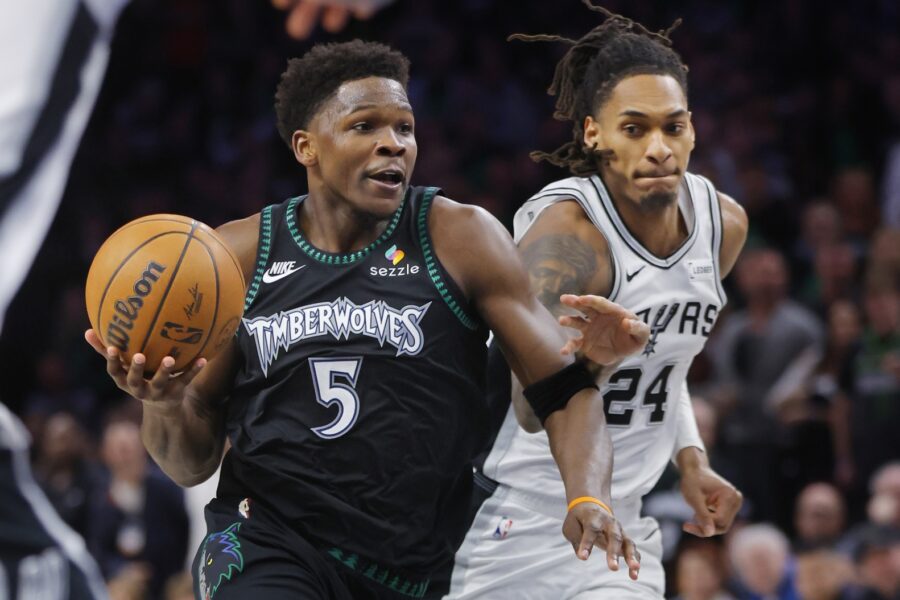
The Timberwolves trail 3-2 in their Western Conference semifinal against the Spurs, and Anthony Edwards made clear that panic is not in the locker room's vocabulary. "There's another basketball game. Come out, put your boots on and get ready to go to war," Edwards said after Tuesday's blowout loss. That confidence is necessary in a do-or-die Game 6, but it also obscures what the film actually showed: Minnesota didn't lose because of heart. They lost because they forgot what they were supposed to be doing.
Edwards himself articulated the real problem. San Antonio's defense forces constant decision-making—physical pressure on the perimeter, pick-and-roll reads that demand precision—and Minnesota has been leaking execution across the board. "Not knowing the game plan, executing on offense," Edwards said. "We know our coverage, what we're supposed to be doing when they're in pick-and-roll, and I think we're just not doing it enough." Translation: the Wolves possess the scheme intelligence to beat this Spurs team. They just haven't been running it. That's coachable. It's also maddening because it suggests the gap between execution and capability is the variable, not raw talent.
Jaden McDaniels' foul trouble compounds the issue. The All-Defensive wing played under 30 minutes in Game 5 after picking up five fouls—a pattern throughout the series that forces Chris Finch to either shrink his rotations or elevate Julius Randle and Rudy Gobert, both of whom have underperformed against San Antonio's switching defense. Edwards flagged McDaniels' availability as a prerequisite: "Everything starts with Jaden McDaniels, trying to keep him out of foul trouble. He's so important to the team." A lineup shuffle inserting Naz Reid for one of the struggling veterans is possible, but Finch's real lever is tightening discipline on the floor—fewer reaching fouls, smarter rotations, fewer dead-ball turnovers that feed San Antonio's transition game.
For prop purposes, this dynamic tilts heavily toward unders on Minnesota's scoring and assist totals in Game 6. The Spurs' defensive intensity doesn't change; what changes is whether the Wolves execute within their game plan or continue to freelance into turnovers and inefficient shot selection. Edwards has averaged 22.4 points on 38% shooting in the series—respectable volume but not explosive enough to mask team offensive chaos. If Game 6 looks like Game 5 (execution breakdowns, McDaniels limited minutes, secondary playmakers adrift), Minnesota's offensive rating will stay depressed. The under on their team total and under on role-player assist props (Randle, Reid, supporting guards) carries genuine edge because the market may still be pricing in a tighter, more composed Minnesota team than what's actually on the floor. The Wolves can improve dramatically—the schematic knowledge is there—but improvement requires discipline, not confidence.