NBA · transaction
Nembhard's Two-Way Ascent Signals Dallas's Bench Guard Architecture
The Mavericks exercised their option on Ryan Nembhard, cementing a rookie who clawed from undrafted to 60-game contributor and reshaping how Dallas deploys its backup playmaker minutes.
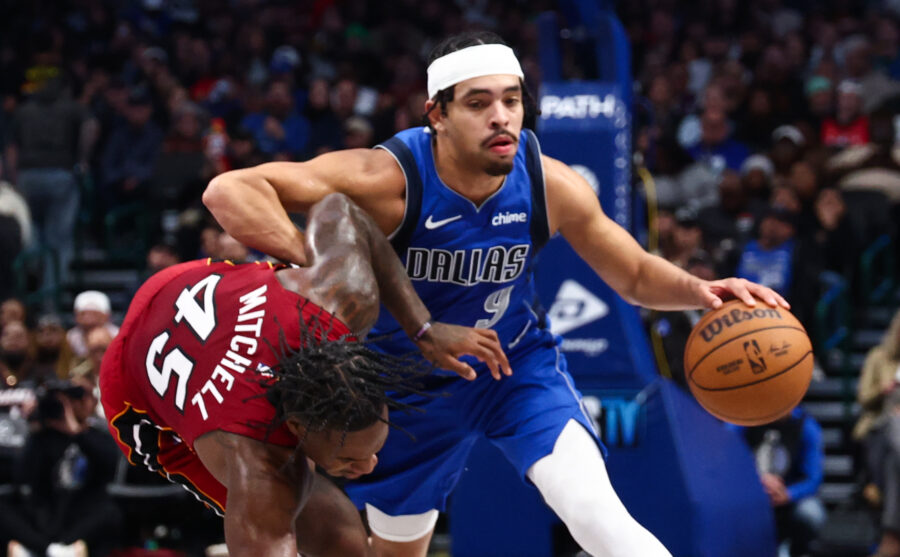
The Dallas Mavericks exercised their $2.15 million option on Ryan Nembhard for the 2026/27 season on Monday, a procedural move that nonetheless validates one of this year's steeper organizational bets. Nembhard, who arrived unsigned out of Gonzaga, appeared in 60 games as a rookie—27 of them starts—and posted 6.6 points and 5.3 assists in 19.5 minutes per night while shooting 41.5% overall and 35.6% from three. That efficiency mattered; it earned him a promotion from a two-way deal to the standard roster in February, and now Dallas is keeping him.
The throughline here is backcourt architecture. Kyrie Irving returns as the primary ball-handler, but Nembhard's combination of playmaking (9.8 assists per game as Gonzaga's senior) and movement shooting (35.6% from range) gives the Mavericks a secondary engine that doesn't require isolation volume to function. In 19.5 minutes, he didn't demand touches; he converted them. That profile—a sub-20-minute reserve who generates efficient offense without usage creep—is exactly what contenders build around when they're not chasing max-salary upgrades.
The real implication arrives in the summer-league and preseason lens. Nembhard will return from Team Canada's FIBA World Cup qualifying window (he's currently on the 16-man roster) to compete for the second-string point guard role and likely inherit minutes in the 15–22 range again. His baseline last season was 5.3 dimes in confined court time; that assist volume scales only if Irving's minutes decline or if Dallas trades him—which remains an open question. If Irving stays and maintains starter status, Nembhard's usage stays compressed, which historically does one thing to scoring and assists: it caps their ceiling while lowering variance. This is the profile of a backup who won't explode in any given game but won't collapse either.
For prop purposes, Nembhard's option pickup solidifies his role but doesn't expand it. Sportsbooks pricing his season totals will anchor to his per-game averages from 60 appearances: roughly 6.5 points and 5.3 assists per game played. The catch is the minutes denominator. If he stays in that 19–21 minute band, those per-game numbers are stable. If Dallas trades Irving or if Nembhard claims more of the bench rotation—a scenario his shooting and efficiency could support—his aggregate totals climb, but the market won't price that adjustment until it happens. Early-season lines treating him as a 19-minute reserve will undervalue any usage bump, though betting that bump requires conviction on the Irving trade, which remains speculative.
The safer angle: monitor Nembhard's assists total relative to his minutes allocation once summer league and preseason tip off. If he's playing 18–20 minutes and his assist line sits at 4.5 or below, that's conservative pricing. His conversion rate (5.3 dimes in 19.5 minutes is roughly 2.72 per hour) outpaces the market assumption baked into sub-5 totals. The edge vanishes if he drops to 16 minutes or if his playmaking role shrinks—both possible outcomes if Irving dominates the offense and Dallas adds another wing creator. But at current option-pickup construction, Nembhard is more than a fringe roster filler. He's a quantifiable backup whose shooting and assist rate have earned their way into the rotation.