NBA · transaction
NBA's Trent Probe Threatens Bucks' Roster Continuity and 2026-27 Cap Flexibility
The league's investigation into Milwaukee's Gary Trent Jr. contract could result in severe penalties—including voided deals and lost draft picks—if circumvention is proven, upending the team's core payroll calculus.
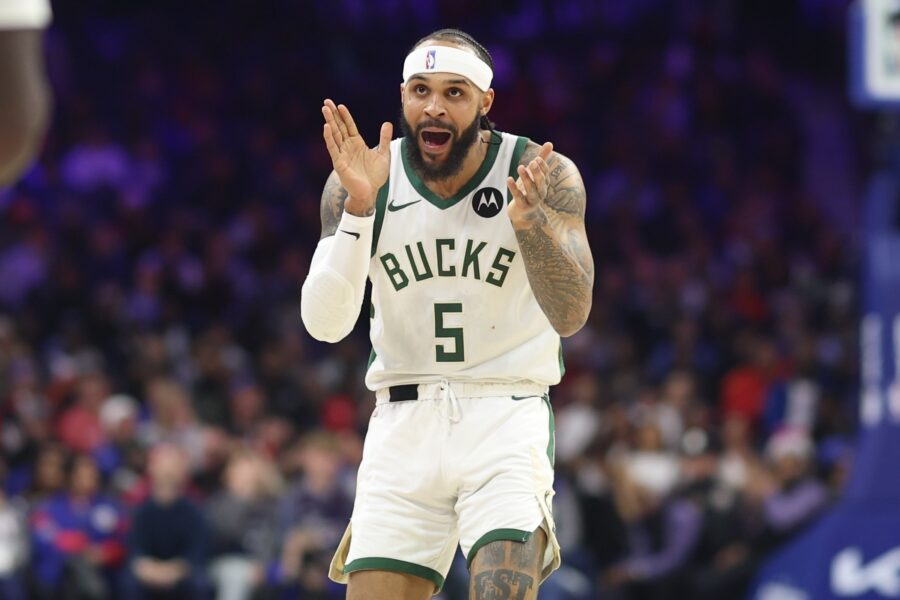
The NBA's formal investigation into the Milwaukee Bucks' four-year, $64 million deal with Gary Trent Jr. remains active, with both the team and Klutch Sports Group cooperating with independent counsel from the law firm Hecker Fink. The timing of the probe underscores the league's heightened scrutiny of off-season deals: the NBA moved quickly after rival executives flagged the agreement's execution on July 11, when cap space around the league had tightened considerably and roster spots had evaporated. That delay from Trent's July re-signing announcement proved material—the same structure struck in early July might have drawn criticism as a market misjudgment rather than a structured circumvention scheme.
The underlying pattern fueling suspicion is straightforward. Trent accepted the veteran minimum in 2024 and a modest $3.7 million raise via Non-Bird rights in 2025 after a productive first season in Milwaukee. This summer, with the Bucks holding Early Bird rights, he landed a fully guaranteed $64 million contract—a valuation roughly four times what the market might have offered a wing averaging 8.1 points on 38.7% shooting after a down 2025-26 campaign. The Bucks have maintained the deal reflects their true belief in Trent's $15 million annual market value, but rival front offices told The Athletic that the sequencing—discounted early deals followed by a payday once Milwaukee gained contractual leverage—bears the hallmark of a prearranged agreement. That structure mirrors the 1999 Joe Smith scandal with the Timberwolves, where below-market one-year contracts preceded a lucrative extension once Bird rights transferred to the franchise.
The Clippers precedent looms large. The league suspended top executives including owner Steve Ballmer, fined Los Angeles $30 million, and stripped five first-round picks for arranging off-the-books endorsement deals to prop up Kawhi Leonard's compensation. While the Trent case differs mechanically—no third-party arrangements alleged—the NBA's punitive appetite is evident. If Hecker Fink uncovers documentary or testimonial evidence of a side agreement between Milwaukee and Trent, the Bucks face contract voiding and similar draft forfeiture. The Joe Smith precedent suggests five first-round picks as the baseline penalty, though two were returned on appeal.
For betting purposes, the immediate exposure tracks Milwaukee's 2026-27 payroll construction and roster optionality. If Trent's deal stands, the Bucks' tax bill and cap inflexibility remain locked in; if voided, Milwaukee suddenly has $16 million in annual salary room and can reshape the wings without luxury-tax recapture. This introduces binary outcome risk into any Bucks team-total or spread analysis over the next 2-3 weeks, until a preliminary finding emerges. The investigation timeline is unannounced, but similar probes (the Clippers' Leonard investigation concluded earlier this month after a year-long process) typically take months to resolve. Early-season Bucks totals and player props carry embedded uncertainty around roster composition; sharper angles emerge once the investigation reaches a material checkpoint or conclusion. Trent's personal scoring and playing-time projections are also clouded until the league signals direction.