Trent Jr. Takes 4-Year Deal in Milwaukee, Signaling Bucks' Backcourt Gamble
By Erik Schwartz ·
Gary Trent Jr.'s $64M contract extension anchors a crowded Milwaukee wing rotation that now includes Tyler Herro, Caris LeVert, and a high-draft pick—a depth play that will compress individual scoring volume across the board.
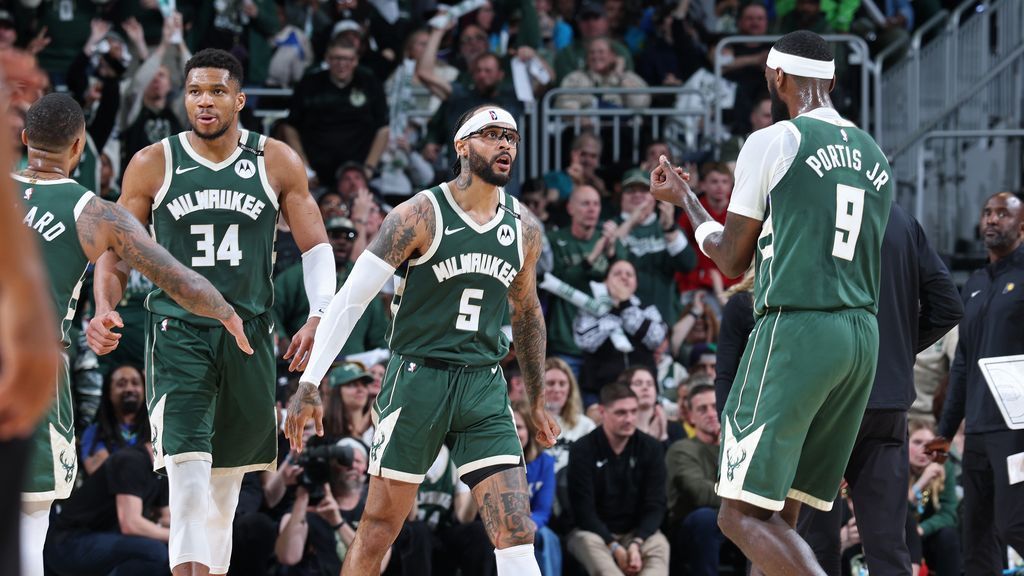
Gary Trent Jr. agreed to a four-year, $64 million deal to remain with the Milwaukee Bucks on Saturday, cementing his role as a cornerstone piece in a franchise that has aggressively reshaped its roster this offseason. The contract, which opens at $15.2 million in year one, represents significant validation for a player who signed for the league minimum in summer 2024 and parlayed two seasons of efficient, off-ball wing play into a payday—a rarity in the modern market.
But the real story isn't Trent's security; it's the architectural problem his extension highlights. Milwaukee's backcourt is now absurdly crowded. The Bucks traded for Tyler Herro mid-season to serve as a high-usage scorer. They retained Caris LeVert as a secondary creator. They signed Ryan Rollins and Kevin Porter Jr. to multi-year deals. And they drafted Brayden Burries at No. 10 overall in the recent draft. Trent's two-year arc in Milwaukee—averaging 9.7 points on 41% overall shooting, 39% from deep—has been defined by off-ball efficiency and role constraint. He's a catch-and-shoot wing who thrives when fed by Damian Lillard's playmaking, not a high-volume scorer.
The Bucks' willingness to lock Trent in at $15.2M in year one suggests the organization views him as a cornerstone wing defender and spacing asset, not a creator or isolation scorer. His shooting metrics don't lie: his role requires efficient, volume-neutral touches. But roster density at guard and wing creates a zero-sum problem. Every dollar, every roster spot, every possession allocated to Herro, LeVert, or Burries is a dollar, spot, or touch pulled from Trent's usage rate. For bettors, this matters enormously.
Trent's points prop will face downward pressure not because of individual decline, but because of offensive-pie fragmentation. His 9.7 PPG average masks the reality that he's entering a season where the Bucks' backcourt depth chart will force bench minutes more frequently and limit starting-unit touches. Books will price his points line based on historical per-game average—likely around 9.5 to 10.5—but that number assumes consistent usage. The contract extension is a two-year comfort signal for the player; for prop bettors, it's a signal that Milwaukee sees Trent as a depth piece, not a core ball-handler. Fade season-long over predictions on Trent's scoring; the deal says Milwaukee built a roster where he scores less, not more.