NBA
Brunson's Finals Defense Holds Up Under Film Review—But San Antonio's Next Test Will Be Intentional
A viral tracking stat masked the real story: Brunson's pick-and-roll discipline blunted the Spurs' attack in Game 1, but they haven't hunted him directly yet.
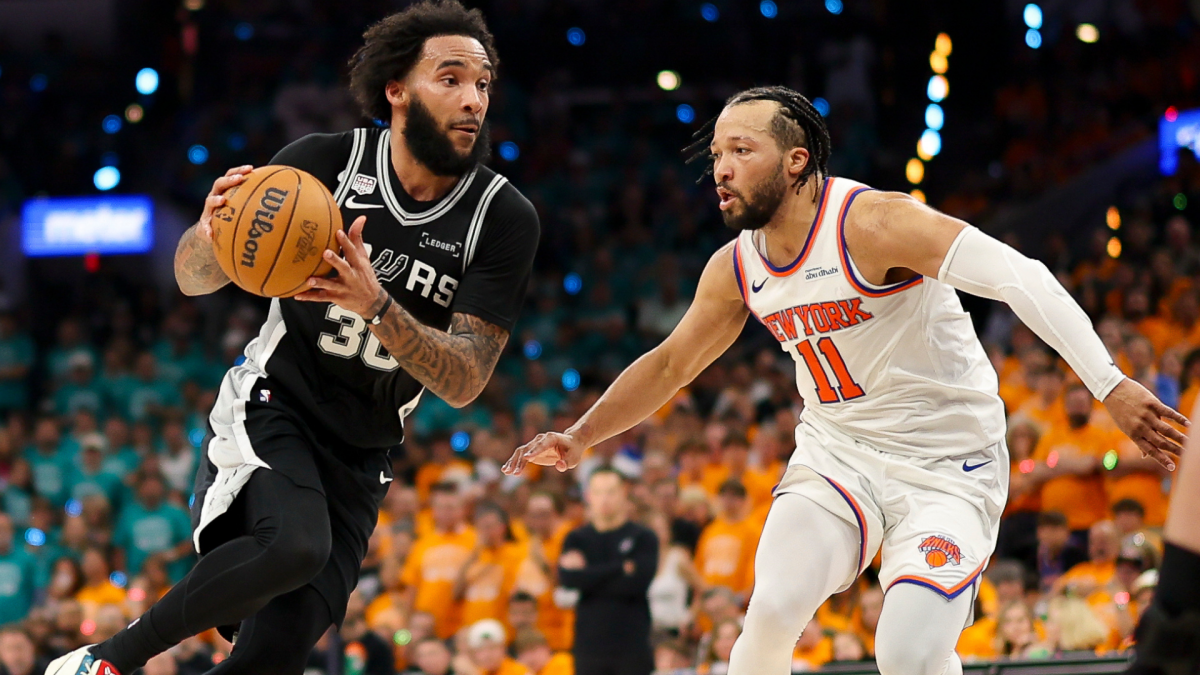
The Knicks' 105-95 Game 1 victory over the Spurs produced a social-media grenade: Brunson, the Knicks' 30-point lead man, was the primary defender on 1-of-14 Spurs shots. Ninety-three percent defensive efficiency on that sample should vault him into Finals legend. The stat is also nearly worthless. NBA matchup tracking credits the nearest defender when a shot misses, regardless of whether that defender actually contested the shot or just happened to be in the vicinity. Stephon Castle's uncontested airball and an offensive rebound attempt by Castle himself both wound up as Brunson defensive stops in the books. Film tells a different story—one that's more useful and more predictive for Game 2.
Brunson's actual contribution wasn't lockdown one-on-one perimeter defense; it was tactical pick-and-roll discipline that disrupted San Antonio's offensive rhythm. When De'Aaron Fox or the rare Spurs ball-handler threatened to pull Brunson into a screen, he showed aggressively enough to stall the play's downward momentum, buying time for his teammates to recover. On a Castle pick-and-roll against Josh Hart, Brunson jumped so early that Castle was forced backward—a false step that gave Hart space to fight over the screen and reset. Later, when Fox probed toward a Brunson screen, Brunson's hard show forced Fox to kick back out, converting a potential advantage into a dead possession. These reads require instinct and fitness, not NBA defensive stopper credentials. Brunson earned the credit here, not the tracking stat.
What's remarkable is how little the Spurs actually tested him head-to-head. According to Synergy, San Antonio isolated onto Brunson exactly once in Game 1—a Harper transition matchup that happened by circumstance, not design. The Spurs' offensive identity runs through ball movement and pace, not hunting individual weaknesses. They're built to drive and kick before New York's defense sets, not to slow-cook isolated scoring. Even when the Cavs forced Brunson into James Harden ball screens during the Eastern Conference Finals, the matchup produced mixed results. San Antonio lacks a dribble creator of Harden's caliber; Fox is the closest thing, and he's more facilitator than isolation threat.
But Game 2 changes the calculus. Now that the Knicks have won at home, the pressure on San Antonio means tighter games and longer possessions—exactly the environment where hunting Brunson's defensive limitations becomes tactically sound. Dylan Harper proved in Game 1 that Brunson is vulnerable on the perimeter when an attacker commits to the drive. Harper overpowered him in transition; with intent, Spurs guards can manufacture similar looks. For bettors, this creates a directional challenge: Brunson's all-action Game 1 (30 points, 13 in the fourth quarter) relied partly on the Spurs' pace-first, pick-and-roll-defensive scheme. If San Antonio slows the game and forces individual matchups, Brunson's offensive load may spike as a compensatory responsibility while his playmaking efficiency flattens. The 30-point performance was environment-dependent. Expect Game 2 Brunson props to adjust upward in scoring volume but downward in assist efficiency if San Antonio runs isolation looks intentionally. The market will lean on Game 1's offensive dominance; the film suggests a tighter, more defensive Finals is coming.