NBA
Hart's All-Around Dominance Rewrites Finals Defensive Script
Josh Hart's 15-rebound, six-assist, four-steal night without scoring volume reshapes how the Knicks can attack San Antonio's perimeter—and what to expect from their role-player props going forward.
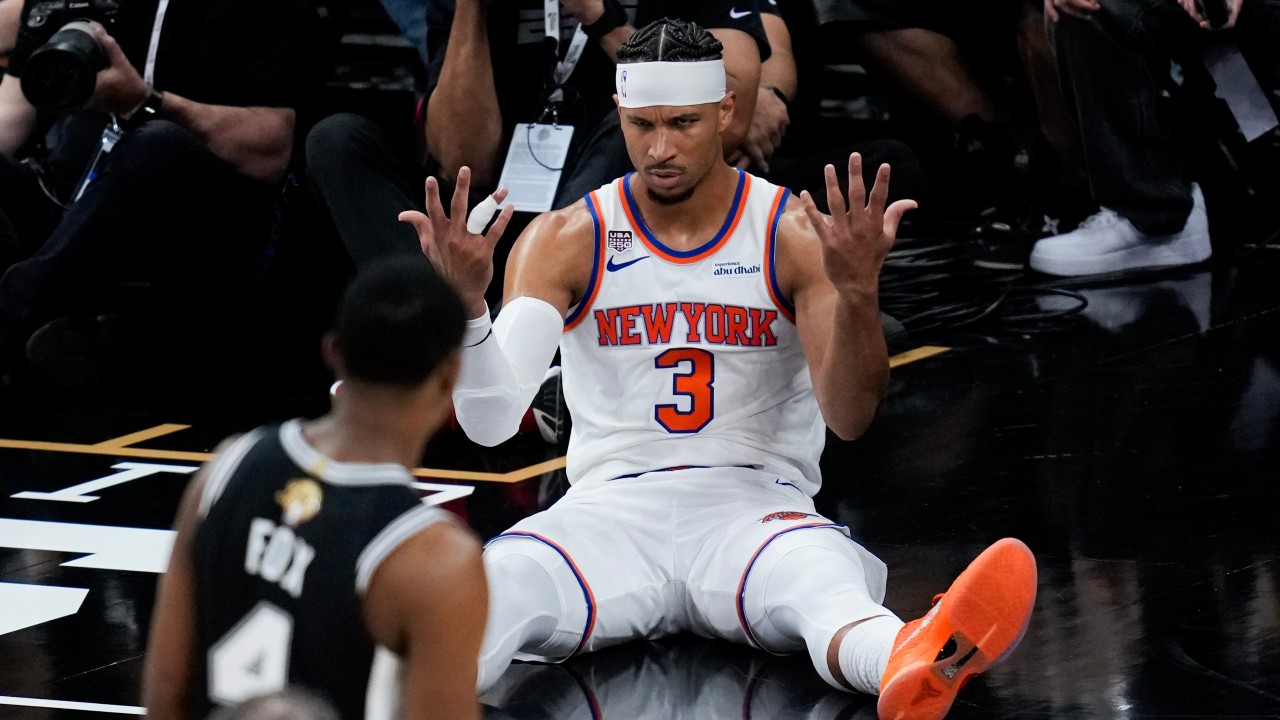
The Knicks stole Game 1 of the NBA Finals on the back of a performance that will never show up as 30 points or 10 assists. Josh Hart's stat line—3 points on 1-for-5 shooting, but 15 rebounds, 6 assists, 4 steals, and 1 block in 27 minutes—became the template for how New York suffocates San Antonio's spacing once its defensive intensity ramps in the second half. Jalen Brunson led the way with 30 points and Karl-Anthony Towns added 18 points and 12 rebounds, but Hart's +22 differential (highest on the floor by eight points) was the structural anchor that turned a 55-49 halftime deficit into a 105-95 finish.
The first half belonged to San Antonio. The Spurs shot 38 percent from three and leaned into their offensive pace, helped substantially by the fact that Hart picked up three early fouls and logged only 6.5 minutes in the opening quarter and 37 seconds in the second. Without him, New York's perimeter defense fractured. Julian Champagnie went 5-for-6 from distance in the first 24 minutes and rookie Dylan Harper, at 20 years old, became the youngest Finals player ever to score 10 points, doing it in his first six minutes. The math was simple: Hart on bench, Spurs spacers thrive. Hart on floor, Spurs offense collapses.
Once Hart returned in earnest in the third quarter, the Spurs' offensive shape disintegrated. Champagnie bricked all five second-half three-point attempts after his torrid first-half start. Harper scored just 4 points on 2-for-5 shooting after halftime. The Knicks outscored San Antonio 29-19 in the fourth quarter alone, with Hart recording three steals in that frame—including the final one that led to Brunson's dagger 15-footer with 38 seconds left. Hart's defensive pressure wasn't generating empty box-score wins; it was directly shortening San Antonio's rotation, forcing isolation-heavy offense, and killing the Spurs' best offensive weapon: three-point volume.
For prop bettors, Hart's Game 1 performance establishes a reliable path: his steal and rebound totals should move higher as the series deepens, because San Antonio will keep hunting three-point opportunities (they're built around it), and Hart will remain the primary rim protector and transition rebounder who prevents second chances. A Hart 4+ steals prop at even money, or a 12+ rebound line after he had to ease in with foul trouble, becomes valuable in Games 2-6 because the Spurs' personnel doesn't change—only their execution will. Game 2 is scheduled for Friday in San Antonio, but the underlying edge is stable: if the Spurs attempt 35+ threes (their season average is 33.4), Hart's steal and defensive rebound volume follows a predictable arc.