NBA
Dylan Harper's Bench Days Are Over: Why the Spurs Star Is Priced as a Reserve in Year 2
Harper's rookie postseason was historically dominant enough to reset market expectations, but his starting role and scoring volume are still undervalued by Vegas.
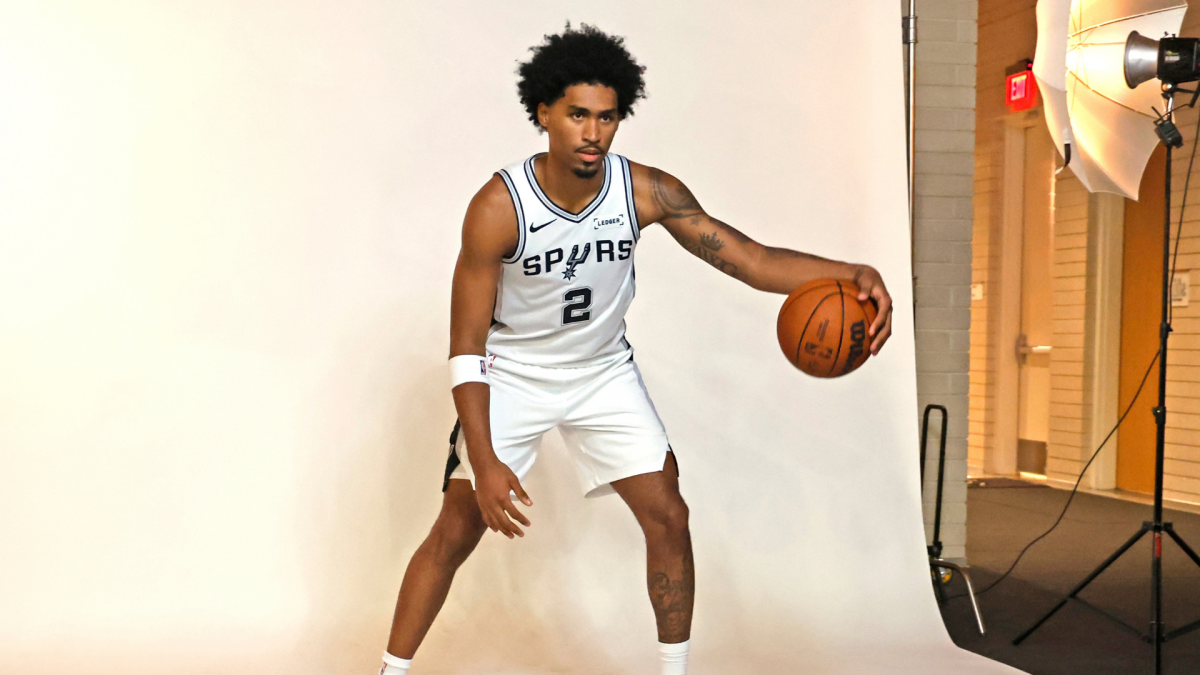
Dylan Harper's declaration that he won't come off the bench is not bravado—it's a statement of fact backed by a 2026 playoff run that rewrote what's possible for a 20-year-old in a Finals series. When Harper finally got his first career playoff start in Game 1 of the conference finals against Oklahoma City, he posted 24 points, 11 rebounds, seven steals and six assists over 47 minutes in a double-overtime victory, a performance that signaled the Spurs had found their opening-round closer. But it was the Finals against the Knicks where Harper transcended the backup-to-starter narrative entirely: 18 PPG on 57% true shooting, the second-highest per-game average in history by a rookie in the Finals, with 56 points across Games 4 and 5 alone. In stretches of those games, he was the best player on a floor that included Jalen Brunson and Victor Wembanyama.
The mechanicals of Harper's game explain why his bench role last season was always temporary. He finishes through contact with the craft and strength of a veteran power forward, nearly impossible to keep out of the paint on drives. The mid-range pull-up is refined; the 3-point shot is live. On defense, he moves like a defensive anchor, not a 20-year-old with length—he defends with deliberation and physicality that belies his age. The Spurs used him off the bench early because De'Aaron Fox was the starter, but the playoff data made it clear that Harper's creation and scoring efficiency demanded closing-minute and high-leverage opportunity. San Antonio had no choice but to pivot.
Entering the 2026-27 season, Harper will inherit a full starting role, and the market has been slow to recalibrate his volume props accordingly. His rookie playoff tape—51 points and 22 rebounds on 19-of-29 shooting over the final three games of the second round, 30 points and 13 rebounds on 11-of-17 in Games 6-7 against OKC—establishes a pattern of elite efficiency under pressure. The Spurs will not return him to a bench role. This is not a prediction; it's a structural outcome. His scoring will increase because his minutes allocation and usage rate will increase. Books have priced his regular-season scoring line as if he remains a reserve. The edge exists because the playoff evidence has already settled the question of his role, but the market is still pricing uncertainty.
For prop players, the mechanism is straightforward: Harper's points line should reflect a starting volume spike (roughly 28-35 minutes per game vs. the 20-25 he averaged as a reserve in Year 1) combined with historical playoff efficiency rates that should persist into a full-time starting role. His true shooting mark in the Finals (57%) exceeds his rookie regular season by a measurable margin, suggesting his scoring line—wherever it's set for 2026-27—is vulnerable to the upside. The Spurs' decision to elevate him is not based on hope; it's based on a Finals run that lasted 13 games and proved he could dominate on the league's biggest stage. That evidence doesn't fade because the regular season began.
The betting implication is direct: fade unders on Harper's season scoring average if it's set as though he remains a sixth-man candidate. His bench days are not behind him in a narrative sense—they're behind him in an organizational resource-allocation sense. The Spurs have already made the decision. Harper's own conviction about his role alignment with his production is the last confirmation you need.
NBA Intelligence — Basketball intelligence beyond the box score. Open NBA Intelligence →