Thunder's Bench Depth Becomes Series Liability as OKC Chases 3-1 Lead Without Mitchell
By Erik Schwartz ·
Oklahoma City's Game 3 blowout relied on historic bench scoring, but injuries to Mitchell and Williams expose depth limits heading into a clincher against San Antonio.
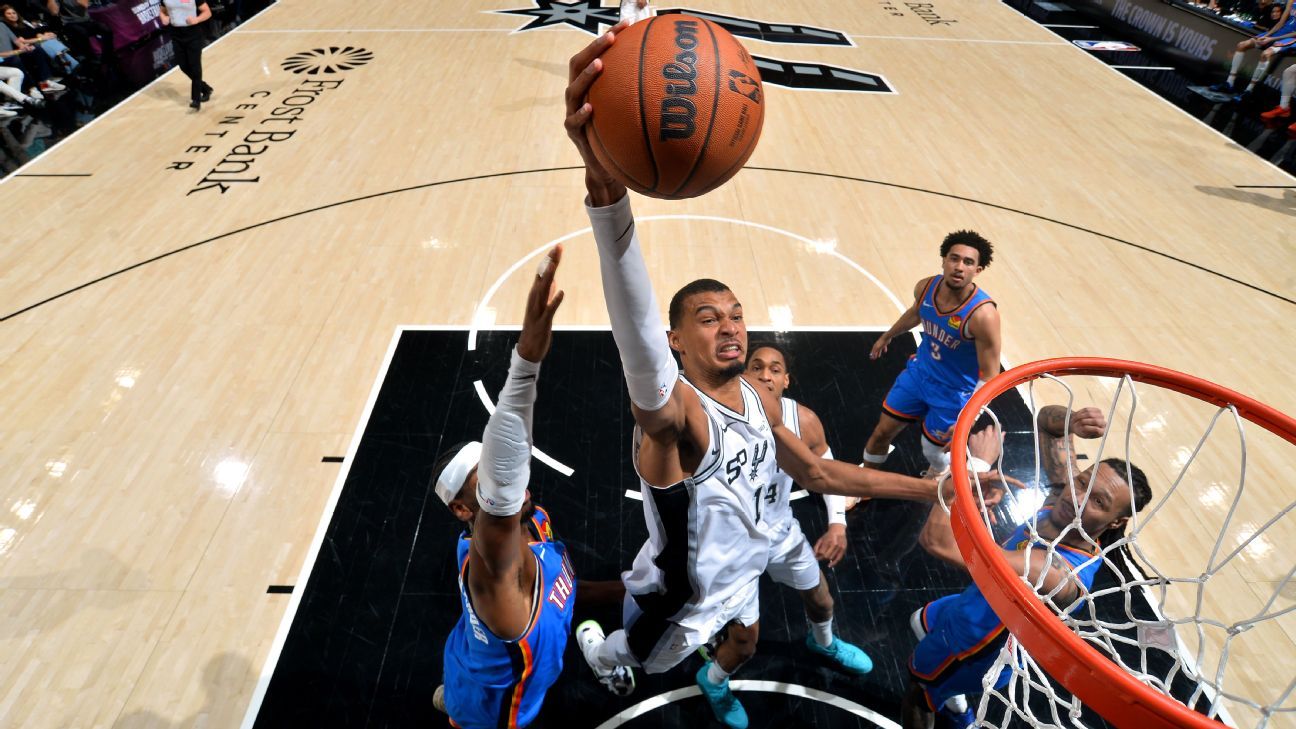
The Oklahoma City Thunder enter Game 4 of the Western Conference finals Sunday with a chance to advance within one win of the NBA Finals, but the path narrows: guard Ajay Mitchell is ruled out with a right soleus strain, and Jalen Williams remains questionable after missing Game 3 with a hamstring injury. The Spurs, meanwhile, field a clean injury report with De'Aaron Fox and Dylan Harper both available, though neither made an impact in San Antonio's Game 3 loss.
Context matters here. Oklahoma City's 123-108 victory in Game 3 was built on a 76-point bench performance—the highest bench output in a conference finals or NBA Finals game since tracking began in 1971. That explosion masked a critical vulnerability: when the Thunder's second unit carries offensive load, it telegraphs that primary scorers aren't generating clean looks. The Spurs' defense has shown it can bend without breaking in stretches, but San Antonio's real problem runs deeper. Victor Wembanyama's on-off differential tells the story: the Spurs are plus-21 in 125 minutes with him on court, minus-38 in just 29 minutes with him off. That's the worst bench-margin swing of any player absence across both teams—a structural liability San Antonio can't afford in a closeout situation.
For Oklahoma City, the Mitchell-Williams tandem absence creates a cascading effect. Both are primary ball handlers who relieve Shai Gilgeous-Alexander of creation duty; without them, SGA's assist workload spikes, and his scoring efficiency typically follows declining marginal returns as defenses tighten around him. Game 3's bench-heavy victory won't repeat if the Spurs narrow their focus defensively. San Antonio knows it must protect the paint when Wembanyama checks out—he's a 7'4" frame-raiser—and that adjustment alone should elevate OKC's interior advantage.
The prop angle crystallizes around Wembanyama's minutes and the Spurs' bench depth. San Antonio's coaching staff will be forced to extend rotation minutes to backup bigs, which historically weakens their defensive anchor and invites more pick-and-roll hunting from Gilgeous-Alexander. If Wembanyama plays north of 38 minutes (likely, given the stakes and his plus-21 on-off), his own scoring and rebounding volume should tick upward, but his teammates' efficiency will decline proportionally when he rests. Conversely, OKC's bench, despite the Game 3 explosion, will face tighter Spurs schemes if San Antonio commits to paint discipline.
The market has already priced in OKC's injury concerns—Mitchell was a starter-level contributor before the injury—but has likely underweighted how much San Antonio's bench instability compounds their deficit. A 3-1 series lead wins 95% of the time historically, but the Spurs' Wembanyama-dependent structure makes them outliers. Monitor OKC's second-unit minutes total; if it dips below 40 minutes due to cautious rotation, the bench prop (OKC bench points over 52.5 or similar thresholds established in Games 1-3) becomes a fade. San Antonio, desperate and playing at home, will load minutes on role players who can't defend on switches—a direct path to another bench-heavy Thunder game if SGA's scoring efficiency holds.