NBA
Mitchell's Game 6 Curse Deepens: Thompson's Defensive Blueprint Exposes Cavs Star's Inconsistency
Donovan Mitchell lost his sixth consecutive Game 6 as Ausar Thompson's suffocating perimeter defense held him to 18 points on brutal shooting efficiency, signaling a reliability problem that extends beyond single-game variance.
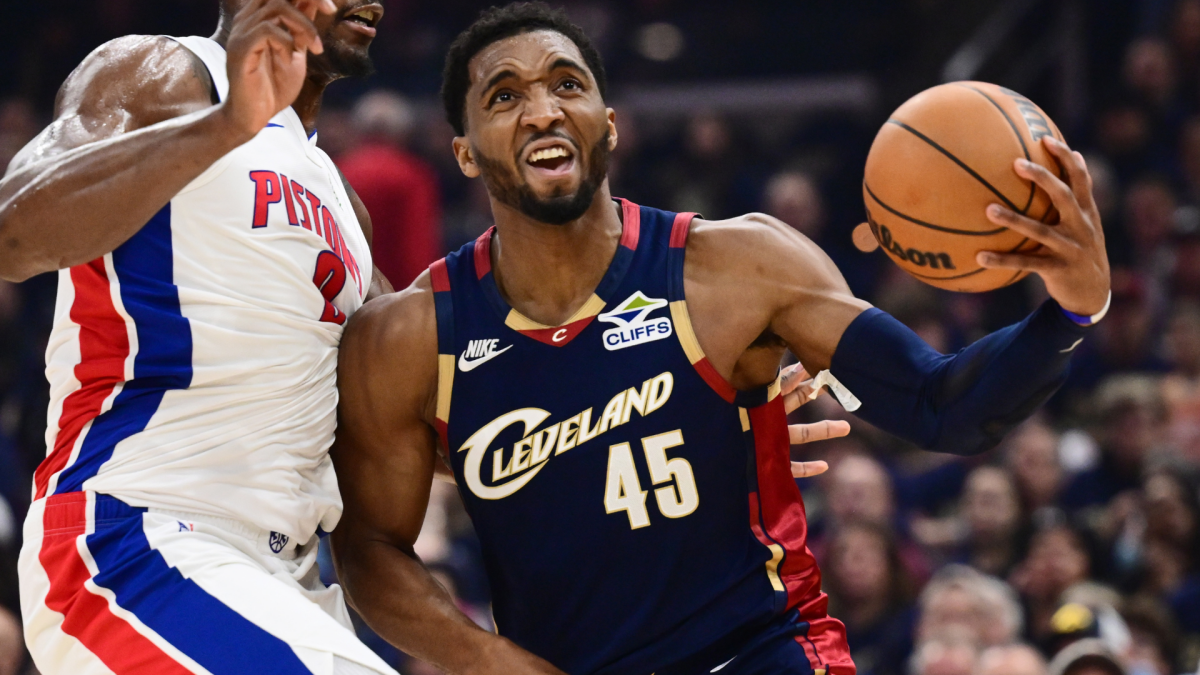
The Cavaliers' 115-94 Game 6 loss to Detroit wasn't a single breakdown—it was Mitchell's worst outing of a wildly inconsistent series, and it arrived at precisely the moment Cleveland needed him most. Mitchell shot 6 of 20 from the field with a -25 plus-minus in 37 minutes, marking the third time in 13 playoff games this year he's been held under 20 points. The broader context is damning: Mitchell has now dropped six consecutive Game 6s dating to the 2020 bubble, including four close-out opportunities he couldn't capitalize on.
Ausar Thompson deserves the lion's share of credit for this performance, but the defensive principle matters more than the individual matchup. Thompson's length and physicality—compounded by Detroit's physical brand of playoff defense—has systematically disrupted Mitchell's rhythm across the series. Tracking data reveals Thompson held Mitchell to just 4 of 19 shooting (21%) across 117 possessions in Games 1-5, with Mitchell converting only 1 of 11 from three-point range in those stretches. The gap between Mitchell's Game 4 eruption (43 points, 65% TS) and his final two games (combined 39 points on 43% shooting) isn't variance—it's evidence of a player whose production swings violently based on defensive pressure and emotional momentum.
Mitchell's series line of 28.5 PPG masks the volatility underneath: 23 points, 31 points, 35 points, 43 points, 21 points, 18 points. That's not consistency at scale. It's a player capable of explosive nights but vulnerable to defensive schemes that force him into difficult looks and contested rhythm shots. The Thompson tape—forcing Mitchell into offensive fouls just trying to catch passes, making him work for every possession—represents a defensive template that opposing scouts will weaponize moving forward, especially in high-leverage moments where Mitchell's shot selection tightens and his shot-making percentages crater.
For bettors, the prop implication cuts two ways depending on opponent quality. Against Detroit's physical, switching-heavy defense, Mitchell's under on scoring totals in Game 7 carries legitimate edge—not because he's "regressing," but because the Pistons have demonstrated a repeatable mechanism for suppressing his volume and efficiency. His last two games saw him average just 19.5 PPG on 35% shooting after averaging 30+ PPG in the first four games. The shift isn't random noise; it's the defensive pressure compounding his Game 6 historical struggles into a measurable pattern within a single series. If his Game 7 scoring line is priced assuming his 28.5-game average, the under becomes undervalued. Conversely, in future matchups against defenses lacking Thompson's length or Detroit's physical blueprint, Mitchell's volatility makes single-game scoring props inherently risky—the explosion to 40+ remains possible, but so does another 18-point dud. The takeaway: fade Mitchell scoring overs in high-leverage games against switching, length-oriented defenses; respect the variance against softer perimeter schemes.