NBA · transaction
Mitchell's $273M Extension Locks Cleveland's Core—And Changes the Cavs' Leverage Math
By committing long-term to Donovan Mitchell, the Cavaliers have eliminated their biggest free-agent wildcard and reset their championship window—but the move also signals urgency that could affect their prop profiles heading into next season.
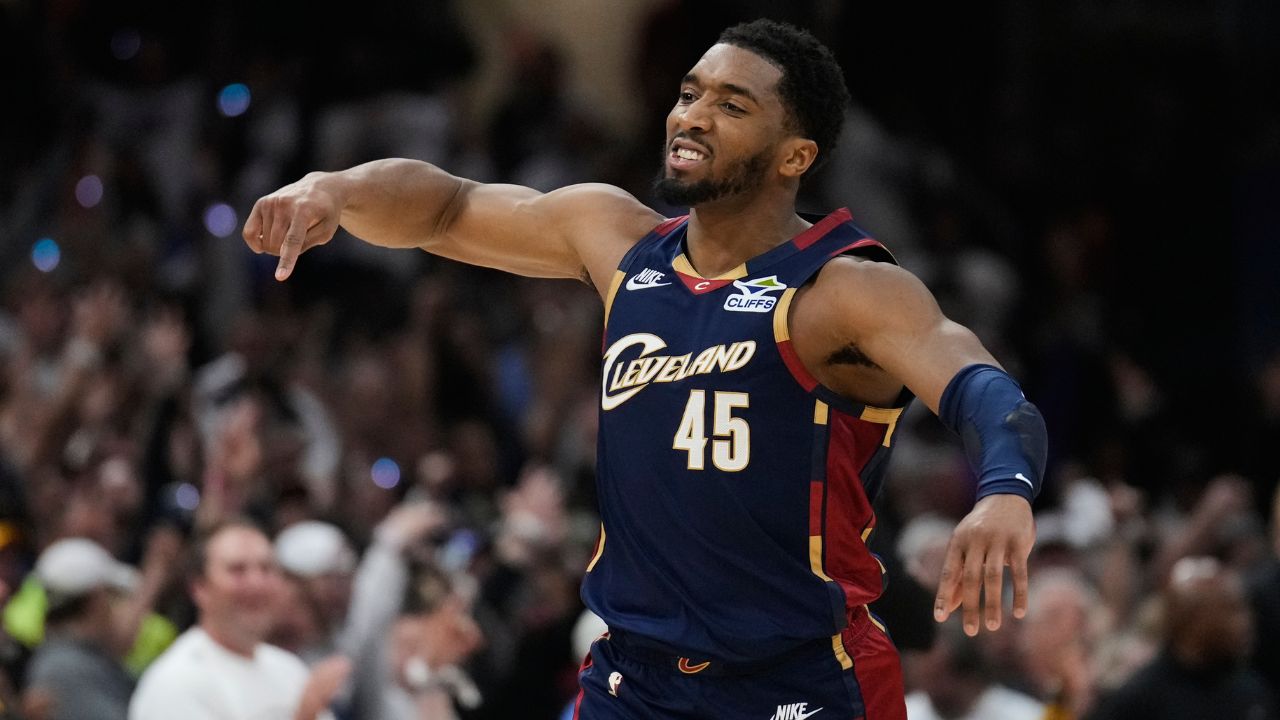
Donovan Mitchell inked a four-year, $273 million extension with the Cleveland Cavaliers on Thursday, just hours after the team became eligible to offer it. The 29-year-old guard turned down the opportunity to chase a five-year supermax ($350 million) next summer, opting instead for immediate certainty and a franchise statement: Cleveland is built to win now. It's the largest move on the Cavaliers' offseason board, and it reshapes how we should think about their 2026-27 roster construction and win-probability outlook.
Mitchell's acceptance represents more than financial security—it's organizational commitment. He led Cleveland to their first conference final in eight seasons, averaging 27.9 points and 5.7 assists during the regular season while the team posted a legitimate Eastern Conference contender profile. By inking early, he removed the leverage that typically follows a star guard into free agency. The Cavaliers, in turn, eliminated the existential risk that Mitchell could test the market, leaving them to chase LeBron James and James Harden with an incomplete roster. Koby Altman's public framing—"securing Donovan long-term reflects our shared vision"—wasn't flowery; it was necessity talking. A team doesn't lock in its second-best player unless it's serious about the next three-year window.
The extension also carries a full trade kicker, meaning Mitchell becomes increasingly immobile as the deal progresses. That stability matters for Cleveland's internal cap maneuvering and for how opposing defenses will gameplan the Cavaliers. When a star is locked down, the defense knows exactly what it's facing: Mitchell as the primary creator and scorer, James Harden (if he re-signs) as the secondary playmaker, and whatever LeBron James decides to contribute. There's no scenario where Mitchell is traded mid-extension, so Cleveland's supporting cast decisions—losing Dean Wade and Larry Nance Jr., retaining Thomas Bryant—become the real draft picks of the offseason.
For prop bettors, Mitchell's extension codifies his role and touches. At 27.9 PPG on 5.7 APG, his offensive workload is non-negotiable; the Cavaliers just paid to ensure that consistency. The lack of uncertainty around his tenure also stabilizes variance in his assist numbers, which will hinge on whether Harden stays (pushes assists down via shot-sharing) or leaves (inflates Mitchell's playmaking necessity). If Harden remains, expect Mitchell's assists to contract slightly from his 5.7 season average as the Cavs deploy two high-volume shot-creators. If Harden leaves or takes a reduced role, Mitchell's assist-per-game floor rises. The contract itself signals Cleveland views him as the cornerstone; the extension's timing (immediate, not delayed) signals they expect to compete within the next two seasons. That urgency will show in pick-and-roll frequency, late-game touches, and aggressive pace-of-play decisions. Overs on Mitchell's scoring and point totals are safer angles than they were when his free-agency status was unresolved; the Cavaliers have no reason to manage his workload now.
The real leverage question—whether LeBron James returns for a third Cleveland stint—remains unresolved. If he does, the Cavaliers instantly become East contenders, and Mitchell's role contracts to second-fiddle status. If James re-signs elsewhere, Mitchell remains the centerpiece, his touches expand, and his scoring line climbs. The extension removed one variable; the James decision will determine whether that variable mattered.