MLB
Yesavage's Walk Problem Finally Solved; Blue Jays Break Skid with Discipline Win
Toronto's young starter ditched the free passes and leaned on defense to shut down the Mets, signaling a potential reset in both his Rookie of the Year case and the offense's second-half trajectory.
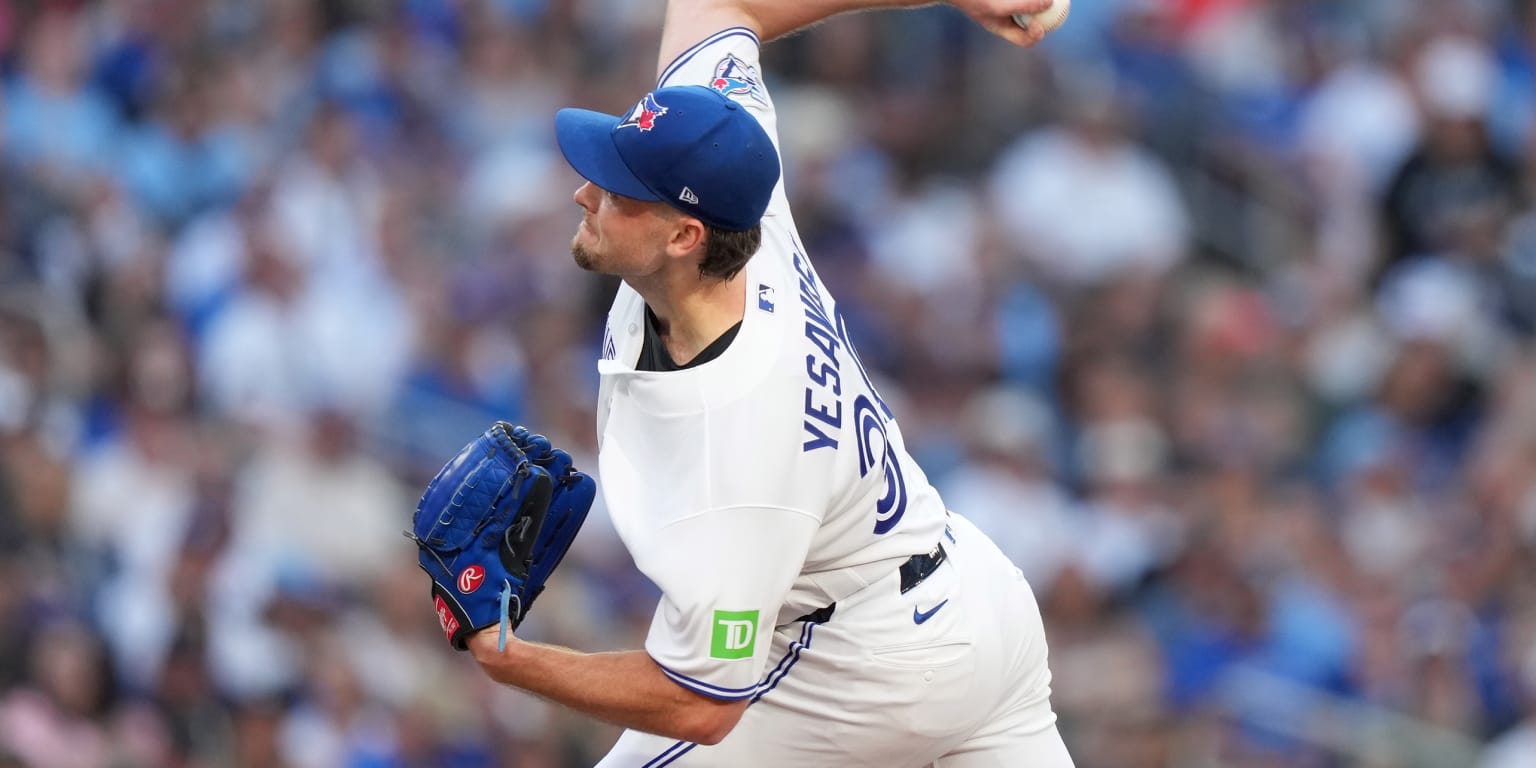
The Blue Jays snapped a six-game losing streak Monday with a 2-1 victory over the Mets, powered by George Springer's unconventional first-inning score on a Juan Soto misplay. But the real story lived in Yesavage's command sheet: zero walks across a complete outing. That stat alone reads like a course correction for a starter who had walked five, six, and seven batters across his previous three starts entering the game.
Yesavage's walk rate has been his ceiling. Elite strikeout stuff means little if he's putting runners on via free passes—a pattern that inflates pitch counts and shortens outings. Monday's approach was different. Manager John Schneider articulated the mechanic shift: "Mindset leads to mechanics. Your body follows what your brain is telling you to do." Yesavage himself endorsed the gamble: "I'd rather go out there and give up solo homers than walk the house." That's not resignation; it's philosophical clarity. With 12 strikeouts still available on days when the stuff is elevated, the path to a sub-3.00 ERA runs through trusting his defense rather than trying to paint corners against hitters who can sit fastballs.
Vladimir Guerrero Jr. showed better bat speed too—hard contact at 111.1 and 107.1 mph on outs, then a single ripped through the right side in the eighth. Ex-teammate Bo Bichette, now with the Mets, defended Guerrero's season as noise atop a career's worth of excellence. The real test for Toronto is whether this two-run win represents momentum or statistical artifact. The offense has been treading water; Guerrero's return to his contact profile matters far more than a single-game sample.
For prop bettors, Yesavage's command reset is the more durable angle. Walk rates regress slowly once a pitcher establishes a new approach—the mechanical change Schneider described typically persists across multiple starts if the mindset holds. Yesavage's next three-to-five outings carry elevated risk on high walk-total props that priced in his recent 5.5-6.5 walk range. If the sample size grows to three consecutive starts with four or fewer walks, you're looking at a permanent recalibration of his talent baseline, which currently sits well above the walk numbers he was producing.
Guerrero's hard-contact data is noisier. One game of 111 mph contact doesn't erase a season of lower overall exit velocity. His strikeout-to-hit ratio hasn't improved materially, and two outs in play suggest luck rather than skill correction. The Blue Jays' ability to climb back above .500 hinges entirely on whether Guerrero rebuilds his slash line—not on one winning game in late June.