Yesavage's Efficiency Masks a Support-Staff Crisis for Toronto
By PropBetEdge Editorial Team ·
The Blue Jays' rookie right-hander delivered a gem on short rest, but his 3.4 runs of support per nine innings tells a darker story about where Toronto's offensive support ranks league-wide.
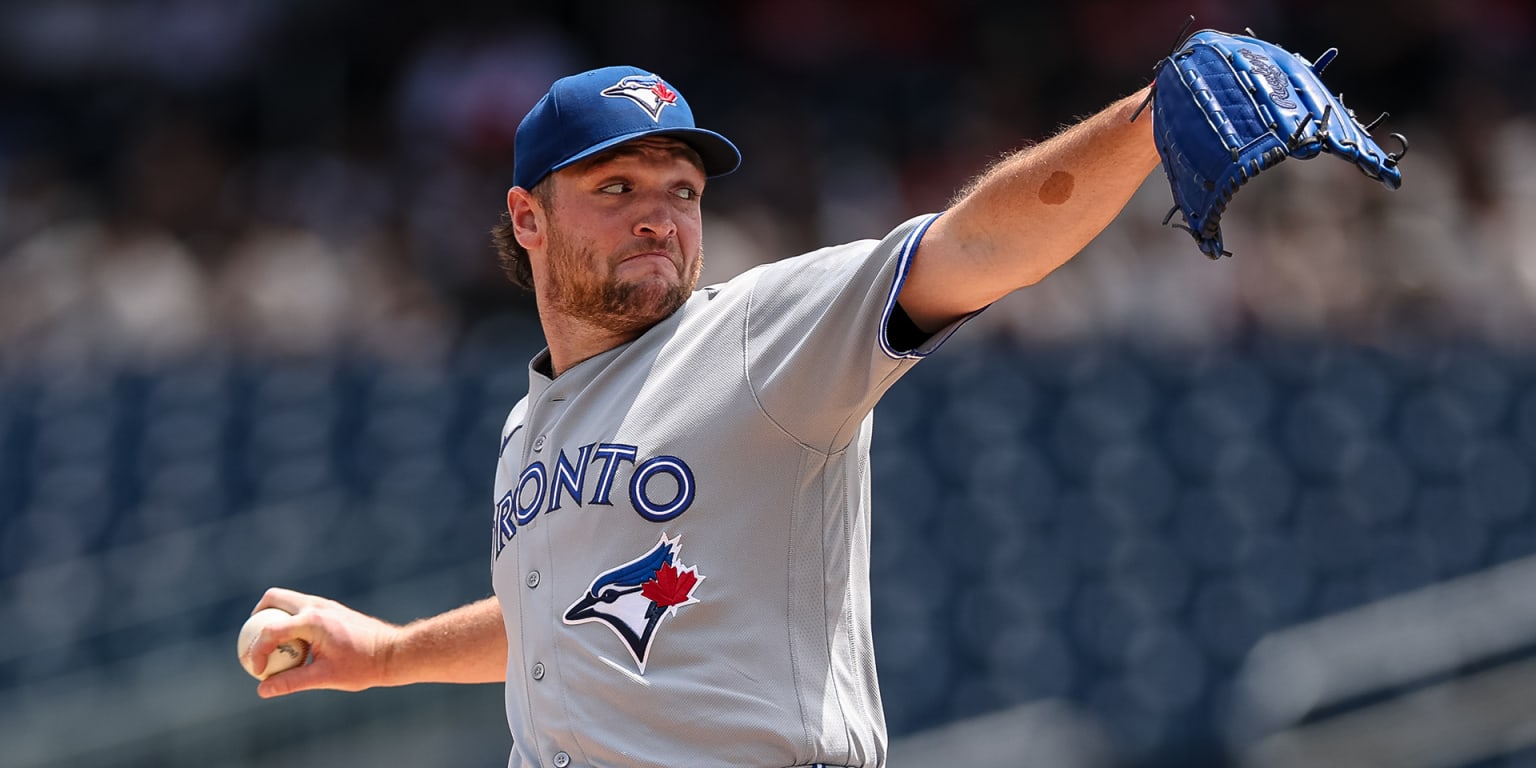
Trey Yesavage delivered exactly what the Blue Jays needed Wednesday: six and two-thirds innings of one-run ball to close out a series victory over Washington and snap Toronto's three-week drought between series wins. The 23-year-old right-hander allowed just three hits and struck out four while walking three, engineering a 5-2 result that felt more decisive than the taut pitching line suggested. Varsho's seventh-inning go-ahead single and Okamoto's two-run double in the eighth provided the margin of victory, but the story underneath is more consequential for Toronto's half-season outlook.
Yesavage entered this outing receiving only 3.4 runs of support per nine innings—the eighth-lowest figure among 112 MLB pitchers with at least 15 starts. That's not a small-sample noise figure; that's a structural disadvantage. When a pitcher faces runners in scoring position, the margin between a clean inning and disaster shrinks to millimeters. Yesavage managed only four batters with RISP on Wednesday, allowing a go-ahead double to Jacob Young in the fourth before striking out the side in the seventh. His control was precise enough to survive a third-inning warning-track catch by Varsho that may have saved a home run—the kind of defensive luck that props up ERAs when offensive support dries up.
Toronto's first series victory since July 6-8 against San Francisco (18 days prior to this game) masks a deeper offensive inconsistency. The Nationals' relief corps—particularly Orlando Ribalto and the late-inning bullpen churn—presented an opportunity for Toronto to capitalize on home-run-ball vulnerability. Instead, the Blue Jays scraped together five runs across nine innings, with Okamoto's two-bagger and a Springer single generating the bulk of the late cushion. When a team's ace-in-training receives run support at the eighth-lowest rate in baseball, even dominant outings feel precarious.
For bettors, Yesavage's K rate (4 strikeouts over 6.2 innings = 5.4 per nine) and walk rate (3 BB = 4.0 per nine) suggest a pitcher operating at the edge of control efficiency rather than elite stuff dominance. His 3.73 ERA already reflects the buffering effect of strong defense and bullpen rescue—Louis Varland's 23rd save and back-to-back saves in this series kept inherited runners off the board. Over his next 4-5 starts, watch Yesavage's strikeout total against teams that rank in the bottom third for run creation. The Blue Jays' offensive drought means his K props will need to carry the entire weight of plus-value recognition. If Toronto's bats don't wake up, Yesavage's unders on ERA and team total props will flatten as the luck of one-run games evaporates.