MLB · lineup
White Sox Youth vs. Astros Experience: Why Chicago's Strikeout Profile Becomes a Liability in Houston
The White Sox clinched an improbable playoff berth on the back of offensive volume, but their record road futility and catastrophic strikeout rates set up a brutal matchup against a Houston staff built for high-velocity shutdown innings.
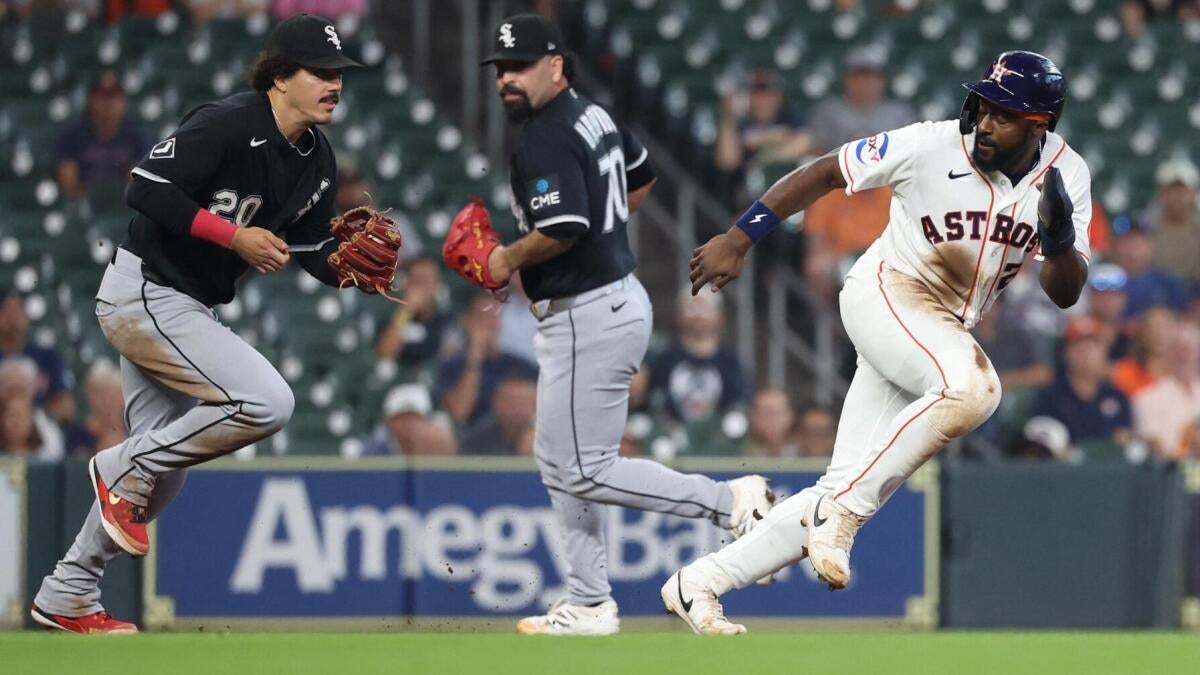
The Chicago White Sox have manufactured something unprecedented: a playoff appearance after three consecutive 100-loss seasons. Will Venable's second-year squad finished 84-78, a five-win improvement over 2025 and their best record since 2021, yet they're walking into Game 1 of their AL Wild-Card Series in Houston as heavy underdogs at -123 on the moneyline—and deservedly so. The Astros, AL West champions with the infrastructure of a nine-time playoff team in the past decade, took five of seven head-to-head matchups this season and own a proven formula for neutralizing exactly the kind of lineup Chicago has built.
The White Sox are a swing-and-miss nightmare dressed up as power: fifth in MLB with 211 homers, fifth in runs, but also fifth in strikeouts with a roster-wide whiff rate that borders on structural liability. Shortstop Colson Montgomery and Japanese rookie Munetaka Murakami embody the profile—Montgomery's 227 strikeouts set an MLB record despite only 31 home runs, while Murakami's 196 strikeouts accompanied his 35 homers and .207 batting average. These are all-or-nothing hitters with minimal postseason experience; only three players on the entire roster have more than three playoff plate appearances, and the pitching staff has combined for just 13 postseason innings. Houston, by contrast, features Yordan Alvarez chasing down an AL MVP award and Jeremy Pena, who is 3-for-4 lifetime against White Sox starter Erick Fedde with a 3.300 OPS.
Fedde, the 33-year-old veteran making his first career playoff start, arrives as the primary arm after Chicago employs an opener strategy with lefty Hagen Smith (1.29 ERA, limited to roughly two innings). Fedde's road splits are ugly—5-6 with a 4.88 ERA away from Chicago—and he lost his only 2026 start to Houston on July 26, surrendering three runs across 4.1 innings at home. The Astros have built their recent dynasty on the back of elite velocity and strikeout pitching designed to exploit exactly these kinds of aggressive, young lineups that chase out of the zone. Houston's pitching staff, even if fatigued from a divisional push, still carries the institutional knowledge and stuff profile to attack Montgomery and Murakami's expansive strike zones.
The betting reality reflects this structural mismatch: Houston is capturing 75% of handle and 60% of wagers at DraftKings, a blowout consensus that typically signals sharp money has already repositioned toward value. The key prop angle emerges on strikeout volume—not individual player K lines, but the aggregate team strikeout rate baked into the under 8.0 total. The White Sox finished the regular season 36-45 on the road, the worst record of any playoff team, and their strikeout-heavy approach becomes exponentially more dangerous in elimination baseball when pitcher aggression increases. Fedde's poor road performance and the Astros' historical willingness to attack young hitters in the postseason create a scenario where the White Sox strikeout total (likely sitting around 9.2-9.5 across the first five innings) carries material edge on the under. This isn't a directional bet on pitcher dominance; it's a structural play: young, swing-heavy lineup + brutal road history + opponent built to attack the zone + elimination baseball psychology = elevated K volume beyond what the market has priced into team totals and first-five-inning props.
The broader series line—Houston at -145 to win the series versus Chicago at +125—reflects fair value given the 36-45 road split and the Astros' recent head-to-head dominance. But single-game volume props, especially strikeout aggregates on the White Sox, represent the sharpest available edge. The market is correctly favoring Houston; what it's underweighting is the mechanism of that dominance: not blowout runs, but accumulated strikeouts and weak contact against premium velocity.
MLB Intelligence — Baseball intelligence beyond the box score. Open MLB Intelligence →