MLB
Painter's Control Collapse Narrows Philadelphia's Rotation Flexibility
The Phillies' prized prospect can't locate his fastball, and they have no emergency exit.
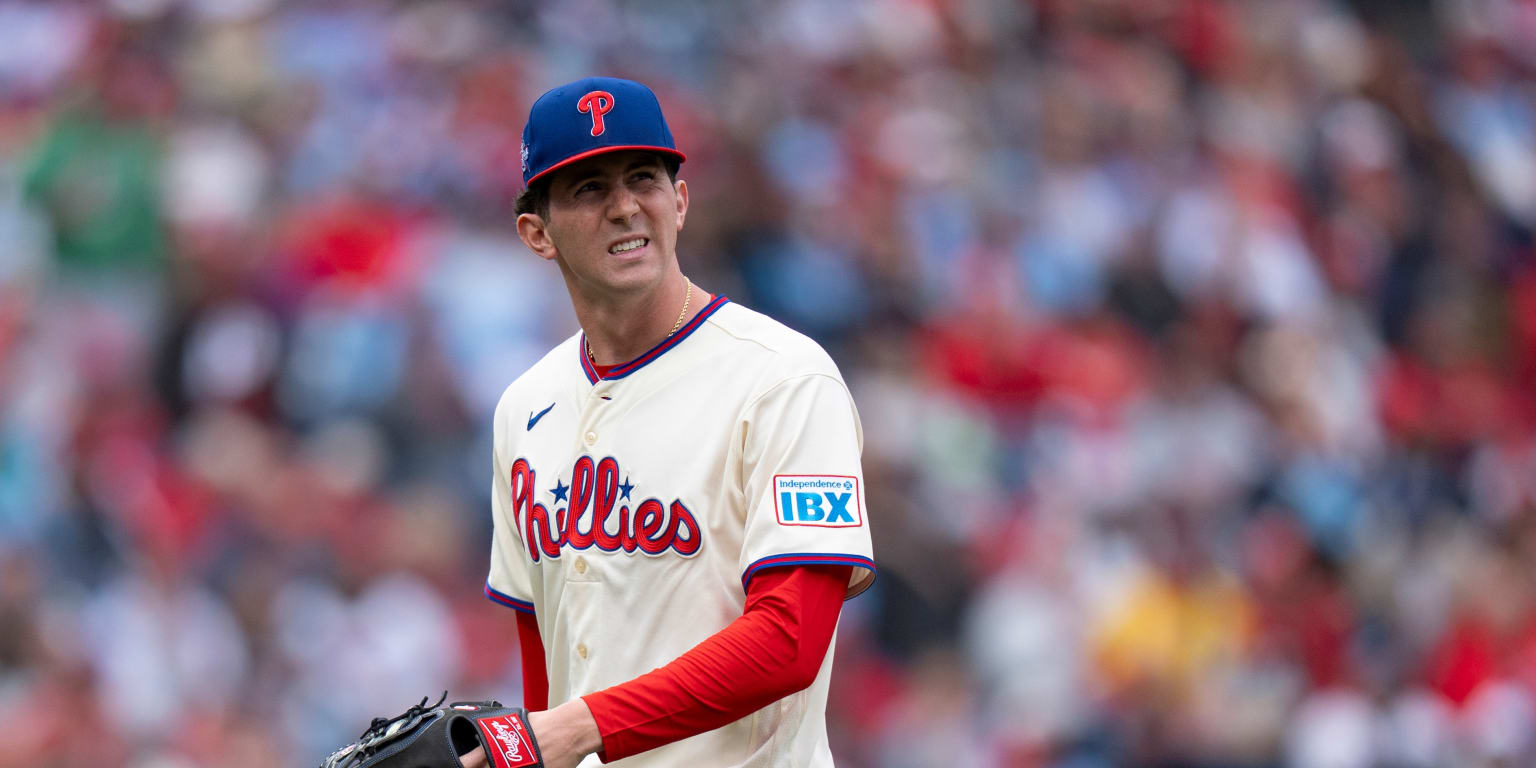
Andrew Painter made the Phillies' Opening Day roster on the back of a full healthy season in the minors last year—the first full year he'd pitched since Tommy John surgery in 2023. Six weeks into his big league trial, that investment looks like dead capital. Through 12 starts, Painter owns a 6.21 ERA, and the mechanical issue is not hidden: his four-seam fastball has become a liability. Opponents are batting .390 against it. His whiff rate on the pitch sits at 9.9%, the second-worst among all 79 MLB pitchers who have thrown at least 300 four-seamers this season. The problem isn't that he's missing his spots by inches—it's that he has no consistent control where the pitch lands once it leaves his hand.
The diagnostic is damning. Of Painter's four-seamers, only 46.3% find the strike zone, the worst rate among that same 79-pitcher cohort. His fastball heatmap lacks any discernible clustering; it's a shotgun pattern where elite fastballs show a tight concentrated zone. In Saturday's start against the White Sox, Painter threw only four four-seamers across his final 51 pitches, a tacit admission from the mound that the pitch is broken. Interim manager Don Mattingly delivered the soft ultimatum: "You don't get endless chances. You have to perform." That Mattingly is publicly linking performance to tenure signals the organization's impatience is real, even if publicly they frame Painter's next start (Friday in Milwaukee) as a routine rotation slot.
The Phillies' institutional problem is that they have no clean exit. Optioning Painter back to Triple-A sounds rational until you examine depth. The Minor League rotation is hollow—there's no obvious replacement candidate waiting, and no confidence that prospect would outperform the teenager who at least still has high-leverage stuff in his breaking balls and changeup. Skipping a turn in the rotation eats into rest, crowds the bullpen, and signals panic to a locker room already grinding through a compressed schedule. They are, functionally, stuck with him until his next poor outing makes the math undeniable.
From a betting lens, Painter's control problems create actionable edges on every start he takes. His inability to command the fastball forces reliance on secondary stuff in hitter counts, which raises the walk rate and lengthens plate appearances. The Brewers, who host him Friday, have ranked in the top 10 in walks drawn this season and feed on wild fastballers. More broadly, any Painter start presents a high-variance pitching line: strikeout upside remains real (his breaking stuff still has bite), but the walk total and earned run projection will hinge entirely on whether he finds any fastball command that night. The market has already factored in his season ERA, but it hasn't fully priced the start-to-start volatility a pitcher with zero-control fastball faces. Lean toward unders on his strikeout prop in early innings and overs on walks in games where opposing hitters can lay off breaking stuff; the Milwaukee lineup does neither comfortably, making Friday a higher-variance spot than the matchup appears.
MLB Intelligence — Baseball intelligence beyond the box score. Open MLB Intelligence →