MLB
Realmuto's ABS Challenge Mastery Tilts Late-Game Leverage in Phillies' Favor
The Phillies catcher's 81% success rate on ball-strike challenges gives Philadelphia an edge in close postseason spots where umpire judgment determines outcomes.
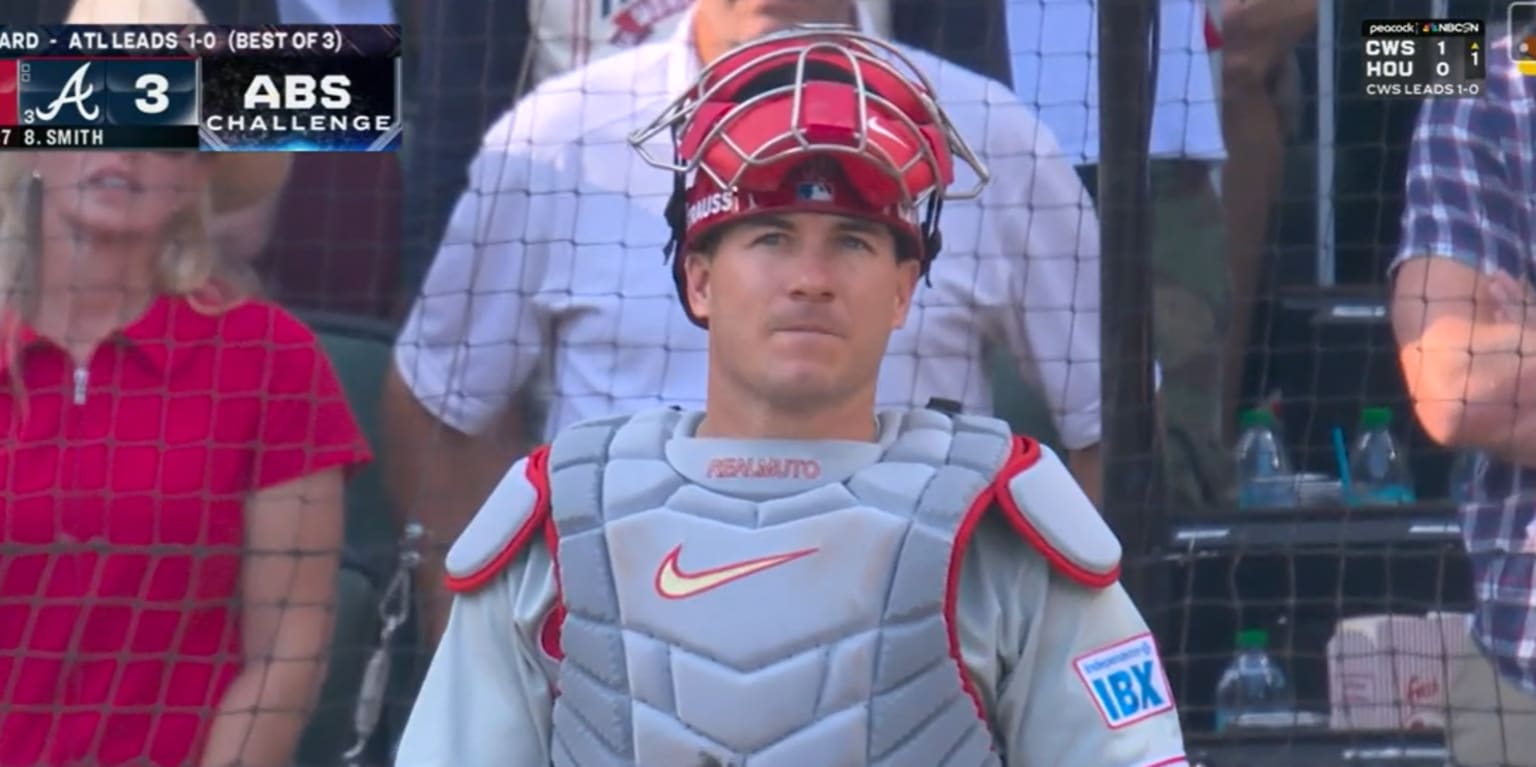
J.T. Realmuto made postseason history on Wednesday night by initiating the first game-ending ABS challenge in playoff history, a moment that encapsulates a larger strategic advantage the Phillies have built around their All-Star catcher's mastery of the Automated Ball-Strike system. With two outs in the bottom of the 10th inning, Dom Smith stepped in against Phillies reliever Andrew Painter with runners on second and third. Painter threw what he intended as a strike on the inner portion of the plate on a two-strike count, but home plate umpire Adam Beck called it a ball. Realmuto challenged immediately. The system overturned Beck's call, ending the game and keeping Philadelphia's season alive in Game 2 of the NL Wild Card Series.
What matters for future matchups isn't the drama of the moment—it's the underlying pattern Realmuto has established over a full regular season of ABS challenges. His 81% success rate led all Major League catchers with a minimum of 20 challenges issued, and he ranks third league-wide in Statcast's Overturns vs. Expected metric, indicating his challenges aren't just lucky guesses but are rooted in an exceptionally sharp eye for pitch-location accuracy. The Phillies organization has leaned into this edge deliberately: Painter acknowledged in his postgame comments that the team makes a conscious effort to preserve challenges for late-game situations specifically for Realmuto to deploy. This is institutional bet-making. A catcher who converts 81% of his challenges into correct reversals isn't experiencing randomness; he's reading the system and the umpire's tendencies with precision.
The strategic implication extends beyond individual plate appearances. In close playoff games where a single pitch call determines advance or elimination, Realmuto's ability to overturn incorrect calls with near-four-to-one odds creates a compounding advantage for the Phillies in the final inning or extra-inning scenarios where challenge availability is typically finite. Opposing teams face a decision cost: they must account for the elevated probability that a tight call against them will be overturned if Realmuto challenges it. This doesn't change the underlying win probability of a game, but it does shift the distribution of outcomes in tight spots toward the Phillies' favor.
For bettors tracking Phillies postseason lineups, the presence of Realmuto behind the plate in high-leverage innings carries more information than his name value alone. His ABS proficiency functions as a persistent edge in games decided by one or two runs, particularly in extra-inning scenarios where pitch-location precision becomes outcome-determining. In the Wild Card Series format—best-of-three with elimination stakes—Games 2 and 3 are functionally must-win situations where every pitch call matters. A catcher with an 81% challenge success rate in those moments isn't just a defensive stabilizer; he's a decision-making asset embedded in late-game probability. Monitor Realmuto's availability closely through the postseason. His absence changes the leverage calculus of close-game outcomes significantly.
MLB Intelligence — Baseball intelligence beyond the box score. Open MLB Intelligence →