MLB
Vegas Ballpark Obliterates Pitcher Projections: Brewers-A's Slugfest Signals Season-Long Volatility Risk
An 11-home-run, 29-run spectacle at a high-altitude Triple-A park exposes a critical gap between regular-season pitching metrics and actual performance in one-off venues.
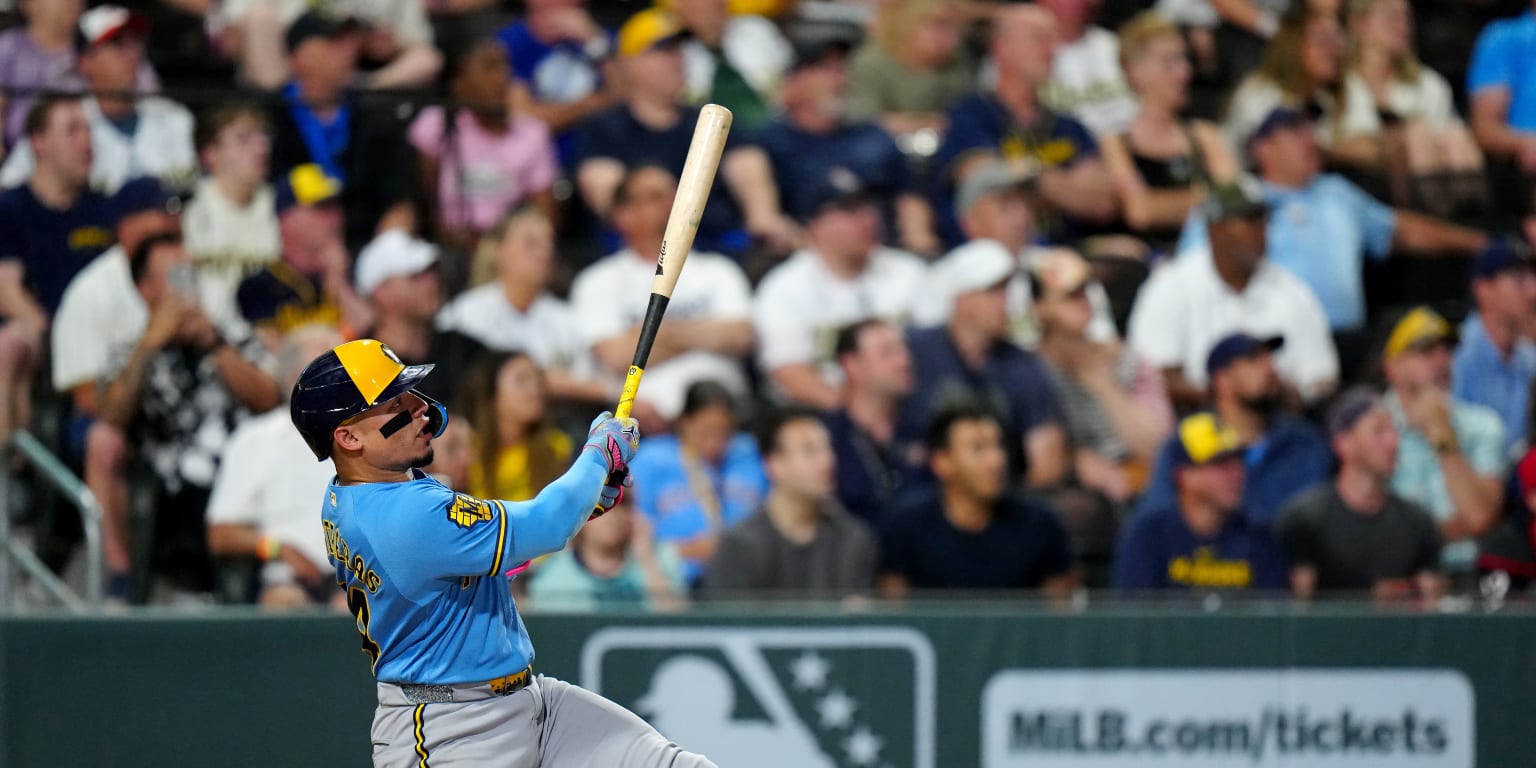
The Brewers' 15-14 win over Oakland in 12 innings Monday was not a baseball game—it was a ballistics demonstration. Eleven home runs flew out of Las Vegas Aviators Stadium, a venue built for minor-league production, not major-league defensive strategy. Milwaukee starter Kyle Harrison, who had compiled a 1.57 ERA over his first 11 outings, surrendered eight earned runs in 2⅔ innings. His season ERA jumped from 1.57 to 2.72. Yet the only meaningful conclusion is that Harrison pitched in a place where the ball carries like a golf course at altitude and velocity.
The A's are displaced to Las Vegas (with a concurrent stint in West Sacramento) while their permanent stadium rises on the Strip—a circumstance that turns 2026 home games into an experimental zone. Oakland hits 10,800 feet above sea level in triple-digit dry heat. Air density evaporates. A pop-up becomes a two-run double. A fly ball to right becomes a game-tying home run off relief pitcher Aaron Ashby in the 10th inning. The Brewers' right fielder didn't track it—nobody tracks what flies that far. Joel Kuhnel, acquired by Milwaukee two days earlier and summoned to this game specifically because he'd pitched at this exact stadium earlier in 2026, warned his new team: "Be cautious. The ball flies." He was understating it.
What matters for bettors is that 15 of Oakland's 25 remaining home games will be played in either Las Vegas or Sacramento—both environments where ballpark factors exceed 120 on the home run scale (compare to Fenway at 115 or Yankee Stadium at 110). Kyle Harrison's 1.57 ERA is now permanently tainted in the record books. Any pitcher facing the A's in Vegas carries an invisible but massive drag on his season line. The game velocity is constant; the air is not. Over a full home series, this compounds. A reliever's 2.80 season ERA might become 3.40 in Vegas simply because there is no such thing as a warning-track fly ball there.
For Brewers hitters facing Oakland's pitchers at this venue, the inverse applies: home run props and team totals will be juiced by the ballpark, not by skill. The Brewers scored 15 runs and hit four home runs despite Kyle Harrison's collapse; that offensive production, when viewed in isolation, looks like a breakout. It isn't. William Contreras didn't become a power hitter Monday—the stadium became a power hitter's playground. Any subsequent prop markets on Brewers run production in Vegas should discount this game entirely. A 29-run total is a Vegas artifact, not a new baseline for Brewers offense against Oakland pitching.
The betting edge here is structural: pitching metrics earned in normal ballparks will be systemically worse in Vegas; batting metrics will be systemically better. A starter posting a 3.20 ERA entering a Vegas start should be treated as if he's entering a 3.80+ environment. Conversely, team totals over 4.5 or 5.0 runs in Vegas carry edge against books that apply standard weather adjustments. The Brewers and A's combined to score 29 runs Monday not because both offenses leveled up—it's because the ballpark is a cheat code. Respect the venue more than the date.