Kyle Harrison's Mechanics Shift Unlocks Strikeout Elite Status at Brewers
By Justin Erickson ·
A tweaked arm angle and rubber position have transformed Harrison from organizational afterthought into a Cy Young-caliber starter, and the strikeout volume suggests the improvement is real, not circumstantial.
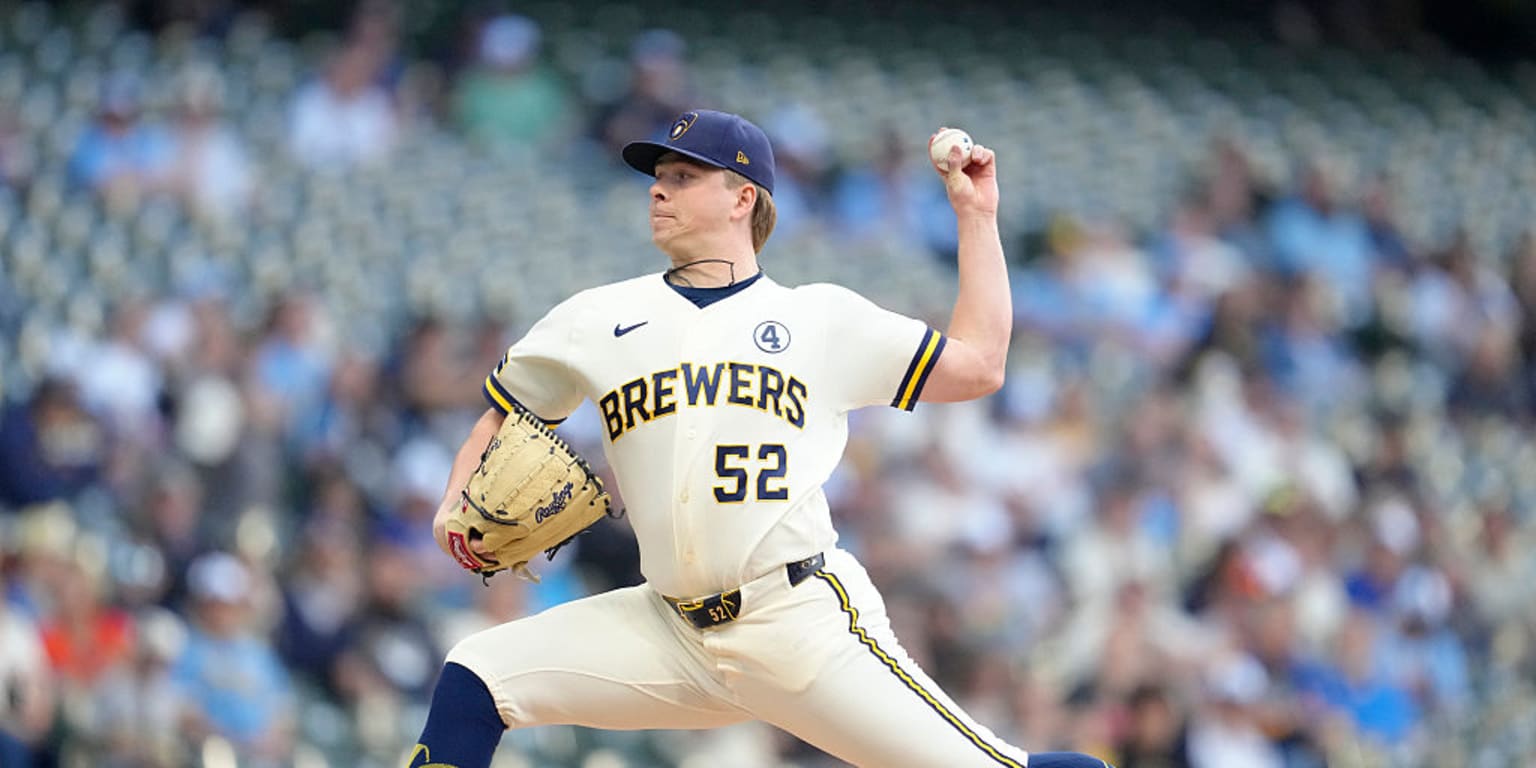
Kyle Harrison struck out 12 batters in 5 2/3 innings Tuesday night against the Giants—the team that drafted him, developed him, and ultimately gave him away. The Brewers won 8-3 at American Family Field, but the scoresheet understates what actually happened: a 26-year-old left-hander has fundamentally altered his mechanics and is now operating at an elite strikeout frequency that will reshape how he's priced in MLB prop markets going forward.
Harrison arrived in Milwaukee last June as part of a six-player package the Giants surrendered to land Rafael Devers. At the time, the trade looked pragmatic for San Francisco—Harrison had posted a 4.39 ERA across three seasons, ping-ponged between starter and reliever roles, and was regarded as a middling prospect who'd aged through the minors without generating elite statistical juice. The Brewers inherited him almost incidentally. What unfolded over the past year tells a different story. Harrison is now 7-1 with a 1.57 ERA through 11 starts. His strikeout rate has skyrocketed. The mechanical work—an adjustment to his position on the rubber and a measurably higher arm angle—has unlocked fastball carry he wasn't accessing before. As Giants GM Zack Minasian acknowledged after the game, those two physical modifications alone amplify the velocity and movement profile enough to play a full grade higher than his raw stuff had ever registered.
This is not a hot-streak narrative. Strikeout rate is one of the most repeatable pitcher metrics when anchored to a mechanical shift that actually changes release point and arm slot. Harrison's 12-K performance wasn't an outlier; it was validation of a sustainable change. He'd already logged strikeout rates north of 11/9 innings in his Brewers tenure. The market has begun to acknowledge this—his strikeout props have climbed accordingly—but books are likely still pricing in some regression discount, assuming a young pitcher with Harrison's historical profile will eventually revert. He won't, because the mechanics that drove his prior mediocrity have been corrected.
For prop bettors, the immediate angle is Harrison's strikeout line in his next start. The Brewers' pitching coach and Harrison's mechanical work have created a persistent edge: his arm angle elevation and rubber adjustment produce fastball control and movement that converts more borderline pitches into whiffs than his Giants-era delivery ever did. This isn't a single-game spike; it's a structural improvement that will hold across multiple outings. If his K prop opened below 10.5 earlier in his Brewers run, it should now sit around 10.5-11.5 depending on opponent. Any close-range number (10.5 to 11.5) against a contact-heavy offense warrants an over lean, because the mechanics are doing the work, not luck.
The Giants, meanwhile, are reminded of the cost of prospect misjudgment. Devers is locked into a $220 million contract through 2033 and has partially vindicated the trade with a strong second half, but their rotation now ranks 29th in ERA and their young arms—Birdsong (Tommy John), Whisenhunt (still in Triple-A), and Roupp (solid but limited upside)—haven't filled the void. Harrison's emergence elsewhere amplifies the sting because it wasn't a failed high-upside gamble; it was a prospect the organization developed and then failed to see clearly when the moment came to choose between him and Devers.