MLB
Senga's Bullpen Dominance Creates Trade Value, But Mets Face Spring Training Standoff
After two months thriving as a high-leverage reliever, Kodai Senga enters free agency with genuine market appeal—but his refusal to embrace a relief role may force the Mets into a costly offseason decision.
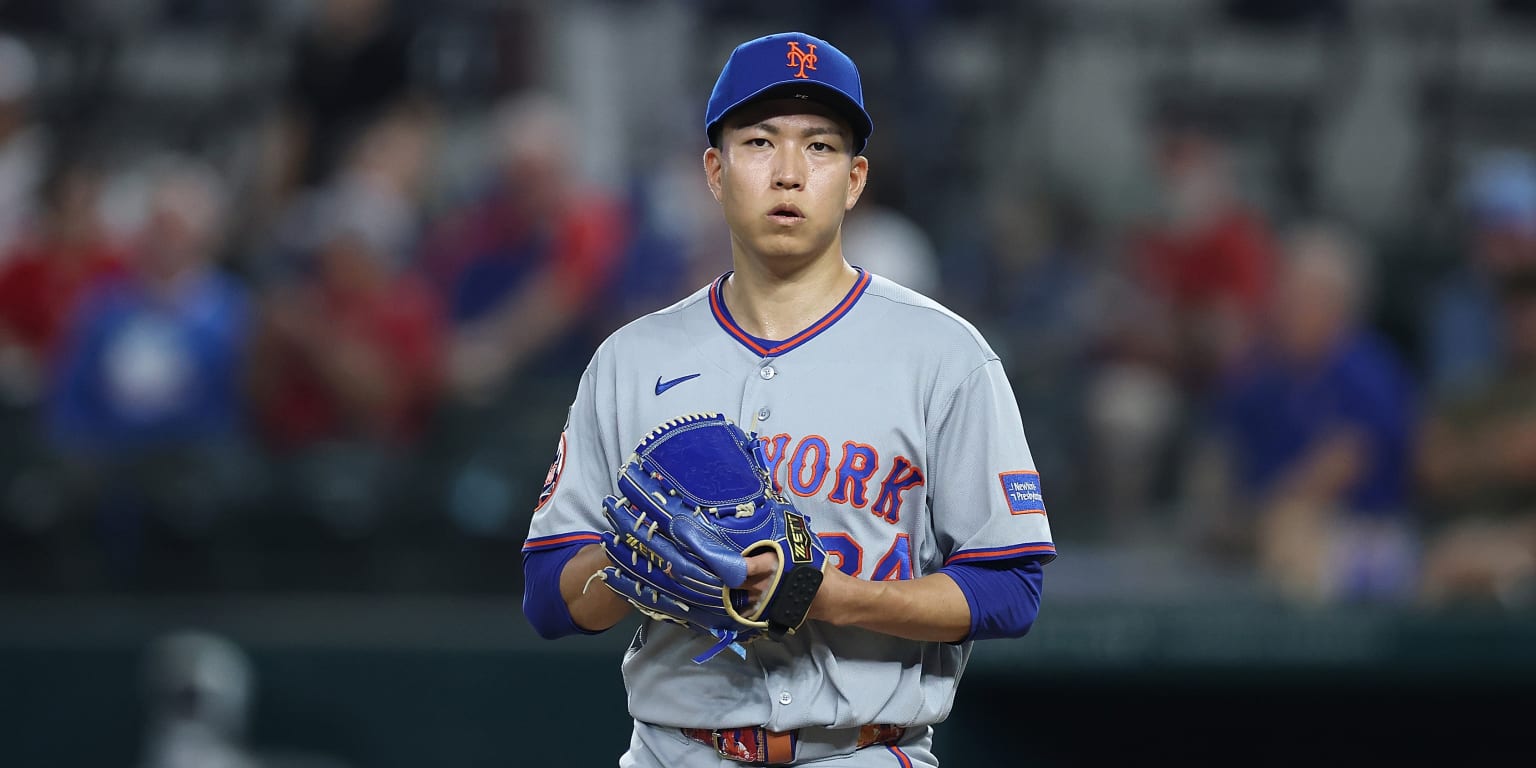
Kodai Senga will make one final appearance for the Mets on Sunday before the organization confronts a roster puzzle that favors neither side cleanly. For two months, the Mets deployed Senga exclusively in high-leverage relief situations, and the results vindicated the experiment: a 3.78 ERA, 22 strikeouts over 16⅔ innings, and the kind of fastball-forkball pairing that has Closer Devin Williams openly lobbying to keep him in the bullpen. The immediate value is undeniable. But Senga, who signed as a starter and continues to insist his identity lies in the rotation, faces an offseason that will test whether conviction or circumstance determines his role in 2027.
The organizational logic is sound. The Mets' rotation appears set with a young core—Nolan McLean, Christian Scott, Zac Thornton, Jonah Tong—plus Sean Manaea and likely one or more external additions. Senga, entering the final year of a $15 million deal, no longer fits comfortably in that hierarchy. As a reliever, however, he's become demonstrably useful, finally leaning into the precise weaponry that coaching staff identified years ago. Since August, his four-seam fastball and forkball usage spiked while reliance on his below-average secondary pitches plummeted. Manager Andy Green acknowledged the clarity: "We have an idea of how he fits in a 'pen now, which is really, really helpful." The math works for New York. The problem is Senga's willingness to solve it.
Senga has consistently stated he will not accept demotion to Triple-A Syracuse as a rotation depth piece, nor has he shown appetite to embrace a permanent bullpen role despite its success. His agent will certainly note that his one-year, $15 million contract—combined with his newly demonstrated relief chops—makes him more tradeable now than at any point since early 2024. Other organizations will circle. The Mets must choose: offer him Spring Training competition for a starting job he's unlikely to secure, attempt to lock him into relief (a conversation that could end in refusal and potential arbitration friction), or trade him while his value has spiked. From a pure handicapping perspective, Senga's relief metrics entering the offseason present a real edge for relief K props if he lands elsewhere or if the Mets extend him in a defined relief role. His strikeout rate as a reliever—22 Ks in 16⅔ innings translates to a 11.9 K/9 pace—sits comfortably above his career relief average. That velocity and forkball sharpness, demonstrated over a sustained two-month sample, should sustain. But that edge only activates if his role is locked in. Uncertainty, particularly uncertainty that may end in a trade or a reserve assignment, collapses predictability. Until the Mets and Senga reach a settlement, prop bets on Senga's ERA, strikeout volume, or innings pitched carry elevated noise. Single-game and short-series props will overweight recent performance (his relief stretch) without accounting for potential role flux or a trade announcement.
MLB Intelligence — Baseball intelligence beyond the box score. Open MLB Intelligence →