MLB · transaction
Piper's Debut Arrives as Rays Shuffle Catching Options After Feduccia Trade
Tampa Bay calls up 28-year-old Kenny Piper for his MLB debut tonight in Colorado, signaling a catching rotation overhaul following the Hunter Feduccia swap.
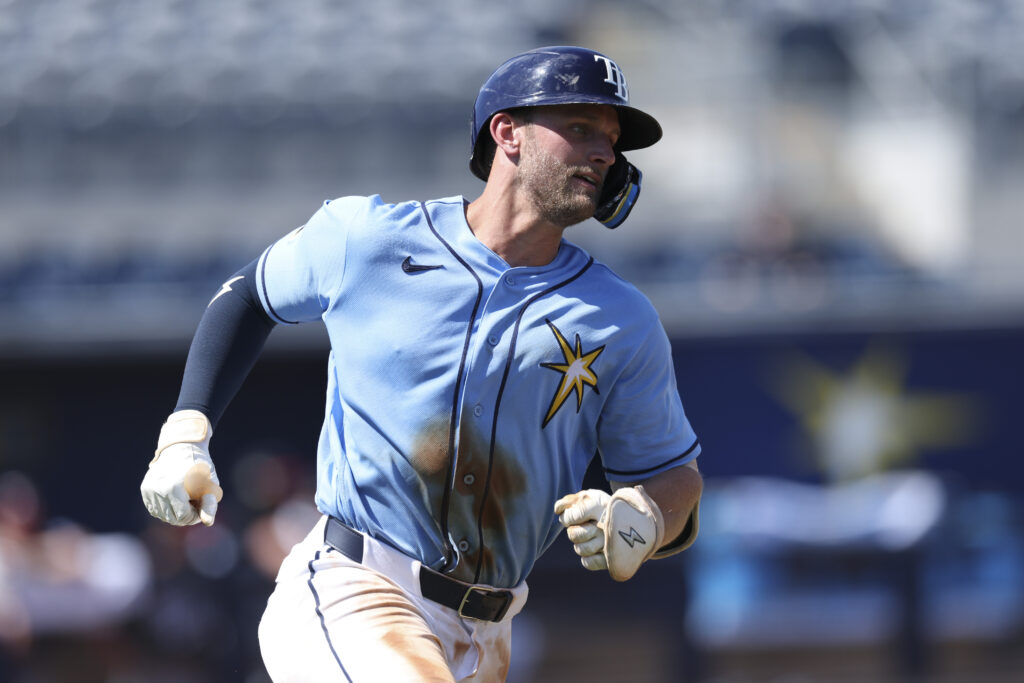
The Rays promoted catcher Kenny Piper to the major league roster on Monday evening, inserting him into tonight's lineup at Coors Field against Michael Lorenzen. It's his first game in the majors. The move came as Tampa Bay finalized its trade sending Hunter Feduccia to the Dodgers—a swap that forced the Rays to clear 40-man space by designating right-hander Chase Solesky for assignment.
Piper, 28, has spent the bulk of his professional career in the minors, grinding through the organization's development pipeline. His call-up marks a tactical reset at the catching position for a Rays team that has shuffled bodies behind the plate this season. The fact that Tampa Bay moved Feduccia rather than another position player suggests internal confidence in Piper's defensive acumen and game-calling ability—the organization doesn't typically promote a long-developing prospect unless there's organizational alignment on his readiness.
The timing lands Piper in one of baseball's most hitter-friendly environments. Coors Field's thin air, elevation, and dimensions inflate both offensive and strikeout numbers; opposing catchers historically see elevated framing difficulty and pitch-spin decay. For a debut scenario, this represents elevated variance—Piper will face a major velocity and selection adjustment on a night when the ballpark already boosts exit velocity.
From a prop-betting lens, Piper's debut carries limited edge because the market has minimal historical data to price. Books will offer his stat lines (hits, RBIs, strikeouts) but will treat him as a weather event—high variance, limited predictive power. The sharper angle sits with opposing pitcher Michael Lorenzen. Lorenzen faces a Rays catching unit now featuring a debuting backstop who has never framed professional velocity at this level. New catcher deployments often correlate with slight upticks in strikeout rates for the pitcher (unfamiliar framing tendencies, communication gaps, missing the pitcher's release point). If Lorenzen carries a strikeout prop in the 7.5–8.5 range, the fresher-than-usual catching dynamic warrants consideration—not a massive edge, but a mechanism that typically inflates pitcher K totals by 0.3–0.5 per game during first-week pairings with rookie backstops.
MLB Intelligence — Baseball intelligence beyond the box score. Open MLB Intelligence →