MLB
Phillies' September Collapse Narrows to Single Elimination Game
Philadelphia's rotation shuffle and bullpen miscalculation in a must-win scenario create a betting landscape where survival and execution diverge sharply.
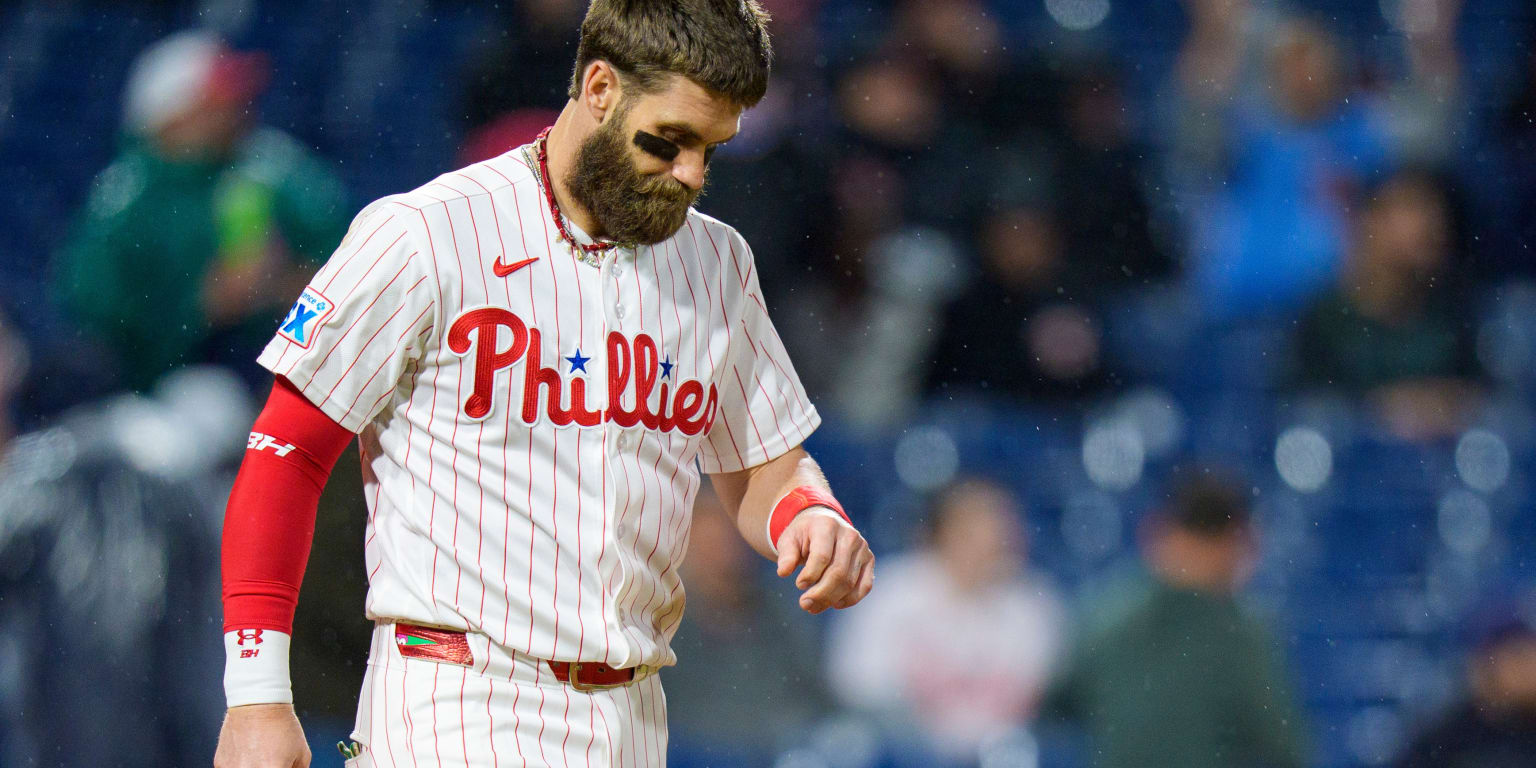
The Phillies' season comes down to Sunday. After losing 12-1 to Tampa Bay on Saturday night at Citizens Bank Park, Philadelphia now sits tied with Arizona for the final National League Wild Card spot—or one game back, depending on the Diamondbacks' result against San Diego. Either way, the team that carried a 99.7% postseason probability on September 1 must win to extend its season at all. This is organizational failure rendered in real time: a 6.5-game division lead over Arizona three weeks ago has evaporated into win-or-go-home desperation.
The mechanics of collapse are instructive. The Phillies were 79-60 on September 1, carrying the fourth-best record in the National League. Their offense then entered a free fall. Saturday's loss came with a 21-inning scoreless streak finally broken only by an unearned run in the seventh inning—their longest such drought since June 22-26, 2025. The pitching didn't stabilize; it deteriorated. Aaron Nola, summoned to start on short rest for the first time in his career, allowed a leadoff double to Yandy Díaz, then gave up a two-out, two-run home run to Junior Caminero and back-to-back doubles to Victor Mesa Jr. and Richie Palacios, spotting Tampa Bay a 3-0 lead before the sixth batter. The bullpen surrendered seven runs across the fifth and sixth innings. This wasn't close competition—it was structural collapse.
The rotation mismanagement that precipitated Saturday's bullpen game reveals how precarious the Phillies' depth had become. Philadelphia shuffled Andrew Painter to Thursday and Cristopher Sánchez to Friday specifically to preserve them for the Wild Card Series, leaving Saturday's slot to be filled by committee. Jesús Luzardo landed on the 15-day injured list with left elbow inflammation, forcing the Phillies to lean on José Urquidy (claimed off waivers from the White Sox, designated for assignment twice this season) and Nestor Cortes (signed in August but deemed insufficiently sharp to start). The math was inescapable: no internal starter was ready, the free-agent market had yielded marginal options, and the cost of that constraint was visible in Nola's early exit and the bullpen's implosion.
For betting purposes, Sunday's game carries binary weight. If the Phillies win, they advance regardless of Arizona's outcome; if they lose and Arizona wins, they miss the postseason entirely. Zack Wheeler takes the mound for Philadelphia—arguably the team's most reliable arm—but the offense's anemic production (21 scoreless innings before Saturday's unearned run) suggests even dominant pitching cannot guarantee advancement. The moneyline will price the Phillies based on Wheeler's quality and home-field advantage, but the market has already absorbed the reality of the collapse: a team that entered September with a stranglehold on a playoff spot now carries no cushion. Unders on Philadelphia's team total will attract action from bettors who've watched four straight games of sub-four-run output, yet Sunday's desperation factor—the team's absolute refusal to go quietly—creates a countervailing force. The Phillies don't advance through elegant offense here; they advance through Wheeler pitching to contact, stranding runners, and the bat suddenly finding lightning. That binary outcome—either the offense unlocks or it doesn't—makes Sunday's total more volatile than the moneyline.
MLB Intelligence — Baseball intelligence beyond the box score. Open MLB Intelligence →