MLB · injury
Williamson's Return Eases Rays' Infield Depth Crunch, but Don't Overestimate the Offensive Impact
Tampa Bay gets its second baseman back from a two-week lower-back absence, but his .268 average and powerless profile offer limited upside for team-total prop bettors.
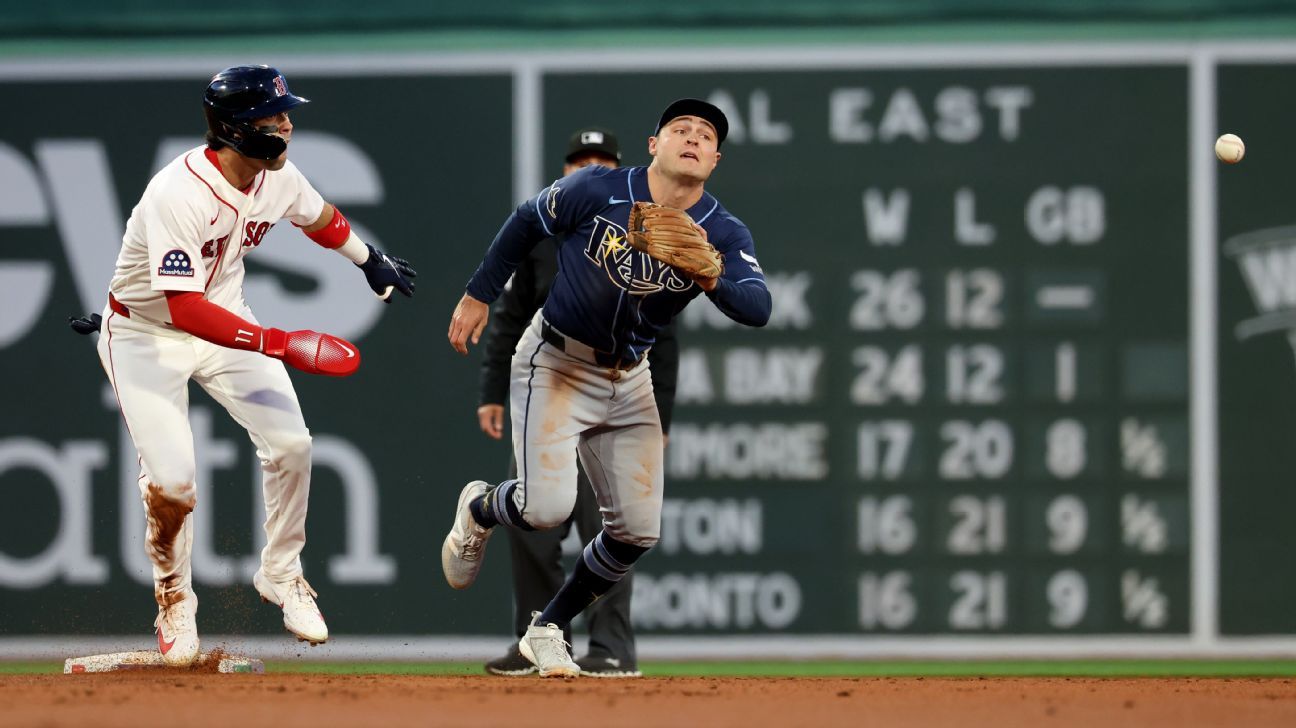
Tampa Bay reinstated second baseman Ben Williamson from the injured list Friday after a two-week absence due to lower back strain, signaling the club feels confident in his structural durability heading into the season's second half. The move came alongside the selection of right-handed pitcher Andrew Wantz from Triple-A Durham and the optioning of infielder Carson Williams back to the minors—a series of roster maneuvers that underscores the Rays' ongoing shuffle to balance depth and performance.
Williamson's injury timeline matters operationally but carries limited edge-value for prop bettors. Two weeks is short enough to avoid the physical reconditioning risk that derails hitters returning from longer IL stints; back strains, while prone to flare-ups, don't typically degrade bat speed or plate discipline if the player clears medical thresholds. That said, his pre-injury numbers—.268 average, .349 on-base percentage, zero homers in 39 games—reveal a contact-oriented utility bat with minimal power ceiling. Williamson had accumulated 14 RBI and four stolen bases, the latter marking his only fantasy-relevant edge: a speed profile that plays in a Rays system built on manufacturing runs through movement rather than power.
The elephant in the room is what Williamson's reinstatement does not signal: an offensive upgrade to Tampa Bay's lineup. Carson Williams, the player optioned out, hit .100 in 12 games—a clear demotion—but the fact that the Rays cycled him rather than committing to Williamson long-term suggests uncertainty about the position's production floor. Williamson's absence cost the team two weeks of at-bats; his return costs nothing in opportunity, but it doesn't add offensive horsepower, either. For team-total and run-production angles, his presence is neutral to slightly negative: he'll accumulate plate appearances that could have gone to a higher-ceiling prospect, and his lack of power output compresses the Rays' upside in low-leverage spots.
Where the Williamson return does create a testable proposition is in Rays team totals under specific run thresholds—particularly in games where Tampa Bay is favored or facing below-average pitching. Williamson's batting eye remains solid (.349 OBP), and his stolen-base rate (four in 39 games, a ~10% clip) is reliable background noise in a team that prioritizes speed and spacing over home-run leverage. But his insertion into the lineup increases the floor of contact and decreases the ceiling of power output. If the Rays face a pitcher with mediocre strikeout rates and average command, Williamson's presence raises the probability of balls in play and lowers the probability of multi-run innings. For bettors tracking run-line markets and team-total unders in the 3.5–4.5 range, the Williamson return is a minor tailwind for unders, not overs, provided the Rays are otherwise healthy and the opposing pitcher carries neutral or below-average stuff.
The Wantz call-up is the secondary angle: a 7.04 ERA in Triple-A is a red flag even for a relief-league context, suggesting the Rays are scraping deeper than usual for bullpen depth. If Wantz enters high-leverage spots, that's a tax on the Rays' ability to close games and an implicit signal that better arms are unavailable. For sharp bettors, the Williamson reinstatement + Wantz callup combo reads as a roster triage play—getting ahead of further IL movement—rather than an offensive solution.
MLB Intelligence — Baseball intelligence beyond the box score. Open MLB Intelligence →