MLB · transaction
Phillies Trade Depth, Recall Arms Before Yankees: Misner Arrival Signals Minor-League Gamble Over Deadline Impact
Philadelphia adds outfield depth and Tommy John recovery arms in a weekend bullpen reshuffle that prioritizes platoon flexibility over immediate offensive firepower.
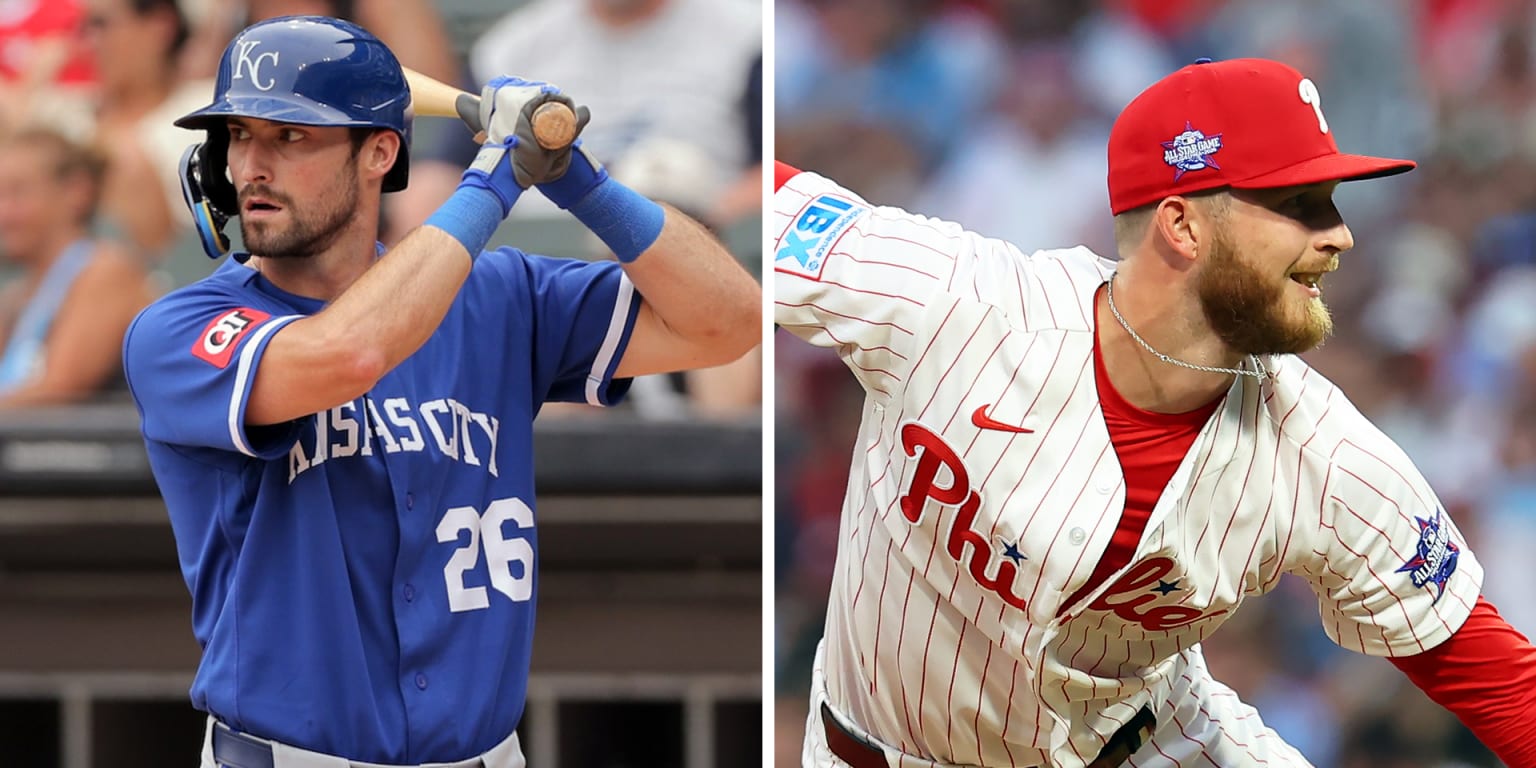
The Phillies made three moves Saturday ahead of their game against the Yankees: acquired outfielder Kameron Misner from Kansas City for cash, selected the contract of right-hander Brian Keller for his MLB debut, and recalled left-hander Kyle Backhus from Triple-A Lehigh Valley. The sequence reveals a front office prioritizing bullpen construction and depth over the right-handed bat they've desperately needed to solve their platoon problem against southpaws.
Misner, 28, arrives with a triple-A resume that screams talent (14 home runs, 14 stolen bases, .941 OPS in 63 games with Omaha this season) but a major-league reality that doesn't match it. He has hit .206 with a .571 OPS in 97 games across parts of three seasons with Tampa Bay and Kansas City. His assignment to Lehigh Valley means he won't contribute at the big-league level in the short term—he's organizational depth, not a roster solution. Interim manager Don Mattingly, who drafted Misner in 2019 when managing Miami, acknowledged the gap: "Obviously, has had a lot more success in Triple-A at this point than he has in the big leagues." The cash-only deal suggests neither team was high on his near-term ceiling; Philadelphia is banking on the fact that a change of organization, combined with time in a developed farm system, might unlock some of what Misner showed in the minors.
The bullpen additions carry more immediate weight. Keller, 32, is making his MLB debut after posting a 2.23 ERA in eight Triple-A starts this season, but his path is circuitous: he pitched in Japan in 2023, suffered an elbow injury after three appearances, and underwent Tommy John surgery that cost him all of 2024 and 2025. His return is a low-cost relief reclamation project. Backhus was recalled after posting a 5.87 ERA in 17 big-league appearances earlier this season—a demotion-and-recall move that signals instability more than confidence. What matters is that both are left-handed arms in a bullpen that, according to Mattingly, lacked depth at the position. With José Alvarado as the only other reliable left-handed reliever, the Phillies were vulnerable to overuse in matchups favoring southpaw appearance.
For wagering purposes, the philosophical message is instructive: the Phillies are not confident enough in their offense to lean on it down the stretch. Instead, they're doubling down on bullpen construction—specifically, the ability to match left-handed matchups in high-leverage spots. This matters for team-total and run-line angles in games where the Yankees (or other opponents heavy on right-handed hitters) face Philadelphia starters. The Phillies' confidence in getting out of innings with runners on likely ticked upward with two relief arms in house, even if one is unproven post-surgery and the other is a recent demotion. Expect their moneyline pricing to tighten slightly as the market factors in better bullpen coverage, particularly in games where they face teams stacking right-handed batters. The offense, meanwhile, remains the weak link—no right-handed acquisition means the .260 wOBA deficit against left-handed pitching persists, keeping unders on team totals viable in matchups with quality left-handed starters.
Neither Misner nor the rotation depth shifts the needle for today's Yankees game. Mattingly is using Tim Mayza as the opener with Keller following—a bullpen-heavy approach that signals either confidence in run containment or resignation about early-inning scoring. The real action is psychological: a team signaling it can hold leads rather than build them. That calculus favors unders on the run total and a lean toward the Phillies' moneyline as the underdog, not because the offense improved, but because the liability on blown leads dropped.
MLB Intelligence — Baseball intelligence beyond the box score. Open MLB Intelligence →