MLB · injury
Ohtani's Dual Injuries Will Linger Through October; Dodgers Lean on Management Over Full Health
The two-time MVP admits his left knee and right bicep won't heal in time for the postseason, forcing the Dodgers to monitor their franchise player's availability and output across a November push for the title.
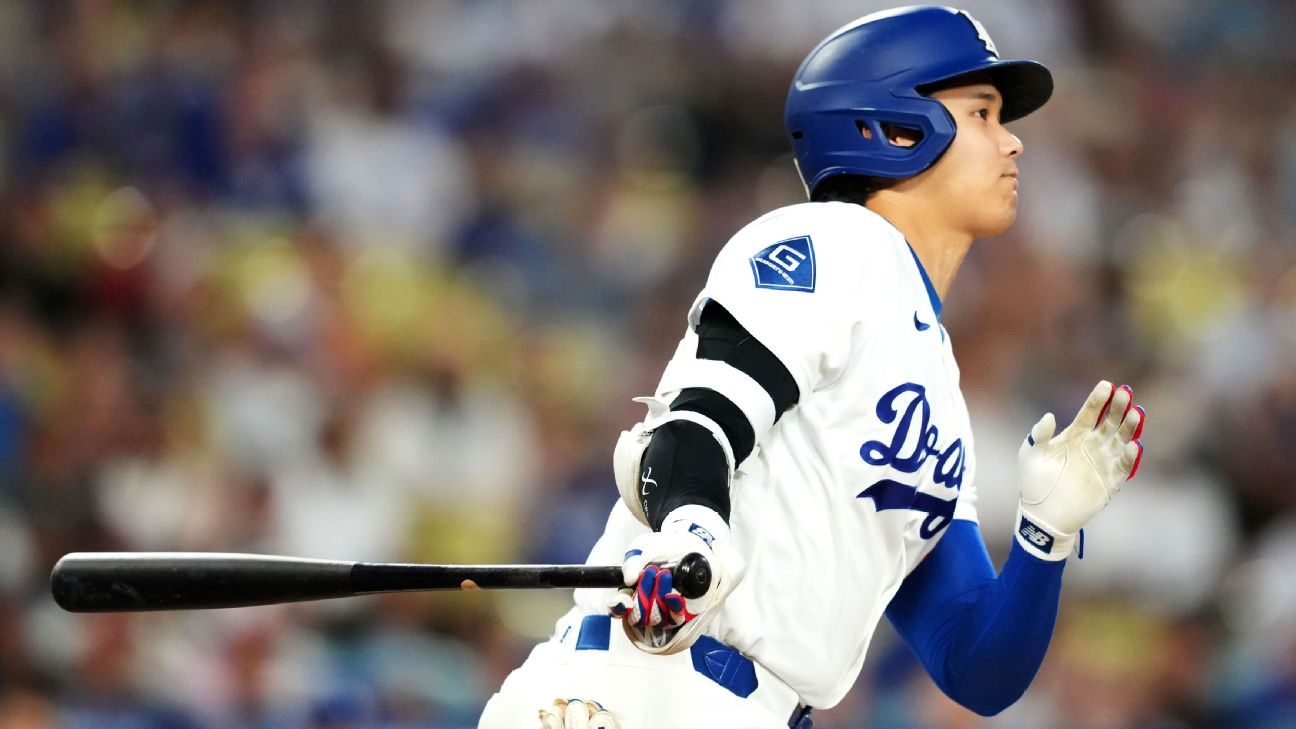
Shohei Ohtani took the field for outdoor batting practice Friday evening and declared himself ready for Saturday's NLDS Game 1 against Atlanta—but with a critical caveat: he won't be fully healthy. The left knee and right bicep injuries that sidelined him in early September will follow him through the playoffs, a reality Ohtani and manager Dave Roberts confirmed Friday as Los Angeles prepares for its division series.
Ohtani spent most of September managing these dual ailments. He landed on the injured list in the first week of the month after a brutal 14-game stretch that yielded only seven hits against 22 strikeouts. Upon his return with five games remaining in the regular season, his performance remained uneven—solid against San Diego, overwhelming against San Francisco. The injuries plainly affected his timing and plate discipline during that stretch, which is precisely why his recent batting practice sessions carry weight. Over Tuesday and Wednesday, Ohtani hit balls off the scoreboard in workouts described by hitting coach Aaron Bates as "as good as we've seen it this year." That trajectory matters less for his health status and more for what it signals about his swing mechanics entering the postseason.
Roberts emphasized Friday that Ohtani isn't alone in carrying injury baggage into October—Freddie Freeman and several others are similarly compromised. But Ohtani's injuries carry outsized importance because of his dual-threat value and the Dodgers' reliance on his bat in a lineup built to win now. The team believes he can perform despite being structurally damaged, a calculation that hinges entirely on how well he manages pain and maintains mechanics over multiple games in rapid succession.
For prop bettors, this admission reshapes how to approach Ohtani's postseason output. The mechanism is straightforward: pain-management situations create volatility in performance distribution. A hitter managing knee and bicep issues doesn't slip into a linear decline—he experiences higher variance between games, with some performances resembling health and others reflecting the physical tax of the moment. His strikeout rate during that September slump (22 K's in 14 games, roughly 11.0 K/9 equivalent) is more predictive of his October floor than his recent warm-up sessions are. Betting markets will likely price Ohtani's postseason props based on full-season averages or his recent positive swings, not the structural reality that his plate discipline will remain under pressure from bilateral injuries. Strikeout props on Ohtani warrant elevation in the first two rounds; home run props warrant caution, as reduced bat speed off the right bicep will suppress exit velo on fastballs. His overall team total contributions are priced for a player managing pain, which the market already knows—but individual prop lines haven't fully widened to reflect that his variance, not his decline, is the real edge.
MLB Intelligence — Baseball intelligence beyond the box score. Open MLB Intelligence →