MLB · lineup
García Trade Reshapes Yankees Lineup for Right-Field Edge
Luis García Jr. arrives in the Bronx as the AL East's hottest hitter, with a mechanical adjustment that makes Yankee Stadium's short porch a direct profit engine.
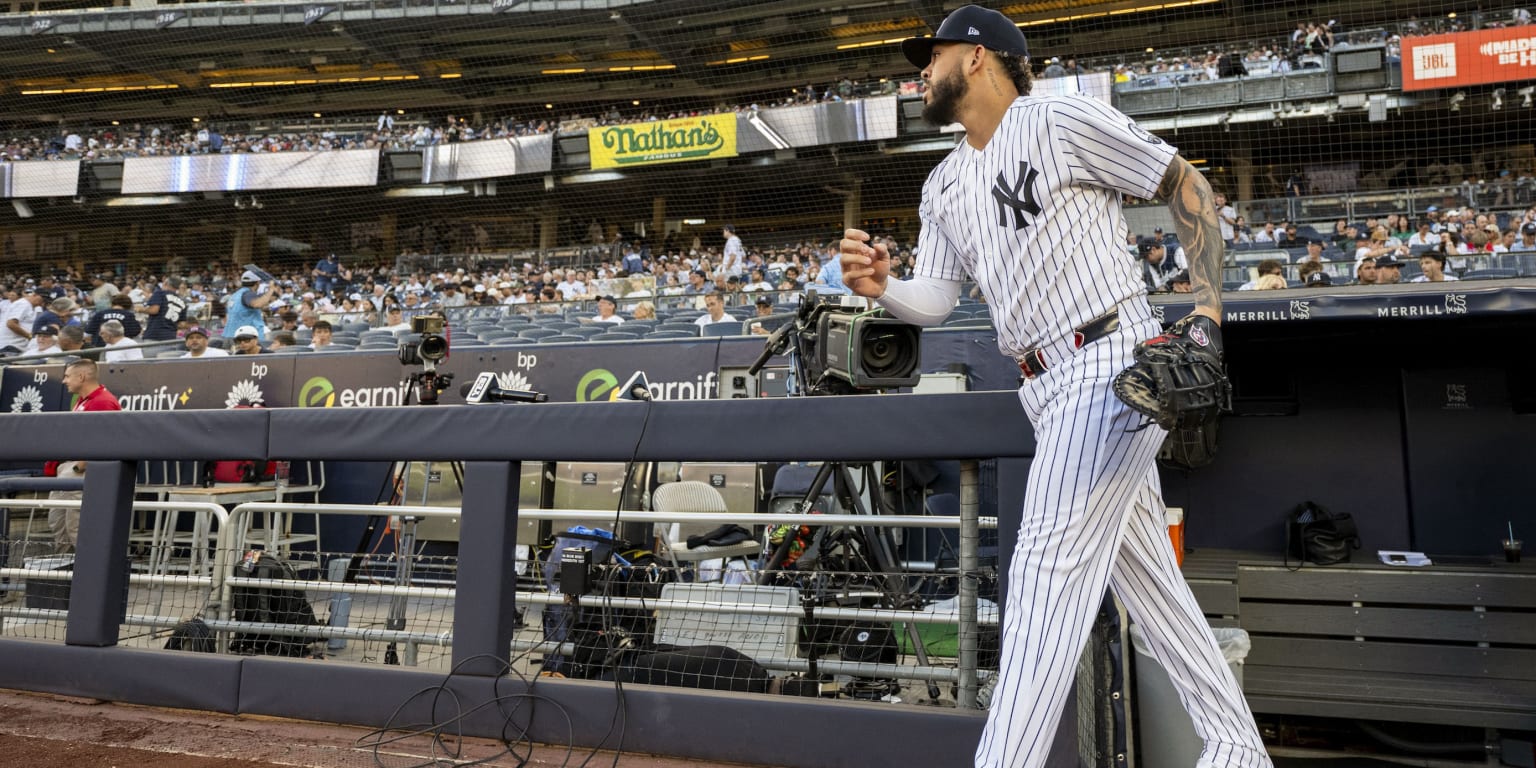
The Yankees acquired Luis García Jr. from Washington on Sunday, and the 26-year-old New York native made his pinstriped debut Monday batting third against the Cardinals. García arrives at .283/.313/.560 with 23 home runs and 76 RBIs—both career highs—and entered the trade leading the National League in slugging percentage at .560. He's been on a tear: .367 with two homers and six RBIs across his last seven games. The move cost New York four pitchers, including prospect Jack Cebert (ranked 14th in the organization) and Ben Grable (25th), signaling the front office's confidence in García as a core piece through 2027, not a rental.
The mechanical foundation of García's breakout matters for the Yankees. He's pulling balls in the air at a career-high 18.5% rate—a deliberate adjustment to add loft and authority. That swing tweak, combined with his improved contact against left-handed pitching (.247 this season vs. .195 last year), gives him a sustainable path to consistent at-bats. Manager Aaron Boone will deploy him primarily against right-handed starters at first base or DH, with Paul Goldschmidt handling the lefty split. García's pullside tendency and the short porch in right field at Yankee Stadium create a direct geometric advantage: his already-elevated fly-ball rate now has a lower distance threshold to clear the fence.
The offensive ceiling for the Yankees has been a problem. New York scored exactly two runs in each of its three weekend games against the Cubs, winning two of three despite the offensive drought. That stretch underscores a months-long slump that prompted the trade-deadline action. García's track record against National League pitching—steady contact, power, and improved secondary pitch recognition—suggests he won't be a weather-dependent addition. His seven-year career arc also shows durability; at 26, he's past the prospect volatility window.
For betting purposes, García's arrival creates a direct avenue on Yankees team totals and run-line expectations. New York's run production has been the limiting factor on overs; adding a .283 hitter with 23 home runs who pulls the ball at a career-high rate changes the baseline offensive power. The immediate impact will be on games where García faces right-handed starters, where his .283 average and .560 slugging percentage apply directly. His first-base positioning also removes defensive liability concerns that might otherwise cap his playing time. The Yankees' team total over/unders in upcoming matchups against RHD-heavy rotations should reflect an offensive boost, but the market may not have fully repriced the Yankee Stadium geometry advantage: García's pullside approach in the Bronx is not the same hitter who compiled those stats in Washington's Nationals Park. That edge persists as long as García maintains his fly-ball rate and matchup splits hold.
The Yankees' acquisition represents a calculated bet on mechanical sustainability rather than recency noise. García spent significant time in the cage and weight room to earn this swing adjustment; it's not a three-week hot streak. His improved performance against southpaws proves he's willing to adapt, and his club control through 2027 gives New York runway to evaluate whether the short porch amplifies his power profile. Early matchups against right-handed-heavy pitching staffs will be the proving ground.
MLB Intelligence — Baseball intelligence beyond the box score. Open MLB Intelligence →