MLB · milestone
Nuñez Rewrites Nationals Speed Record—and Exposes Why Books Underprice Stolen Base Prop Stacks
The Nationals speedster just shattered Washington's single-season SB record with a 49th steal, but his leap from 9 thefts last year signals a deeper market mismatch: stolen base props on elite base runners still move like replacement-level speed threats.
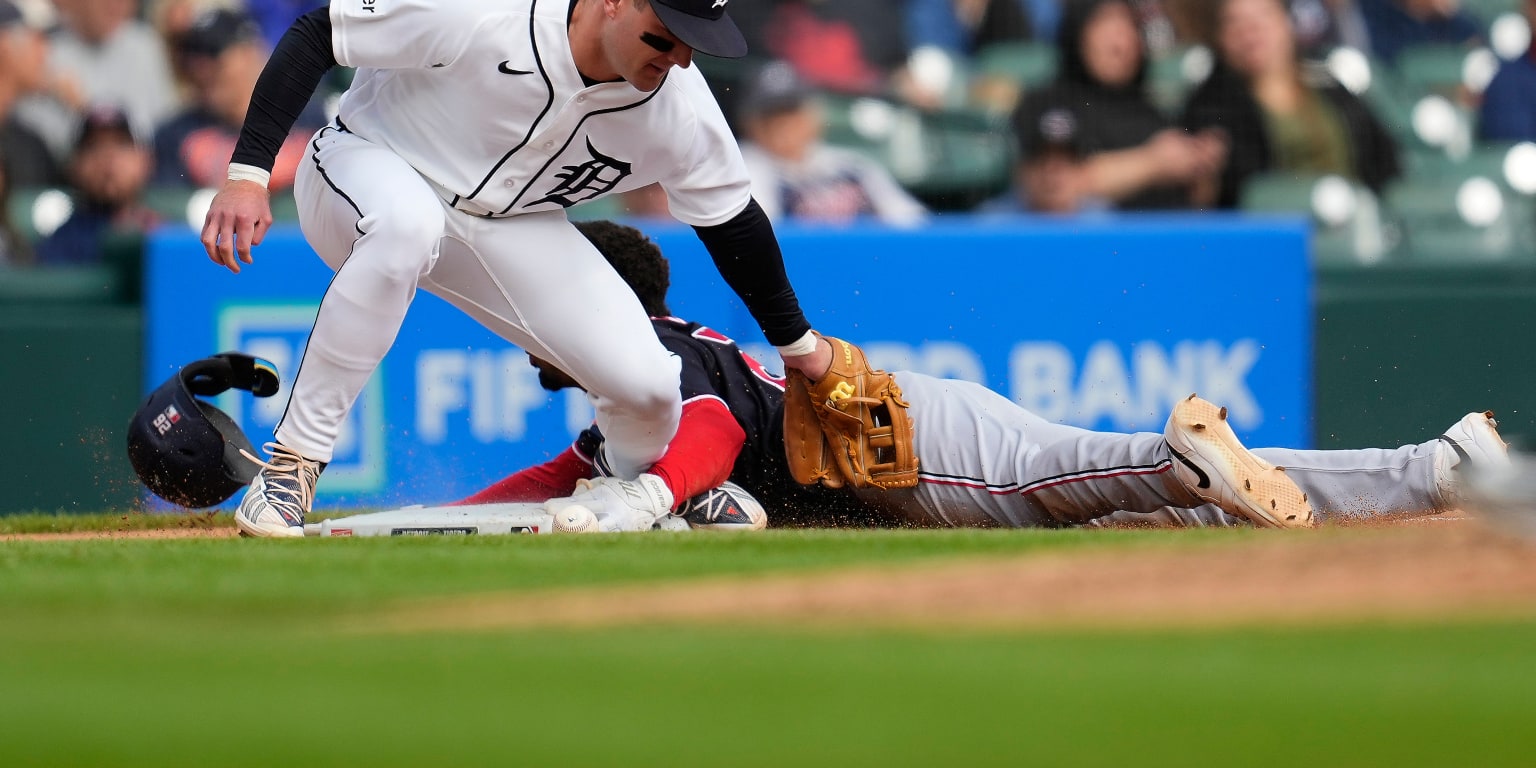
Nasim Nuñez stole his 49th base Wednesday night in Detroit, breaking CJ Abrams' franchise record of 47 set in 2023. The 26-year-old shortstop entered the season with an explicit target of 80 steals—an audacious number, but one grounded in visible mechanics rather than hype. Over nine games remaining in the season, Nuñez needs 31 more steals to hit that mark. He won't get there, but the trajectory tells a story the sportsbook market has been slow to price.
The leap from nine steals last year to 49 this season isn't random volatility. Nuñez, a 2023 Rule 5 pick in his first year as a regular starter, spent the offseason working with bench coach Michael Johns and first-base coach Corey Ray on decision architecture—specifically, when not to run. Early in the season, Nuñez was a headless attacker, stealing in suboptimal spots and burning outs. That changed. Nationals manager Blake Butera credits the coaching staff with teaching Nuñez to read pitcher attention and catcher readiness rather than simply using his elite sprint speed (he stole third base on a 28.7 feet-per-second slide Wednesday) as an open invitation. The result is a player who now commands trust on the basepaths. "When he's on base, it's like, 'Nas, it's all you,'" Butera said. Translation: the team has stopped handcuffing him.
This matters for stolen base prop betting because the market traditionally prices SB lines as if the player's speed is the only variable. Nuñez's 30 feet-per-second sprint velocity (league average for competitive plays is 27) looks like a nine-steals-per-season floor to a line-setter. But coaching intervention that unlocks decision-making can double a baseline overnight. Compare Nuñez to Chandler Simpson of Tampa Bay, who has 46 steals—one fewer than Nuñez, despite being on a team playing meaningful baseball. Simpson is a speed asset with worse coaching architecture; the gap between 46 and 49 is a gap between "fast guy the team uses" and "fast guy the team trusts to think."
For bettors, the angle is structural, not recency-driven. Nuñez's coaching investment won't vanish after September. If he remains in Washington's lineup next season (a reasonable assumption given the Rule 5 contract mechanics and the team's farm-system constraints), his stolen base floor has been reset upward. The 2026 market will price him as a 9-steal baseline with 2026 numbers as the comp; books have not yet fully absorbed that 2025 marked a coaching inflection, not a ceiling. His stolen base totals and game props against teams with weak catcher-pitcher communication will retain value through October and into spring 2027 projections. The current stolen base prop market on Nuñez is priced like he's still the uncoached version.
The Nationals have clinched nothing; Nuñez's stolen base rate will flatten if Washington pulls its starters in blowouts down the stretch. But the structural upgrade—fast player + smart coaching = trustworthy base-thief—persists regardless of September weather. Any projection model that treats his 2025 SB total as a fluke rather than a permanent improvement to his archetype is undervaluing the coaching premium.