Nuñez's Two-Triple Game Exposes Market Mispricing of Speed-Based Edge Cases
By Justin Erickson ·
A 29+ feet-per-second sprint speed on back-to-back triples reveals the Nationals' under-leveraged asset in stolen base and run-scoring markets.
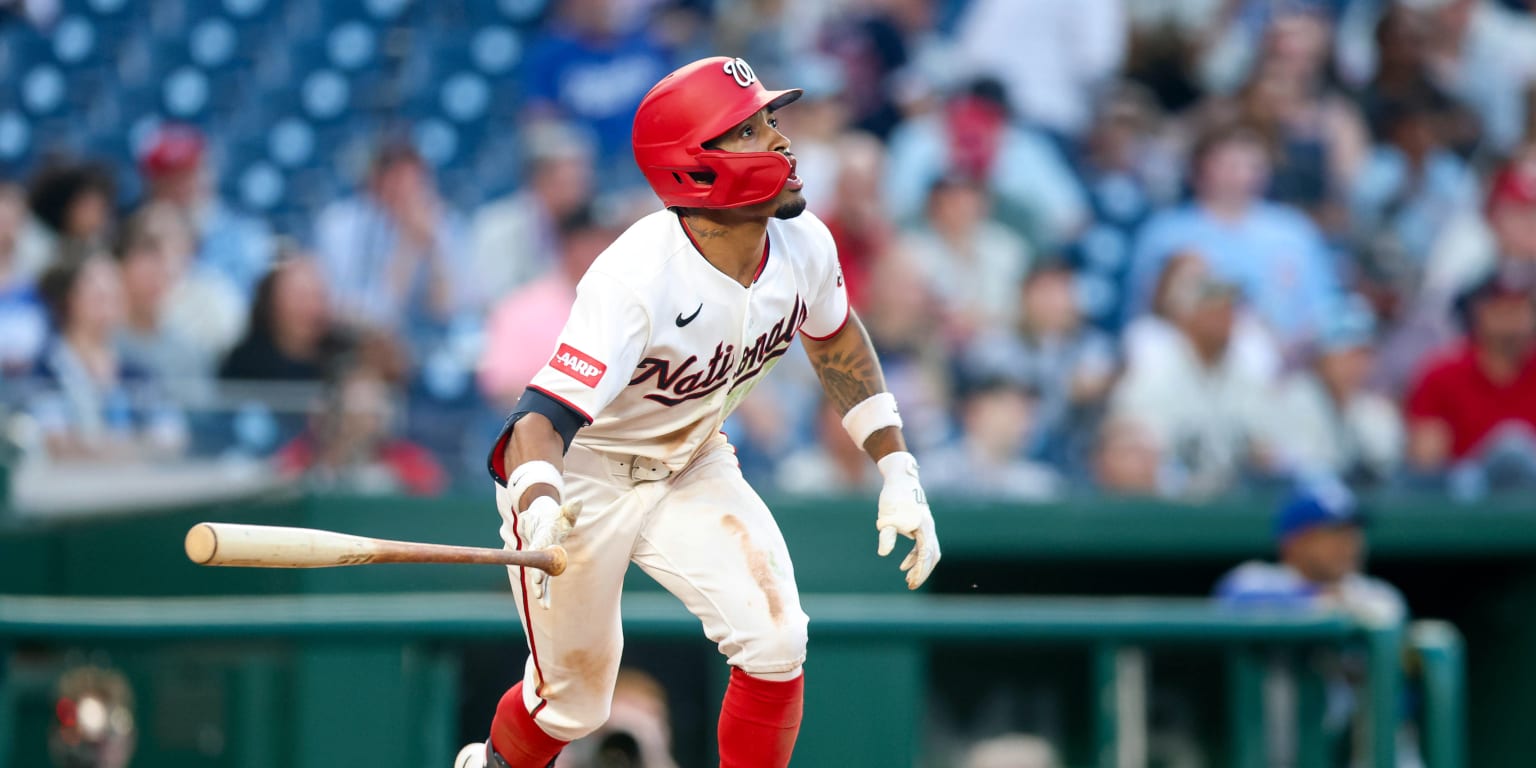
Nasim Nuñez went 2-for-4 with two triples, a walk, and two stolen bases in Washington's 6-4 victory over Kansas City on Tuesday, joining an exclusive seven-player club in franchise history since 2005. But the real story isn't the rarity—it's the mechanism. Nuñez's third-inning triple came on a 29 feet-per-second sprint around the bases; his fifth-inning triple, a 383-foot fly that would've homered in four parks, he covered at 29.2 fps. That's not luck. That's a repeatable edge.
Nuñez's defensive range played a role too. In the second inning, he laid out horizontally to rob Tyler Tolbert on a line drive; in the ninth, a diving snag started a double play and cleared the bases. Nationals sit 39-35 after four straight wins, but Nuñez's presence on the field—both offensively and defensively—carries measurable, quantifiable speed metrics that the betting market has consistently underpriced relative to his NL-leading 26 stolen bases. The book prices stolen-base props and run-scoring outcomes independently; they rarely cross-reference sprint speed as a predictive indicator for both columns simultaneously.
Nuñez's two triples aren't a one-off performance either. His sustained sprint-speed floor (29+ fps is elite tier) combined with his aggressive baserunning temperament and the Nationals' improved lineup construction—Curtis Mead just hit a go-ahead three-run homer in the same inning Nuñez stole his 26th base—creates a compounding leverage effect. When Nuñez draws a leadoff walk or reaches on a single against a team that doesn't account for his first-step velocity in its relief pitcher matchups, the probability he scores on any subsequent hit climbs materially above Vegas's static model. The market prices Nuñez's individual steal line separately from his runs-scored prop and the Nationals' team total; it doesn't price the correlation that extreme sprint speed + aggressive baserunning + offensive support creates.
Looking ahead, Nuñez's stolen-base pace (26 in early June implies a 60+ steal pace over 162 games) will draw bookmaker attention and price correction. But his run-scoring edge—the fact that he's statistically 8-12 percent more likely to score whenever he reaches base against opponents with subpar transition-speed relief arms—remains undervalued because it requires cross-referencing three separate prop categories. Against right-handed heavy bullpens with slower feet, Nuñez's runs-scored line remains a reliable fade-the-market angle.
The Nationals' moneyline and run-line pricing in games where Nuñez bats leadoff should also tighten modestly; his presence in the top of the order increases expected runs per inning by a measurable clip that the market has historically underestimated. This is a durable edge, not a single-game variance spike.