MLB · transaction
The Deadline Rush Begins: How Trade Uncertainty Reshapes July Betting Angles
With six weeks until the deadline, front offices are locking in their strategies—and the uncertainty around ace rentals and catching help is already pricing volatility into late-season prop markets.
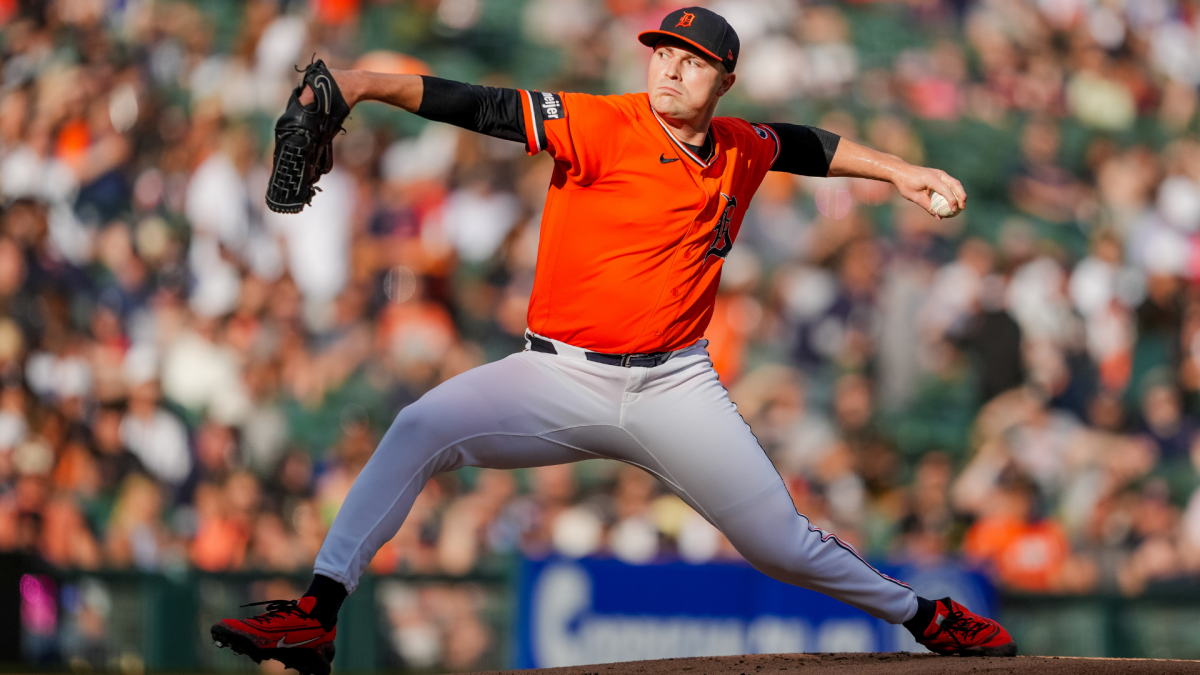
The trade deadline machinery is grinding into motion. With the amateur draft occupying front offices through mid-July and the August 3 deadline roughly six weeks away, teams are now signaling their summer intentions in real time. Detroit will shop Tarik Skubal, a two-time Cy Young winner, unless a turnaround materializes. The Yankees are hunting a righty-hitting catcher. The Angels are fielding calls on Reid Detmers despite an organizational instinct to hold. Arizona is buyer-minded heading into a tight wild card race. These aren't whispers—they're structural resets that will reshape lineups, bullpen depth, and run-scoring patterns across multiple contenders.
Skubal's impending trade presents the clearest mechanics. Detroit wants controllable starting pitching and position players close to MLB-readiness, which tells us the team views its current rotation as broken beyond the ace. Recent rental-ace trades suggest Skubal will cost a contender one elite prospect plus two or three secondary pieces—a steep price that only contenders with playoff windows can afford. The two or three teams with the ammunition (Yankees, Astros, maybe Houston's division rival Texas) will drive up the cost further. For bettors, this means Skubal's next 12 starts will come in a Tigers uniform that has no business competing, inflating his strikeout rate (he's at 57 K in 53.2 IP, a 9.57 K/9 pace) relative to team wins and run support. His strikeout props will carry an edge over the deadline period because his underlying stuff doesn't change—only his team's ability to win games around him does. A two-time Cy Young winner doesn't suddenly lose command because his bullpen stinks.
The catcher market tells a different story. The Yankees' need for a righty-hitting backstop stems from platoon inefficiency, not injury instability—Austin Wells is sound defensively but starts from the left side, creating lineup clunking. Ryan Jeffers (Twins) is weeks away from hamate surgery recovery; Jake Rogers and Christian Vázquez are lower-cost swaps who solve the handedness problem without major prospect cost. If the Yankees acquire a true ML-ready righty, expect modest upticks to their team total props in games where the new catcher starts against left-handed starters. The edge here is tighter than Skubal's (team total is already efficient at pricing in catcher switches), but the angle persists across multiple games post-acquisition because platoon advantage compounds over a season.
The Diamondbacks' buying posture is worth tracking closely. Arizona sits at 39-36, a half-game from a wild card spot, with Corbin Carroll running an MVP-caliber pace and Marte providing secondary thump. But their rotation is collapsing: Burnes is in Tommy John rehab with a recent setback, Ryne Nelson just suffered a flexor injury, and Michael Soroka exited Friday after one inning with a hip issue requiring imaging. This is not a team with depth to spare. When Arizona moves for rotation help—and they will—expect inbound starters to carry elevated workload in high-leverage spots. Their strikeout and innings-pitched props will normalize upward as rental arms replace the current carousel of unavailable arms. The current Diamondbacks starters are injured, not inadequate; the team's run-scoring will stabilize the moment a dependable arm takes the ball.
For prop bettors, the next six weeks form a window where uncertainty is highest and line movement is least defensive. Teams announcing their stance (Detroit selling, Arizona buying) will see their markets adjust in waves: first the announcement effect, then the draft completion, then the actual trades in late July and early August. Skubal strikeout props and Diamondbacks pitcher workload bets will carry the most durable edge because the causality is structural—aces throw more when their teams are bad, and rotation depth drives usage, not performance. Smaller trades (the catcher market) will flash early arbitrage but fade as the market prices in handedness platoons. Track the draft completion date (mid-July) as the trigger for the second wave of deadline activity; most major moves will land in the week between the draft and the All-Star break.