MLB
Mahle's Quiet Deadline Acquisition Is Looking Like Atlanta's Safest Bet for October
Tyler Mahle has posted a 3.06 ERA across nine starts since the Braves acquired him from San Francisco, emerging as a viable Game 2 starter candidate while the team's postseason rotation takes shape.
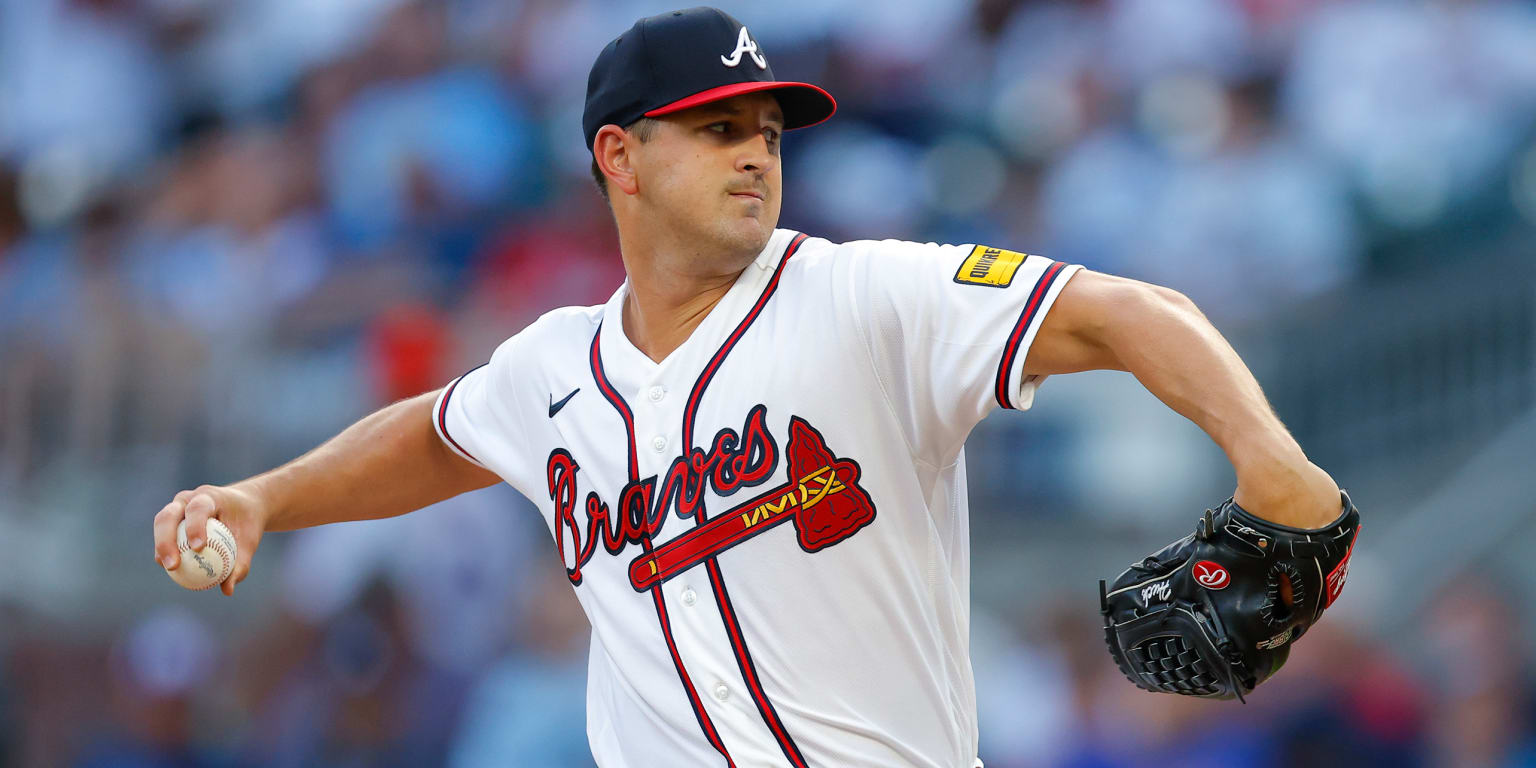
Tyler Mahle arrived in Atlanta as a consolation prize. The Braves couldn't pry Jacob deGrom away from Texas, couldn't get the Giants to move Logan Webb, and watched Tarik Skubal walk out the door to Los Angeles. In the wreckage of a frustrating Trade Deadline, they landed a 31-year-old right-hander who had posted a 6.04 ERA in 11 starts for San Francisco and blown out his left hamstring for good measure. Nothing about that acquisition looked frontline on paper.
Wednesday's 6-3 victory over the Mets suggests Atlanta's front office spotted something the market hadn't fully priced. Mahle limited New York to one run over six innings while recording seven strikeouts, extending a remarkable two-start sequence since his arrival. Over 12 innings of work in Atlanta, he's struck out 16 hitters—a 12.0 K/9 clip. His ERA in those starts sits at 0.75. The sample is still compressed, but the mechanics are unmistakable: a pitcher who was cycling between mediocrity and injury with the Giants has found immediate traction in a new uniform.
The hamstring strain that cost Mahle a month earlier in the season reveals something worth tracking. Mahle's velocity and spin rates have remained stable post-return—the injury didn't structurally alter his stuff. What's changed is deployment context. San Francisco was out of contention when he returned; Atlanta is in the thick of a division race with 18 wins in their last 28 games and a 9.5-game lead over Philadelphia. Pitchers often throw with different intensity and focus depending on organizational urgency. Mahle's slider usage has ticked up since the trade, suggesting Atlanta's coaching staff adjusted his pitch sequencing to exploit weaknesses in NL East lineups he'll face repeatedly. That's not luck—that's systems working.
For prop bettors, Mahle's strikeout prop offers a narrow but legitimate edge. His 12.0 K/9 rate over two Atlanta starts conflicts with his season-long 8.1 K/9 average with San Francisco. Books will likely split the difference or drift toward his full-season mark, especially if the sample hasn't inflated his line yet. The mechanism behind the uptick—improved pitch sequencing from Atlanta's coaching staff combined with better conditioning post-hamstring strain—is durable enough to survive a single bad outing. The Braves face an NL East slate heavy with strikeout-prone lineups (Nationals, Phillies bench depth). Mahle's K prop likely carries value when his line sits in the 6.5-7.5 range, which should reflect his San Francisco baseline rather than his Atlanta reality.
Chris Sale projects as the Game 1 starter in October, but Mahle has built a credible case for Game 2 with just two starts. That's the upstream betting signal: the organization is committing resources to a pitcher it views as postseason-viable. Teams don't build October rotations around reclamation projects unless early evidence triggers confidence. The Braves had alternatives and chose depth over star power. That calculation often outperforms the headline trades in October baseball.
MLB Intelligence — Baseball intelligence beyond the box score. Open MLB Intelligence →