MLB
Lile's Reds Mastery Signals a Mid-Season Pivot for Nationals Offense
A Louisville native's three-run blast and clutch hitting expose the Nationals' sudden need for secondary contributors as injuries and trades hollow their lineup.
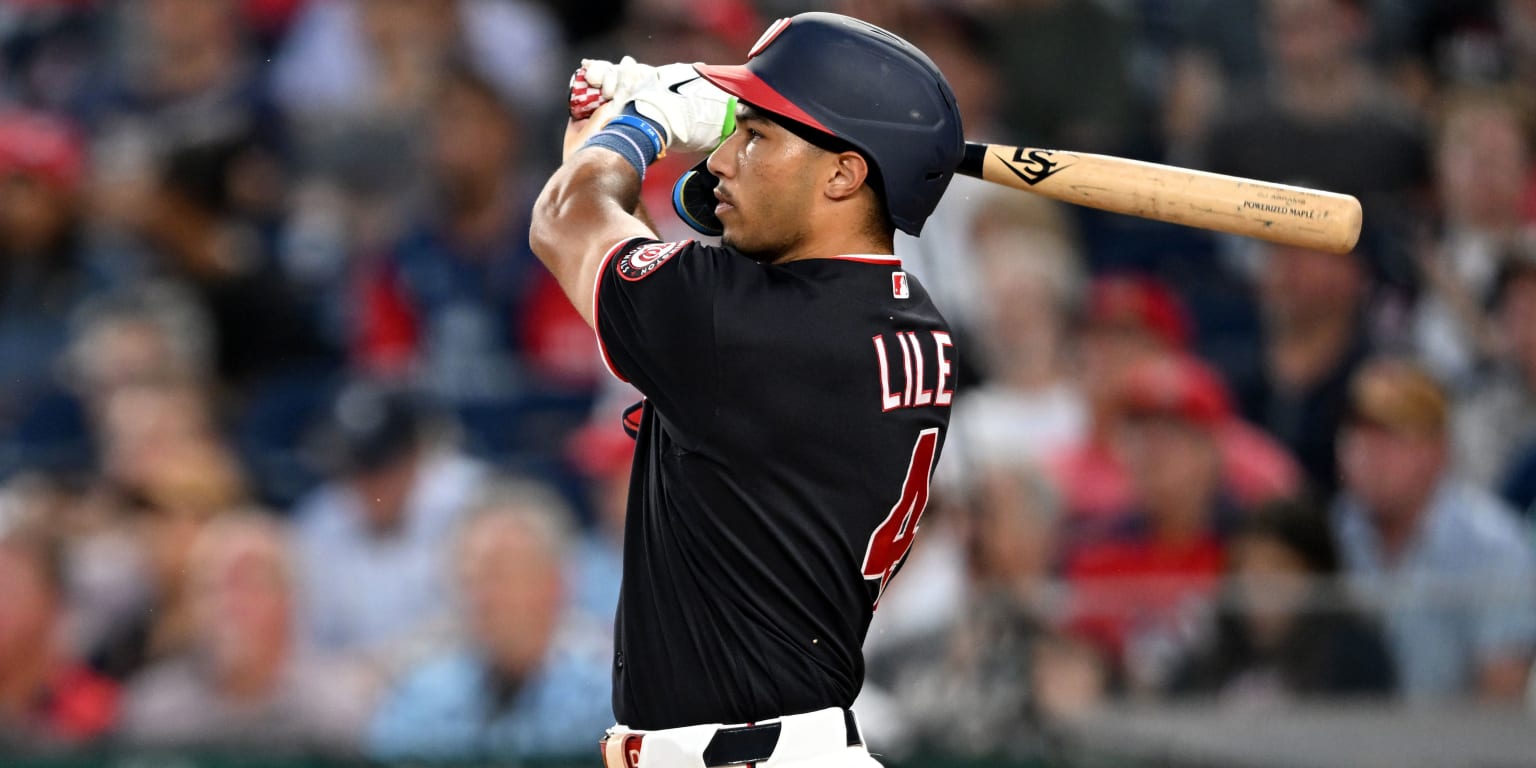
Daylen Lile broke a personal 0-for-13 skid with a three-run home run in the first inning of Friday's series opener, handing Washington a 3-0 lead and sparking a 5-3 victory over Cincinnati. It was Lile's second dominant showing against the Reds this season—he'd already impressed at Great American Ball Park in May with friends and family in attendance. This time, the Louisville native extended his dominance: 2-for-4 with a double, a homer, two runs scored, and three RBIs. Over four games against Cincinnati in 2026, Lile has posted a .412 average (7-for-17) with four homers, five runs, and 10 RBIs. That's not noise; it's a specific, repeating edge.
The context matters more than the single game. The Nationals sit atop the majors in home run total (170) and run production, yet they've suddenly lost depth. James Wood is sidelined on the 10-day IL. Luis García Jr. and Curtis Mead—both recent trades—are gone. The team's offensive scaffolding has begun to crack, and Lile's rediscovery against Cincinnati arrives at exactly the moment when the Nationals can't afford for him to remain inconsistent. Manager Blake Butera described the issue clearly in pregame comments: pitch selection and timing have been Lile's recurring weaknesses this season, despite his raw talent and a breakthrough rookie campaign last summer. The coaching staff has invested heavily in mechanical work. Friday's outing—particularly the decisiveness in the box—suggested some of that labor is yielding results.
Cade Cavalli, meanwhile, extended his streak to six consecutive quality starts despite surrendering three solo homers to Suárez, McLain, and De La Cruz in the first three innings. His curveball was sharp, and his command was steady enough to survive the early damage. The defense behind him proved decisive: Brady House, José Tena, and Abimelec Ortiz turned a critical 5-4-3 double play in the fifth with runners on and one out, a sequence that may have preserved the win. Cavalli's workload has been managed carefully—he exited after 90 pitches and six-plus frames—but his reliability in quality-start territory has become a cornerstone of the rotation's consistency.
For prop players, Lile's specific edge against Cincinnati is difficult to ignore, though it's embedded in a single-matchup context that limits portability. His ISO (isolated slugging) jumps dramatically when facing the Reds' pitching staff; the four-game sample shows a .47 ISO versus his season average of approximately .35. This isn't a result of facing weak relief—he's done damage across Reds' rotation and bullpen arms. The mechanism is likely one of familiarity and comfort: Lile has seen Cincinnati's arsenal twice now in a condensed window, and his approach has tightened accordingly. The risk is that betting Lile's home-run or RBI props in future Reds matchups assumes this specific comfort carries forward, which is durable if the two teams remain in regular contact, but volatile if this becomes the final meeting of the season. Early August means limited data on future scheduling; if the Nationals and Reds play again soon, Lile's props—specifically HR and RBI lines—warrant elevation from their baseline. If this is the tail end of their matchup series, the edge dissipates.
The broader offensive story for Washington is one of forced adaptation. Trading depth for marginal upgrades elsewhere has compressed the margin for error. Lile's hot stretch against a specific opponent reveals both a potential solution and a hard truth: the Nationals' run production will now depend on secondary contributors delivering repeatably, not just spotty heroics. Cavalli's six-game quality-start streak and Friday's defensive execution bought them a series-opening win, but the roster construction suggests that wins will come from players like Lile stepping up consistently, not from stable lineups.
MLB Intelligence — Baseball intelligence beyond the box score. Open MLB Intelligence →