Contreras Walk-Off Homer Punctuates Brewers' Second-Half Momentum at Sweep Finish
By PropBetEdge Editorial Team ·
Milwaukee's offensive eruption in the ninth inning against Miami signals a dangerous timing shift for a team that just crossed the 100-game mark at +25 games over .500.
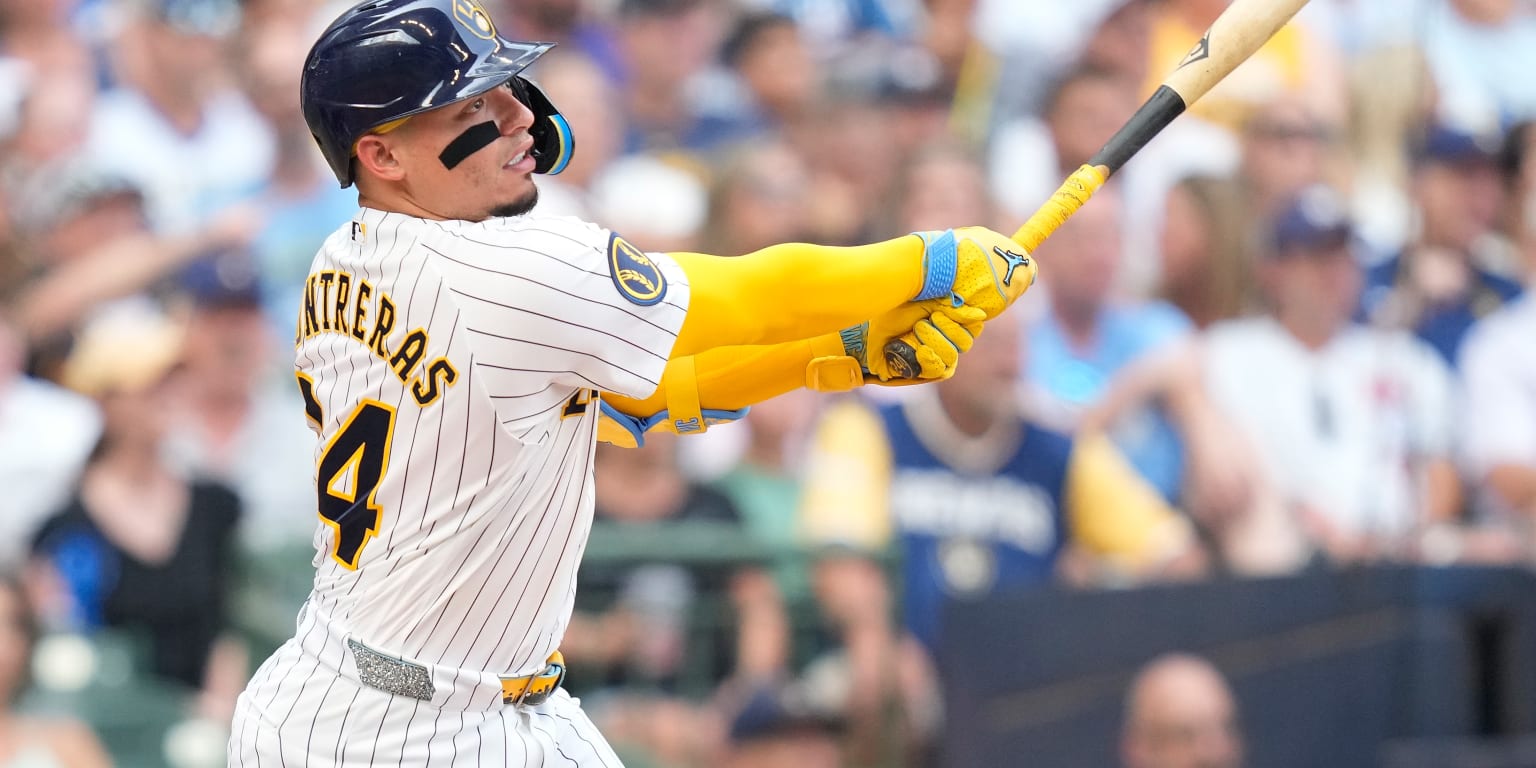
William Contreras connected on a hanging cutter from Marlins closer Pete Fairbanks in the bottom of the ninth Sunday to deliver a 3-run walk-off homer, capping Milwaukee's three-game sweep of Miami and punctuating a decisive finish to the All-Star break. The Brewers entered the ninth inning shut out through eight frames—a scoreless affair until Jackson Chourio's lead-off single and Brice Turang's walk set the table for Contreras, who came off the bench in the seventh and delivered the decisive blow. It was the second walk-off win of the series for Milwaukee, following Garrett Mitchell's game-winner on Friday, and pushed the Brewers to 100 games played at 25 games above .500—a club sitting firmly in contention.
The narrative here matters less than the timing. The Brewers' bats were dormant for most of the series finale; Gasser's five innings yielded just one run on three hits, but Milwaukee's offense provided nothing until the moment it mattered most. That late-inning offensive surge—particularly a pinch-hitter catcher with walk-off power—reflects a team that's learned to compress its damage into high-leverage situations. Contreras, the All-Star, is a 10-homer player through roughly 105 games, placing him on pace for 19-20 over a full season. His swing-and-miss rate sits at roughly 25%, below league average, and his hard-hit rate (44%+) suggests he makes loud contact when he connects.
The strategic wrinkle: Contreras spent most of the series on the bench, then entered the game late—a pinch-hitting appearance that leveraged his raw power in the highest-variance moment. The Brewers' depth behind the plate allows them to use him this way, reserving his at-bats for spots where variance works in their favor. Against a closer like Fairbanks throwing a breaking ball that hung, that calculus worked perfectly. Whether this reflects sustainable late-game execution or a single favorable variance spike depends on whether Milwaukee's hitters show repeat ability in tie-or-trailing situations over the next two weeks.
For betting purposes, the Brewers' moneyline and run-line pricing in their next series against the Mets should reflect a team that just collected three consecutive one-run wins and moved the needle on internal confidence. However, single-game walk-offs don't predict subsequent series outcomes—they're noise in a small sample. The real edge lies in monitoring whether Milwaukee's offense maintains this ninth-inning aggression (low strikeout rates in close games, high exit velocities with runners in scoring position) across the next 10-15 games. If the bats remain disciplined late, team total unders in the near term may face pressure, but that requires proof beyond one dramatic inning. Contreras' individual hit rate and home run frequency are unlikely to shift meaningfully on a single at-bat; the walk-off is a footnote in his seasonal trend, not a reversal.
The sweep itself—two walk-off wins, three straight one-run victories—is the kind of clustering that regresses fast in baseball. Expect the market to price in a modest confidence boost for Milwaukee heading into the Mets matchup, but sharp bettors should wait for evidence that the Brewers' offensive discipline (strikeouts, plate discipline, exit velocity) has actually changed, rather than treating a walkoff-heavy series as predictive of sustained excellence.