MLB · milestone
Trout's Birthday Blast Punctuates a Career-Long Pattern—But Tonight's Fireworks Don't Rewrite Tomorrow's Odds
Mike Trout homered on his 35th birthday to tie a historic record, but a single-night surge carries zero predictive weight for his next plate appearance.
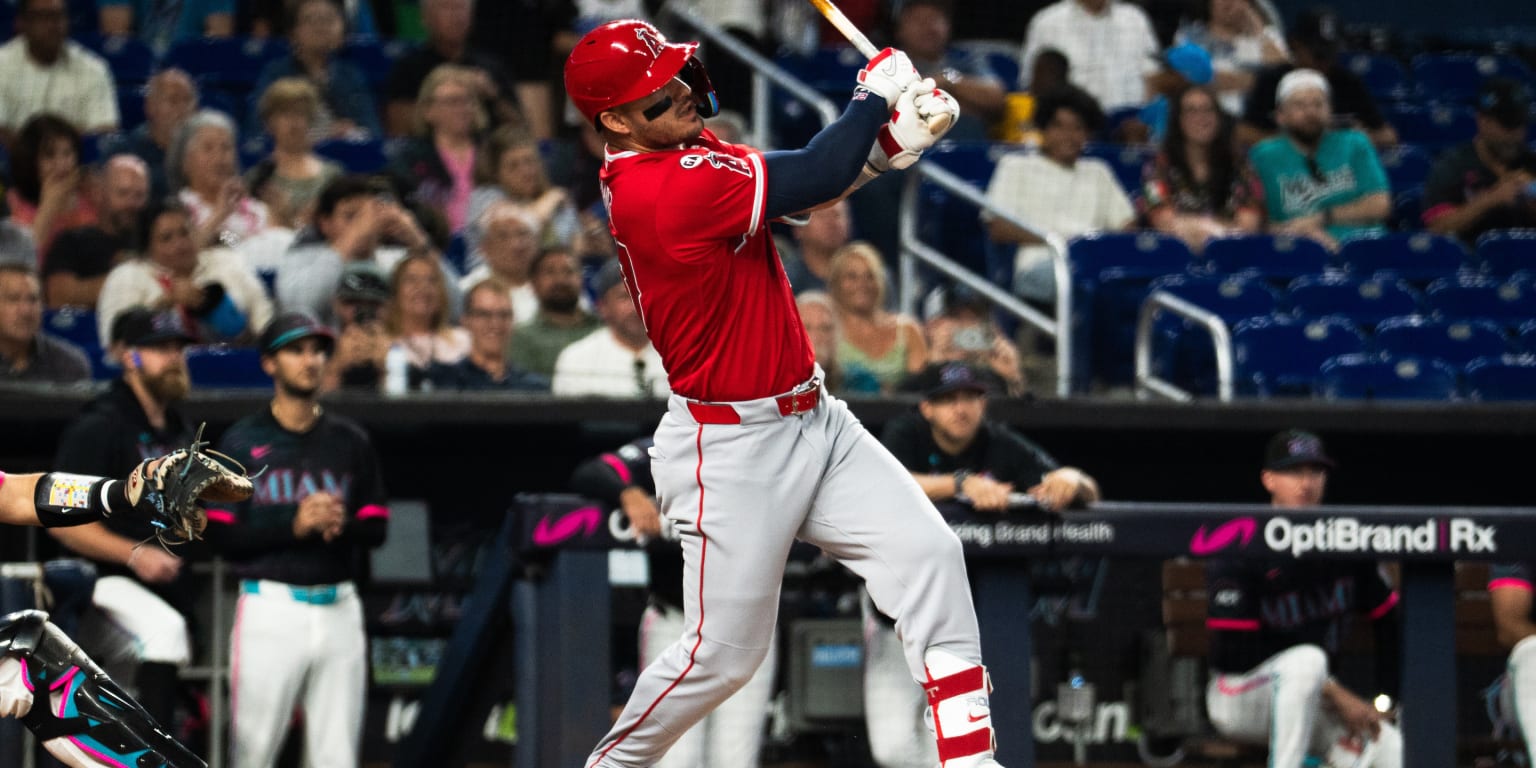
Mike Trout hit a 400-foot home run off Marlins starter Tyler Phillips on Friday night, his sixth career birthday homer, tying Alex Rodriguez and Mark Reynolds for the most in MLB history. The blast came on the first pitch he saw in the opening inning—a 96.8 mph four-seam fastball—and marked his 19th long ball of the season. It also made Trout the first player ever to homer on his birthday in six different calendar years: 2012, 2013, 2015, 2017, 2020, and 2026.
The statistical backdrop here is worth noting. Entering Friday, Trout was 9-for-28 (.321 average) with five homers in his previous seven birthday games. That's a robust sample for a single recurring date—well above his season rates—and it reflects a genuine pattern: Trout performs above baseline when he takes the field on August 7. The streak is real. What it isn't is predictive of anything beyond the moment it happens.
Betting markets don't price in nostalgia or historical resonance. A single home run, even one that checks a historic box, is noise in a 162-game season. Trout's season-long weighted average exit velocity, barrel rate, and hard-hit percentage will determine his next 20 plate appearances far more reliably than the fact that he delivered on his birthday four times in his career. The Marlins' pitching staff doesn't adjust its game plan because Trout has a knack for birthday power. Tyler Phillips doesn't change his approach in a rematch because of what happened Friday night.
What this moment does signal, however, is baseline health. Trout missed multiple birthdays due to injury—he didn't play on August 7 in 2021, 2022, 2023, or 2024. His presence in the lineup on Friday, and his ability to drive a fastball 400 feet, confirms he's available and functional at an age when star position players often begin to decline. That durability matters for Angels totals and Trout's own counting-stat props over the course of remaining games in August and into September. But it matters as a season-long durability signal, not as a Monday-morning contra to Friday's box score.
For bettors, the angle isn't to chase Trout's next home run or extend his batting average because he went deep on his birthday. It's to monitor whether the Angels' lineup depth has enough depth around him to sustain run production—and whether Trout's continued ability to stay on the field will push the team's win total in the direction books haven't fully repriced since the injuries that cost him those four birthdays.
MLB Intelligence — Baseball intelligence beyond the box score. Open MLB Intelligence →