Trout's Perfect Night Masks a Deeper Offensive Struggle
By PropBetEdge Editorial Team ·
A 4-for-4 performance against San Francisco arrives at the end of a season where Trout's batting average sits dangerously low, complicating the prop narrative around baseball's best player.
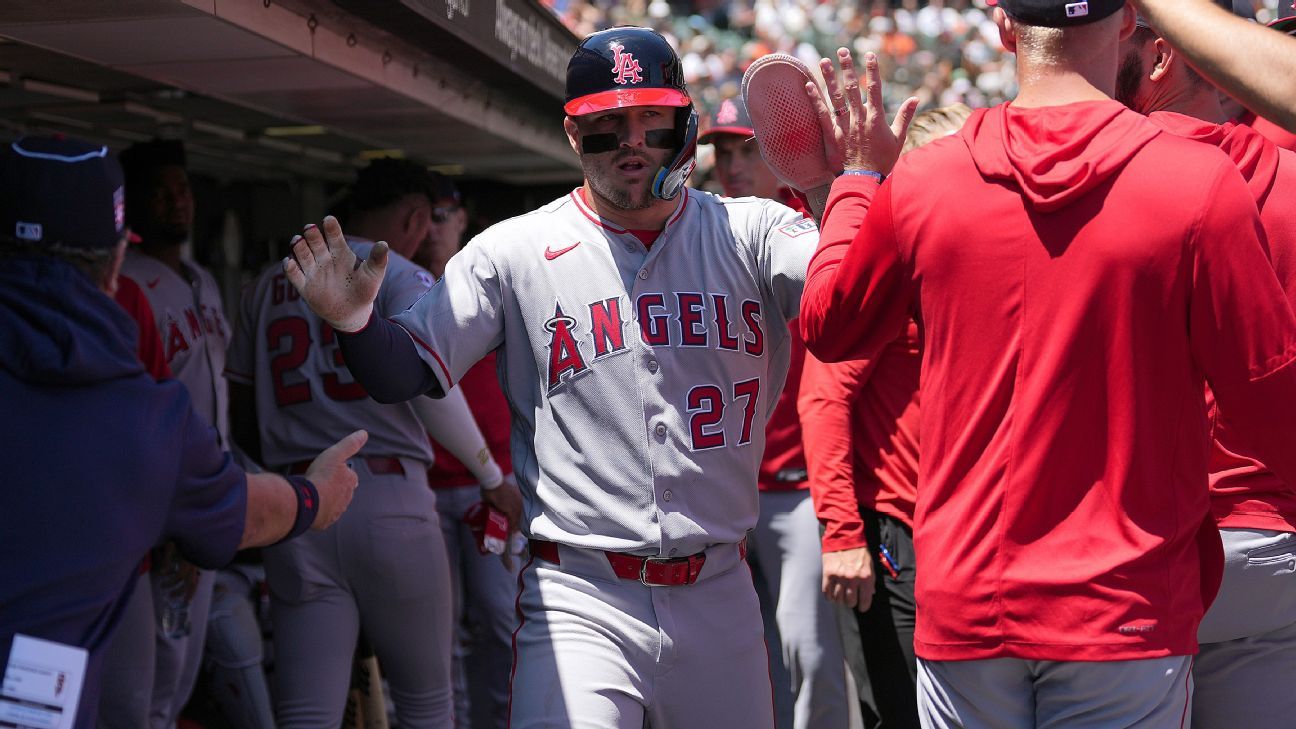
Mike Trout went 4-for-4 on Sunday against the Giants, finishing with a double and three singles in the Angels' 4-3 win. It was his first four-hit game since April 26, 2021—a span of five years and roughly three months. The performance moved him past Tim Salmon on the franchise's career doubles list (now 340, second all-time behind Garrett Anderson's 489) and into fourth place on the Angels' singles leaderboard with 1,014 hits, trailing Anderson, Darin Erstad, and Brian Downing.
What the box score doesn't advertise is the context underneath. Trout's season-long batting average sits at .247, a figure that would rank among the bottom third of qualified hitters in the league. The 4-for-4 night is the kind of performance that feels like a correction to a season spent in the muck—one explosive game that temporarily erases weeks of below-standard contact quality. It's the statistical equivalent of a pressure relief valve, impressive in isolation but insufficient on its own to reset a year-long trend.
The mechanics of why Trout has struggled this season matter more than the single-game flash. His strikeout rate has edged up, chase-rate patterns suggest he's been hunting for strikes outside his zone more frequently, and his exit velocities on weak contact have been dragging his expected batting average (.248) even closer to his actual number. Sunday's game was a reminder that the ability is still there—no player goes 4-for-4 by accident—but it doesn't alter the underlying offensive volatility that's defined his 2026 campaign.
For bettors tracking Trout's prop lines, the key is recognizing that one perfect night doesn't rebalance a full season's data. Markets will likely bump his hit and total bases projections in his next few games as sportsbooks respond to the recent performance, but that's a recency edge working against the bettor, not for them. The real edge lies in the fade: if Trout's hit line ticks from 1.5 to 2.0 in his next game due to Sunday's game, the house is asking you to bet on sustainable normalization that his .247 average hasn't earned. The strong play is to wait for that uptick and lean against it, given that his expected average still sits at .248—nearly identical to where he actually is. His 5-year absence from a 4-hit game also signals that these performances are rare enough to be noise, not signal.