MLB
Padres Role-Player Surge Reshapes Offensive Ceiling Before September Push
San Diego's late-summer lineup resurgence traces not to star power alone but to bench depth suddenly producing at starter rates—a volatility profile that matters for team total projections heading into crunch time.
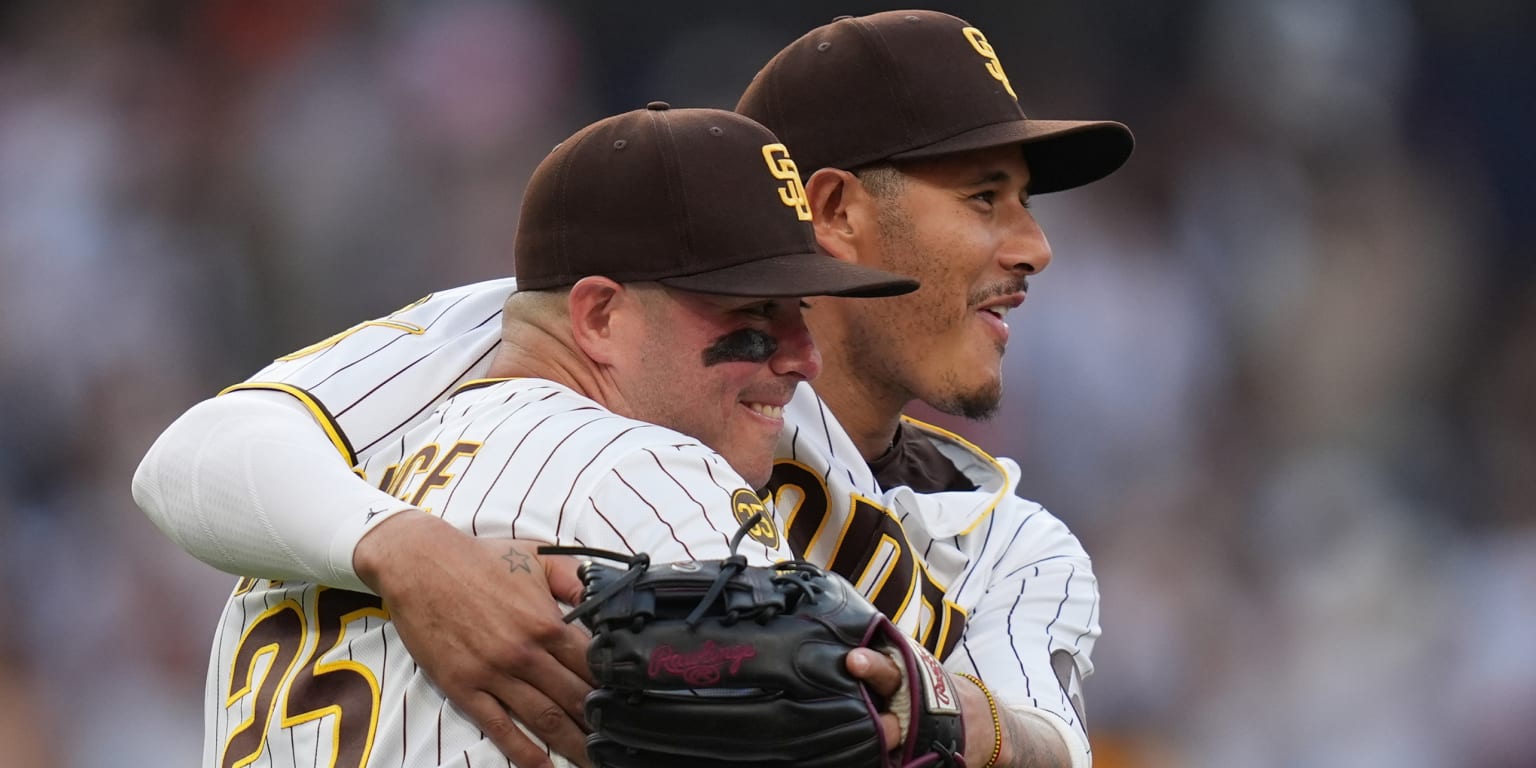
The Padres have won 17 of 22 games since July 24, clawing to within reach of a Wild Card spot with 37 games remaining. The story isn't Manny Machado or Fernando Tatis Jr. finding their footing—though both are contributors now. It's that San Diego's middle-tier players have carried offensive load for three-plus months while the stars labored, and they haven't stepped down. Ty France, Luis Rengifo, and Luis Campusano have each delivered at rates that typically belong to higher-tier salary cohorts. France signed to a minor-league deal in February, barely made spring training, and has since accumulated 3.3 bWAR across 99 games—the team's highest mark. Rengifo arrived on a minor-league pact in early July after Milwaukee released him, yet has posted a .323/.411/.473 slash line in San Diego versus his .205/.280/.254 mark in Milwaukee. Campusano returned from a July toe fracture with no apparent loss of velocity; his pre-injury .958 OPS across 18 games has held. These aren't marginal gains. They're structural shifts in offensive production distribution.
The Padres entered 2026 with star-dependent architecture: if Machado, Tatis, and Merrill hit, offense would scale; if they didn't, the offense would flatline. For much of the season, the second scenario defined them. France, Rengifo, and Campusano flipped that risk on its head by producing as if they were the anchors, not the depth. Now the math compounds. With those stars ramping back to form—Machado batting .289 over his last 30 games, Merrill regaining swing consistency—the Padres' aggregate offensive profile has moved into the 15th-20th percentile range for runs per game. That's playoff-level output.
But here sits the edge: depth production at this level rarely sustains. France's .805 OPS minimum in June looks like the floor; it wasn't. Rengifo's 27-game heater against low-velocity pitching is volatile. Campusano's return window is now 6+ weeks; sample sizes that predictive models still treat as high-variance. The stars' resurgence is real and measurable. The role-player binge is real but structurally unsustainable. When San Diego enters September, that distinction will matter for run projection.
Team total pricing already accounts for the recent hot streak—books lifted Padres run lines by 0.25–0.40 runs in early August. But the market is pricing in a blended scenario: stars + depth both hold. The smarter read is that stars stabilize while depth regresses to career means. France drops to his historical .750 OPS band, Rengifo normalizes to the .280-.300 range he showed in Milwaukee, Campusano's platoon role compresses his plate appearances. Machado, Tatis, and Merrill can't fully offset that math. The Padres' run output will tick downward from its current 4.9/game pace by late season.
This tells you where the value splits. Short-term unders on team totals in the 4.3–4.6 range are pricing in sustainability that won't materialize. The Padres will win enough games to stay in the race—the quality of their star core is real—but the offensive ceiling compresses once role-player regression normalizes.
MLB Intelligence — Baseball intelligence beyond the box score. Open MLB Intelligence →