Padres' offensive eruption in KC signals second-half reset, but road-trip narrative carries real risk
By PropBetEdge Editorial Team ·
A 19-run explosion masks that San Diego still botched close games and faces three weeks of gauntlet scheduling before any trend is real.
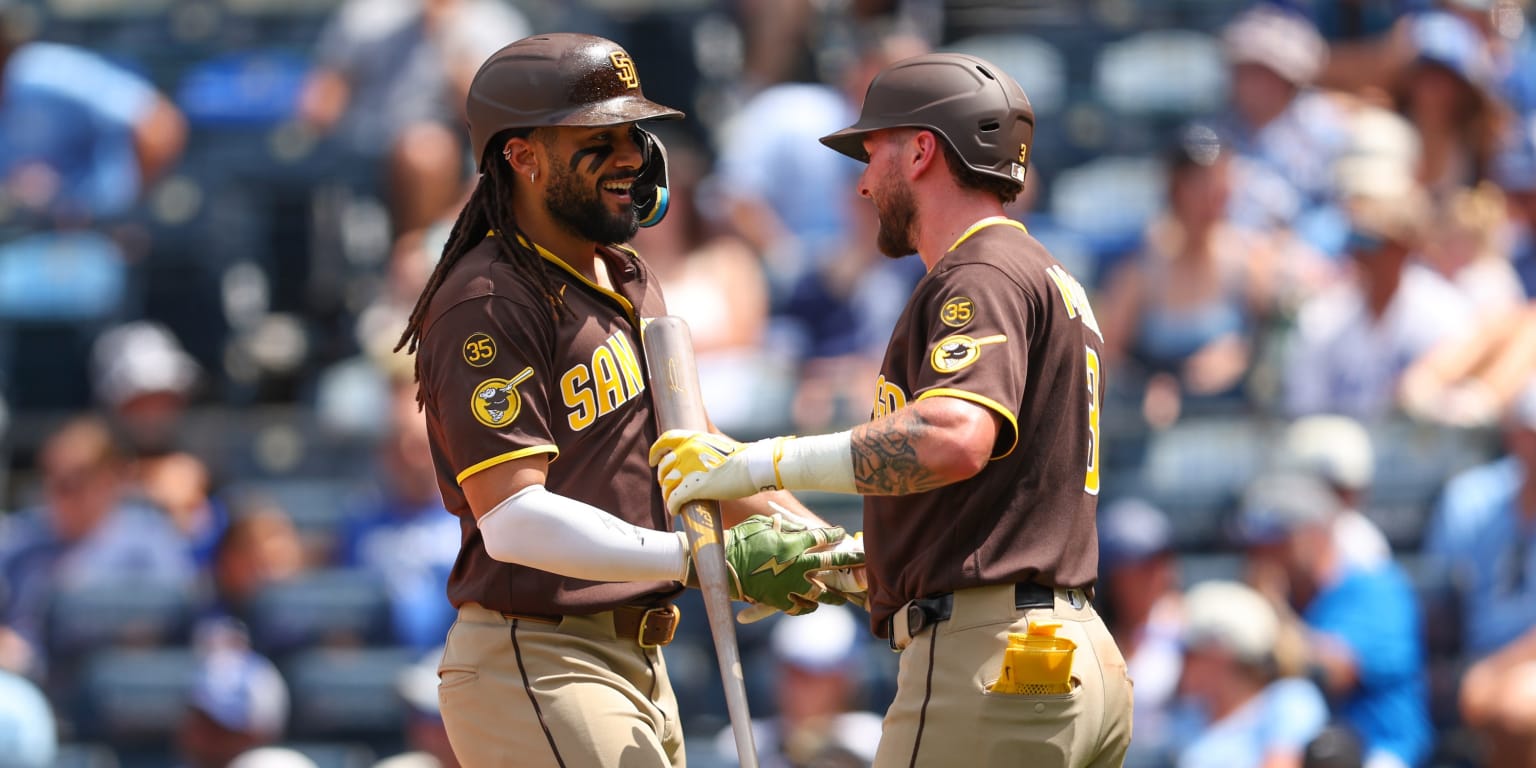
The Padres obliterated Kansas City 19-2 on Sunday, capping an otherwise disastrous opening to their 10-game road trip. Fernando Tatis Jr. went 2-for-5 with four RBIs, including a two-run single that sparked a four-run second. Ty France launched a grand slam and two home runs total. Jackson Merrill collected four hits with two homers. It was, on its face, the kind of cathartic beatdown that can reset a clubhouse mood—and manager Craig Stammen publicly signaled as much, describing a return to that "baseball is fun again" feeling heading into Atlanta.
But the blowout obscures what actually went wrong the first two games. San Diego surrendered a three-run lead in the tenth inning Friday and got "flat-out beat" Saturday. The Padres also hit into six double plays in the first two contests, a signal of undisciplined at-bat construction when runners were in scoring position. Stammen acknowledged this directly: the early offense Sunday, he said, came because players "took some really good at-bats" with runners in scoring position—implying they hadn't done that consistently. A single dominant performance against a fragile Royals lineup does not erase those mechanical failures.
The real defensive story was Yuki Matsui, the left-handed reliever who inherited a bases-loaded, no-outs jam in the fourth inning and struck out Carter Jensen before forcing a double-play groundout. That escape, not the 19-run bombardment, was the actual pivot in the game—it kept Kansas City from cutting into a 7-2 lead at a moment when the Padres' offense was not yet dominant. Stammen labeled it "the biggest part of the game." When a team nearly loses control of a routed opponent, the relief comes from executing a single clutch inning, not from eventually outscoring everyone. The Padres' propensity to hand opponents opportunities (leaving runners on, early defensive lapses) remains the real metric to watch over the next two weeks.
From a prop lens, the Sunday blowout will create a false consensus: Padres overs. Books will adjust upward on San Diego team totals and individual batter props for the next three to four contests, and that adjustment will likely overcorrect. Tatis went 2-for-5; France and Merrill had outlier multi-homer games; the Royals sent a position player to the mound in the ninth, inflating run production in garbage time. Over the Padres' last 15 games before Sunday, San Diego averaged 4.2 runs per game—below league median. A single 19-run game does not rewire a season-long offensive profile. The market will price in a "momentum surge" that exists primarily in the post-game narrative. Conversely, Padres unders for Tuesday onward remain undervalued, especially against Atlanta, which enters that series with a top-eight pitching staff by ERA. The edge is anti-narrative: fade the overheated team total in the immediate wake of the blowout, then reassess after one neutral outing.
Stammen's optimism is earned—his roster has the ceiling. But road trips are won by teams that avoid self-inflicted damage (extra outs, base-running mistakes, poor at-bat sequencing) across 10 games, not by teams that blow out one weak opponent and then draw false conclusions. The Padres have eight games left on this trip. Sunday proved they can hit. The previous two games proved they still leave openings. That tension is where the real value sits.