MLB · injury
Clay Holmes Headed for Trade Block as Mets Sell Off Deadline Inventory
The Mets' failed starter experiment with Holmes creates a rental asset for contenders, but his injury timeline and market demand will dictate both trade value and betting exposure for the remainder of the season.
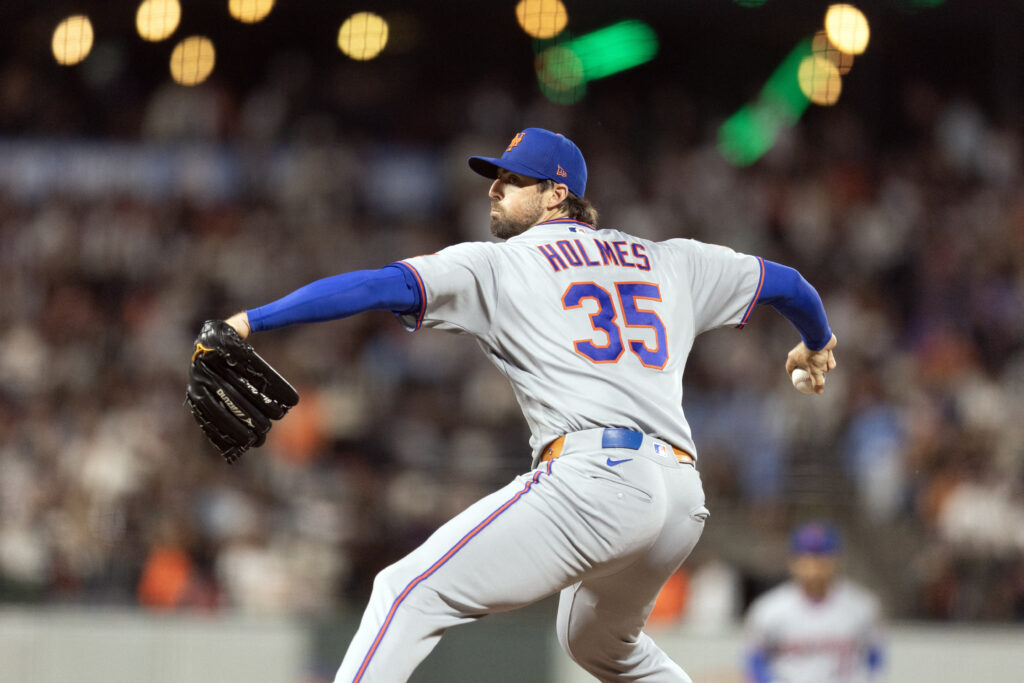
Clay Holmes is leaving New York, just not to a division rival. The right-hander made clear Friday that extension talks with the Mets have stalled, signaling his status as a deadline trade chip as the organization dismantles its roster ahead of Aug. 1. Holmes is rehabbing a broken fibula suffered in May when a comebacker struck him, an injury that has sidelined him for roughly two months. His first minor-league rehab appearance Thursday was pedestrian—2 1/3 innings, two runs allowed—but the Mets aren't panicking about one rusty outing. Teams are already circling.
The Holmes experiment in Flushing was designed as a reclamation project: take a former closer from the Yankees and stretch him into a rotation piece. It worked. Before the injury, he posted a 2.39 ERA with a 20.9% strikeout rate and a 55.8% ground-ball rate across 52 2/3 innings this season. Over his two-year tenure with the Mets, he's compiled a 3.26 ERA across 218 1/3 innings with elite contact management (9.2% walk rate, 55.8% ground-ball rate). The problem isn't Holmes' pitching—it's the Mets, who sit 43-60 and are fireselling ahead of the deadline. With no path to contention and Holmes facing a $12MM player option in 2027 that he'll almost certainly decline, holding him makes no sense. The team gets no compensatory draft pick benefit (they're luxury-tax payers, so any pick drops to the fourth round), and a trade haul is the logical return.
The White Sox, among other contenders, have registered interest. Holmes' $13MM salary is absorbable for any club with rotation depth needs, and his strikeout rates and ground-ball profile make him a stabilizing force down the stretch. The injury and opt-out provision may shave a few percentage points off his market value, but contenders understand that a two-month absence doesn't erase two years of 3.26-ERA production in a uniform. Expect a deal to close within the week.
For betting purposes, Holmes' value as a mid-rotation stabilizer matters most when he lands. On a contender, his strikeout rate (18.9% career with Mets, 20.9% this year pre-injury) becomes a floor prop to target: his ground-ball rate means fewer fly-ball outs and more double-play opportunities, which suppresses homer rates and elevates team defensive efficiency in the games he starts. Teams acquiring Holmes are doing so because he suppresses run-scoring environments. The injury is a real variable—he's still building back to full strength, and the first 3-4 starts post-rehab will feature elevated variance. However, the strikeout rate is durable even in recovery phases. Once he settles into his new team's rotation (likely within 10-14 days of acquisition), his K/9 prop becomes a reliable target, especially if his destination features a below-average infield defense that benefits from ground-ball inducement.
MLB Intelligence — Baseball intelligence beyond the box score. Open MLB Intelligence →