MLB · callup
Gordon's Debut Showcases Brewers' Rotation Depth as Milwaukee Advances Past Philadelphia
A five-inning relief cameo from Colton Gordon masked a short-outing failure from Dustin May, but Milwaukee's playoff positioning remains intact after clinching a bye and home-field edge.
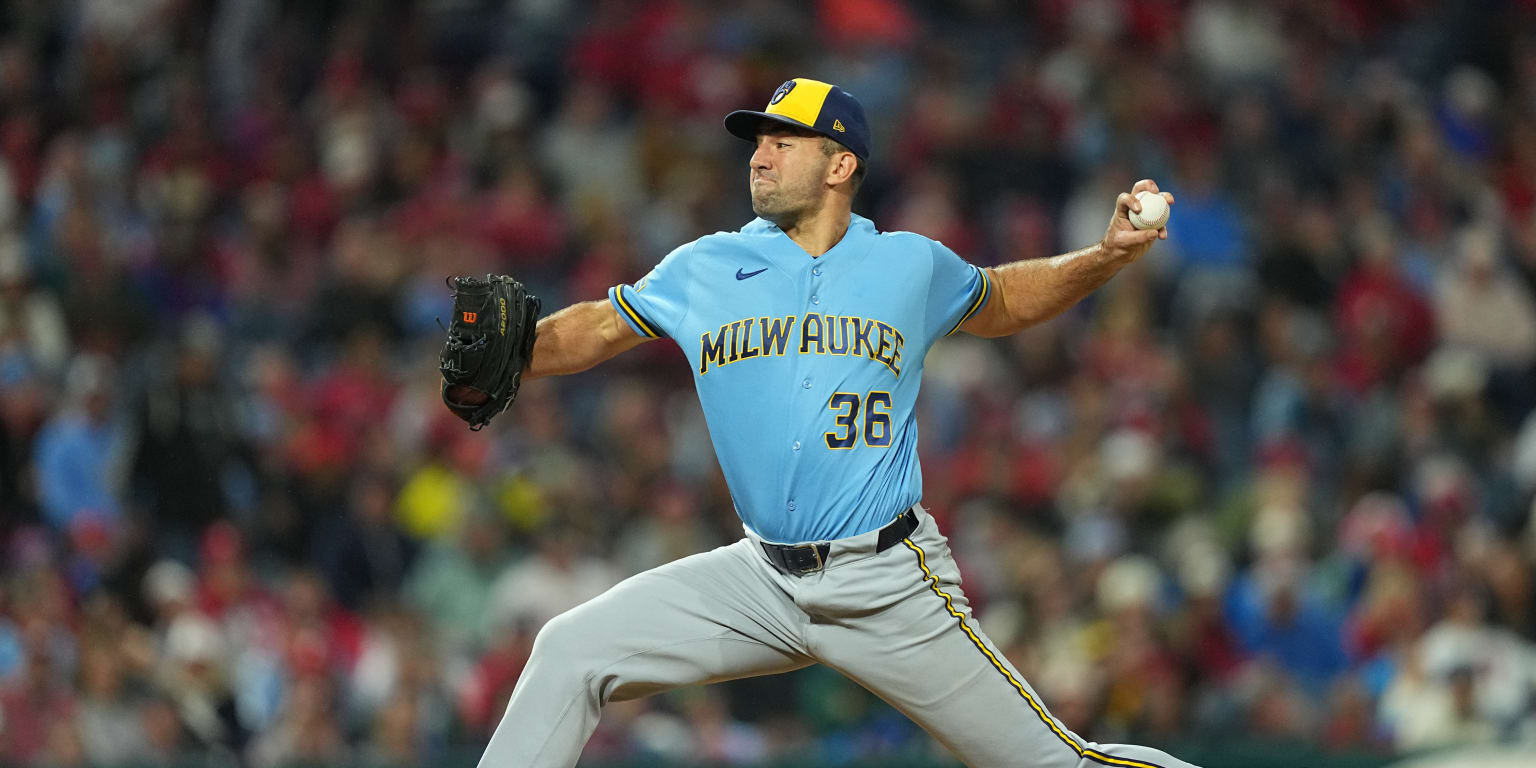
The Brewers absorbed a 6-4 loss to Philadelphia on Tuesday night at Citizens Bank Park, but the result barely registers against the backdrop of their clinched first-round bye and home-field advantage in the NLDS—secured when Atlanta fell to Cincinnati. The loss itself mattered less than what it revealed about Milwaukee's pitching arsenal heading into October: a newly acquired arm ready to shoulder late-inning load, and a reclamation project still searching for traction.
Dustin May took the ball on short rest, three days after getting shelled in Baltimore (2 1/3 innings, six hits, three runs). Manager Pat Murphy explicitly deployed him for more work, betting that additional mound time would help May calibrate his pitch selection and sequencing as he transitions into his new environment. The strategy backfired immediately. May surrendered a two-run homer to Brandon Marsh in the second inning on a 1-2 sinker, exiting after just two innings and 36 pitches. The Brewers' short-rest experiment proved that proximity to the mound alone doesn't solve mechanical or sequencing problems—it just accelerates the timeline for recognizing them. That matters for playoff planning: May's struggles suggest Milwaukee may need to rely more heavily on acquired reinforcements than on internal recovery.
Colton Gordon, obtained alongside Lance McCullers Jr. in a July trade with Houston, immediately demonstrated why the Brewers valued the left-hander enough to make the swap. He pitched four scoreless, hitless innings in relief, silencing a Phillies lineup that had feasted on early Wheeler dominance (seven strikeouts to start, 10 K's through six). Gordon returned for a fifth inning and unraveled—Luis Arraez and Alec Bohm singled with two outs, then Bryson Stott's center-field single triggered the collapse. An errant throw from Garrett Mitchell, compounded by what appeared to be Bohm's deliberate interference (he turned his head to watch the throw), allowed an insurance run to score. The inning spiraled from there, with Brandon Marsh doubling off the wall to extend Philadelphia's lead to 6-4. Gordon's outing—brilliant through four, vulnerable in five—encapsulates a roster reality: Milwaukee has depth and talent, but those arms aren't invincible when exposed to heavy workload on short notice.
For prop bettors, the Brewers' pitching volatility in high-leverage moments creates a clear edge against Milwaukee relief overs and team-total overs in their remaining regular-season games against St. Louis. May's continued struggles make him a fade for strikeout props (he lasted two innings; his K-rate will deteriorate against extended work), while Gordon, despite the blown inning, carries longer-term trust given his dominant four-inning opening. The real angle: when Milwaukee faces teams that work deep counts and force third-plus relief appearances, expect elevated pitch totals and higher-scoring outcomes. Both teams' bullpens will see heavy work, and tired arms in September often mean harder contact and more runs. The Brewers have secured their bye; they're running out the string against St. Louis with arms like May still seeking rhythm. Expect overs on team totals to hold value as long as volatility in the Milwaukee pen remains unresolved.