MLB · callup
Eldridge's Rookie Run Ends Early: How San Francisco's Lineup Looks Into October
A hotel accident sidelines the Giants' breakout first baseman weeks before the postseason, forcing a late-season depth test.
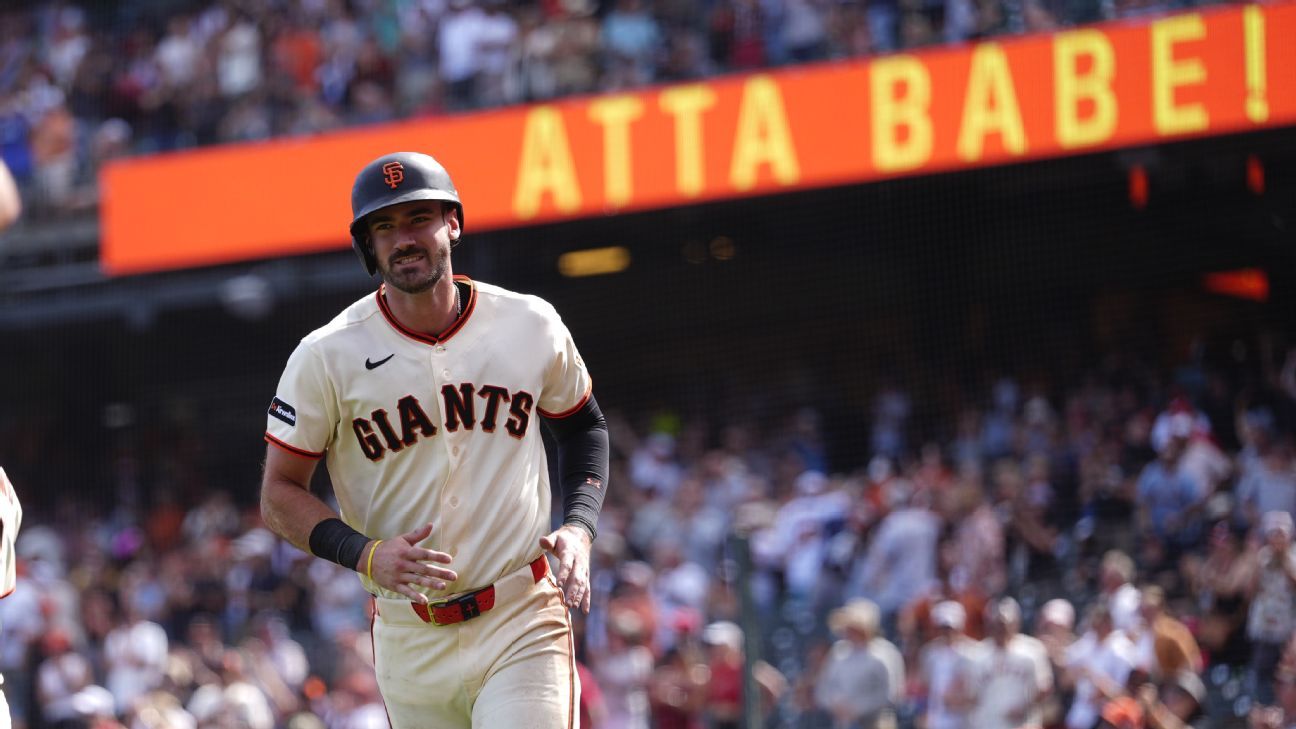
Bryce Eldridge's breakthrough rookie season is over. The San Francisco Giants placed their 21-year-old first baseman/designated hitter on the seven-day concussion list Monday after a head injury sustained at the team hotel in Los Angeles on Friday. While the retroactive timing (Sept. 18) technically makes him eligible for the Giants' final three games this weekend against the Dodgers, manager Tony Vitello has already signaled Eldridge won't see the field again in 2026.
That's a meaningful blow to a Giants lineup still operating on the margins of the wild-card race. Eldridge arrived at the majors May 4 and hit .269 with 17 home runs and 57 RBIs across 386 at-bats—a solid debut for a teenager drafted 16th overall in 2023. Vitello emphasized that Eldridge's value extended beyond power: his defensive development at first base, a position he hadn't played until his second pro season in 2024, impressed the front office as much as his thunderous moments. That versatility and upside is now unavailable for what could be a deep October run.
The Giants compensated Monday by activating infielder Marcelo Mayer from the injured list (acquired at the trade deadline from Boston) and promoting outfielder Bo Davidson from Triple-A Sacramento for his major-league debut. Davidson's numbers in the minors—.290 with 29 home runs, 94 RBIs, and 20 stolen bases split between Double-A and Triple-A—suggest the organization views him as a legitimate lineup piece, not a placeholder. Concurrently, Jung Hoo Lee landed on the 10-day injured list with a groin contusion, compounding San Francisco's health complications heading into a critical stretch.
For prop bettors, Eldridge's absence reshapes San Francisco's team-total profile and DH/first-base hitting production in two ways. First, his 17 home runs in 386 at-bats (4.4% home-run rate) represented near-league-average power for a rookie; replacing that slot with Davidson, whose minor-league power rate translates to roughly 4.8% at the majors if projections hold, doesn't create an immediate downgrade—but it adds variance. Davidson's 20 steals suggest speed that Eldridge didn't offer, which could affect run-production mechanics on the basepaths. Second, and more directly: the Giants' team total over-under should tighten slightly. Eldridge's 57 RBIs over 115 games (approximately 0.50 per game) flowed primarily through his power stroke; his loss doesn't erase San Francisco's offensive system, but it removes a direct source of counting stats. Over the final 12 games of the regular season, expect the Giants' team totals to settle 0.3–0.5 runs lower than they would have with Eldridge in the lineup.
The broader strategic issue is depth. Mayer's elevation at DH adds a Boston-acquisition element to monitor (the Red Sox acquired Erik Miller in that deal, signaling the trade's efficiency), but Mayer arrives without Giants-specific timing or chemistry. If San Francisco advances, it enters October with proven production capacity compromised and a lineup that must compensate through plate discipline and bench production. That's a subtle but quantifiable cost when betting team totals or player props for starting lineup members in October matchups.