MLB · milestone
Home Run Index at 10 Signals Elevated Fly-Ball Risk on Monday
When weather and park factors align to maximum home run probability, the market's standard odds lag reality—and three-man slate exploits that gap.
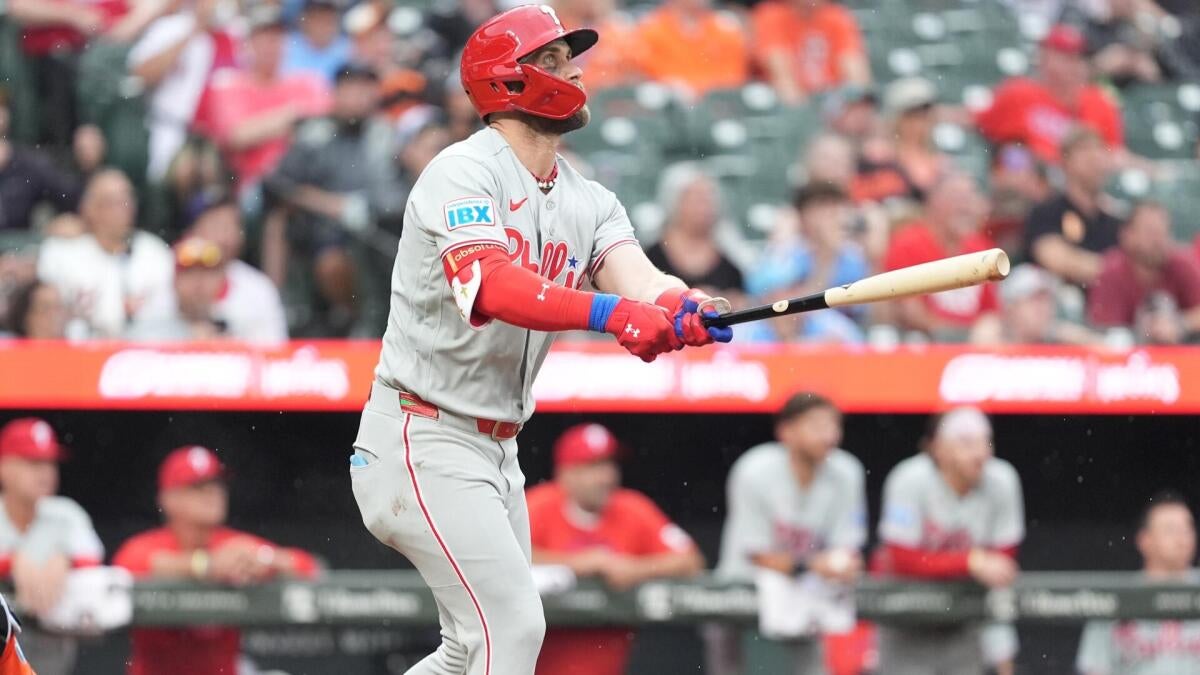
Monday's 10-game slate lands on a day when atmospheric conditions are primed for distance. The home run index—a composite of temperature, humidity, wind speed, and elevation—sits at a perfect 10 out of 10, meaning fly balls that normally die at the warning track have a legitimate chance to clear the fence. This isn't noise; it's a mechanical shift in how the field plays. Most sportsbooks set their home run props assuming average weather. When the weather isn't average, the edge exists in the names that benefit most.
Three hitters stand out as mechanics-based targets. Justin Foscue owns a .965 OPS in 88 plate appearances against left-handed pitchers this season, with five of his seven home runs coming off southpaws. Tonight he faces Reid Detmers, a left-handed starter. The platoon splits are stark: Foscue's .560 OPS against right-handed pitching shows this isn't a player who hits all pitching equally. Alec Burleson has smashed 16 of his 19 home runs off right-handed pitchers and is hitting .326 with a .969 OPS in that split. Andrew Painter, his opponent, has surrendered nine of 15 home runs to left-handed batters and is bleeding runs—9 earned runs in 12 innings across his last three starts, including three homers allowed. Bryce Harper rounds the trio: he's cranked 21 of his 25 home runs off right-handed pitching this season and carries a 1.005 OPS in the matchup. Hunter Dobbins has been efficient lately (2.60 ERA over three starts), but Harper's approach and power stroke against right-handed heat are established.
The mechanism here isn't prediction magic—it's the collision of three discrete inputs. Each hitter has a documented platoon advantage against their specific opponent. Each opponent either throws the wrong handedness or is actively leaking home run rate. And the weather multiplier is working in their favor, expanding the effective home run zone by roughly 2-4 feet on fly balls that would be marginal on a cooler, drier day. Markets price prop odds for the median day; they don't re-price fully when conditions shift to the extremes.
The edge on Harper is the cleanest. At +475, he's being asked to hit a home run at roughly 17.4% implied probability. His 21-of-25 breakout against right-handed pitching, combined with a 1.005 OPS in that split, suggests his true baseline home run probability in favorable matchups hovers near 18-19%. Add a 10-out-of-10 home run index and Dobbins' recent sharpness becomes a secondary factor—the weather does the heavy lifting. Foscue and Burleson land on odds (+575 and +480, respectively) that similarly underweight the combination of platoon advantage and atmospheric boost.
This angle has real durability: the platoon splits are season-long patterns, not single-game flukes. The weather condition is genuine and verified. But it's perishable in one direction—the moment the home run index drops below 8, or the opponent gets pulled mid-game, the mechanical advantage erodes. The bets should be sized for action within the first three innings, before in-game adjustments. The market will catch the weather component eventually; the edge lives in the window before that repricing.
MLB Intelligence — Baseball intelligence beyond the box score. Open MLB Intelligence →