MLB · lineup
Pfaadt Returns to Diamondbacks Rotation After Minor-League Rebuild
Arizona brings its starter back from Triple-A with fresh legs and a cleaner arm angle—timing that matters for a playoff contender mid-season.
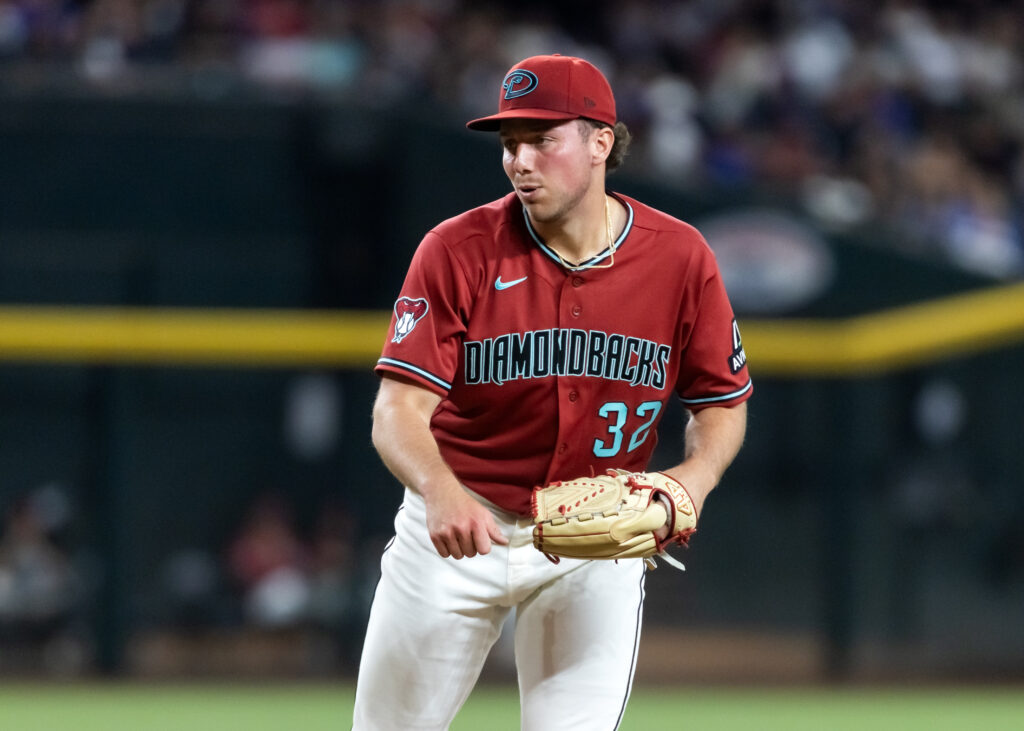
Brandon Pfaadt is heading back to the majors. The Diamondbacks will recall him to start Wednesday's game against San Francisco, manager Torey Lovullo confirmed, ending a nearly month-long developmental stint in Triple-A. Arizona will option a reliever to open a roster spot, finally closing the nine-man bullpen experiment that had been stretching the staff thin.
The timing and mechanics here matter. Pfaadt wasn't shipped down because of failure—he was sent to rebuild his delivery and build innings as a starter in a controlled environment. Nearly 30 days in Triple-A is long enough to shake off rust, install adjustments, and accumulate enough work to pitch deep into games without load management. The fact that he's returning in late June, with a quarter of the season still ahead, suggests the organization views him as a durable piece for the stretch run and playoffs. That's not a plug for a failing spot starter; that's a rotation stabilizer being brought back when the org felt his readiness matched the moment.
For prop purposes, Pfaadt's strikeout lines and team-total under/over exposure shift on his return. His Triple-A conditioning—and the likely increase in pitch efficiency after mechanical work—typically produces lower walk rates and higher K/9 rates early after recall. The Diamondbacks' bullpen suddenly has an extra arm, which means fewer high-leverage spots for relief pitchers and slightly lower team total variance. The Giants' lineup comes in cold; Pfaadt gets a favorable matchup on his way back.
Markets will price Pfaadt's strikeout prop conservatively at first, anchoring to his season numbers rather than accounting for the recalibration and fresh workload. His K/9 in Triple-A should exceed his major-league average once adjusted for competition level—a predictable gap that books often overshoot on the low side early. His first start back, especially against a non-elite offense, creates a window where strikeout volume sits underpriced relative to his recent work and mechanical refinement.
The team-total angle is more subtle but equally real. With the bullpen suddenly deeper and a fresh starter eating innings, Arizona's game scripts normalize; they're less likely to blow leads in the eighth inning and claw back in the ninth. That stabilization typically reduces total volatility and shifts unders into slightly favorable territory, assuming the Pfaadt recall didn't disrupt a winning formula that was already working.